

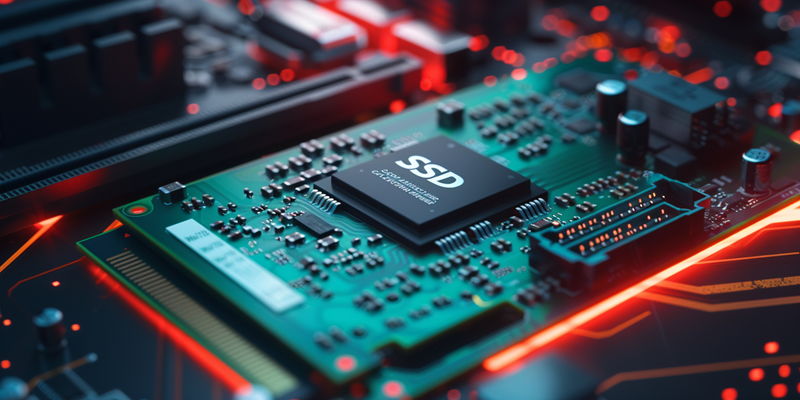
In an exciting development for tech enthusiasts and penny-wise consumers alike, Phison has unveiled the E31T PCIe Gen5 SSD controller. This new entry into the world of solid-state drives heralds a significant shift in the industry—imagine the blazing-fast speeds of a Gen5 SSD being accessible to the broader market. The E31T asserts itself as a cost-effective, DRAM-less solution to a segment that’s long been craving the pinnacle of performance without the pinnacle of price. The absence of DRAM in SSDs typically hints at a budget-friendly stance, and Phison is capitalizing on this to widen the PCIe 5.0 embrace.
A Leap in Performance for the Value-Conscious
The E31T isn’t just affordable; it’s a powerhouse. By drastically cutting production costs and omitting the need for expensive heatsinks, this SSD controller is set to redefine the value segment of the market. It presses forward with speeds that can reach 10 GB/s for reads and writes and an impressive 1,500K in 4K random IOPS—all achieved through the use of TSMC’s cutting-edge 7nm manufacturing process. The controller further boasts two Arm Cortex-R5 cores and a four-channel NAND interface, which collectively push the envelope in delivering high-end performance.
Moreover, Phison hasn’t compromised on reliability or durability. The integration of its seventh-generation ECC engine employs LDPC coding to enhance not just the performance but also the reliability of the SSD. Moves like these see Phison aiming high, promising not just affordability but a product that’s robust and equipped to handle the demands of modern high-speed data transfer, all without causing a dent in your finances.
A New Era of Affordable Gen5 SSDs
Tech aficionados and budget-conscious shoppers have reason to celebrate: Phison has just introduced the E31T PCIe Gen5 SSD controller, a game-changer in the realm of solid-state drives. This launch signals a transformative period in the SSD industry, making the ultra-fast speeds once reserved for high-end models now available at more affordable price points. The E31T stands out with its value and efficiency—it’s a DRAM-less controller, meaning it slashes costs while still catering to those desiring top-tier performance. With the E31T’s arrival, the promise of PCIe 5.0 technology is expanding to reach a wider audience without sacrificing speed for savings. This strategy by Phison cleverly leverages the typically lower-cost nature of DRAM-less SSDs, positioning the company to broaden the adoption of next-generation technology among consumers.