

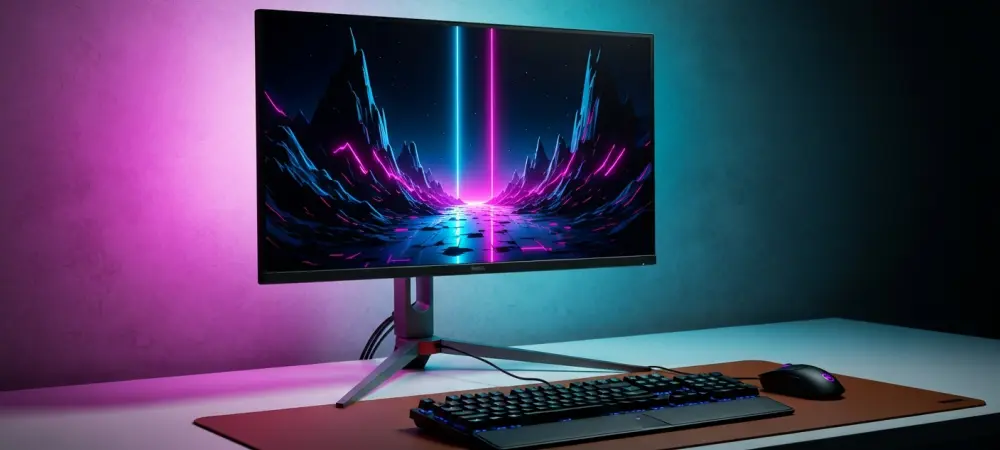
The competitive landscape for high-performance displays has undergone a significant transformation as enthusiasts no longer settle for choosing between rapid response times and pristine visual clarity. In previous years, a professional gamer might have sacrificed color accuracy for a higher refresh rate, while a content creator would prioritize resolution over motion smoothness. This dichotomy is dissolving with the arrival of advanced panel technologies that cater to both ends of the spectrum simultaneously. The introduction of the Philips Evnia 8000 series exemplifies this shift, specifically the 32M2N8800 model, which integrates the latest Quantum Dot Organic Light-Emitting Diode technology to provide an uncompromising visual experience. As the industry moves toward standardizing 4K resolution at ultra-high refresh rates, the demand for hardware that can maintain color integrity while pushing hundreds of frames per second has reached an all-time high among the global gaming community. This monitor release signals a broader trend where premium components are now more accessible to the wider public, effectively raising the bar for what constitutes a flagship monitor.
Visual Performance: Redefining High Fidelity
Panel Technology: The Quantum Dot Advantage
The integration of a 31.5-inch QD-OLED panel marks a significant milestone for the product lineup, offering a native resolution of 3840 x 2160 pixels that ensures exceptional sharpness for both gaming and professional workflows. By combining the self-emissive properties of organic light-emitting diodes with a quantum dot layer, this display achieves a level of vibrance and peak brightness that traditional OLED panels often struggle to maintain. This specific engineering choice allows for a wider color gamut and more accurate reproduction of secondary tones, which is vital for modern titles that rely on atmospheric lighting and complex textures. Furthermore, the monitor features a VESA DisplayHDR True Black 400 certification, which guarantees the deep, inky blacks that are a hallmark of high-end display technology. This certification is particularly important for games that utilize advanced ray-tracing techniques, as it allows the hardware to display tiny points of light against complete darkness without any loss of detail in the shadows. The infinite contrast ratio provided by pixel-level dimming ensures that every frame is rendered with a depth that liquid crystal displays simply cannot replicate, making it a viable tool for digital artists who require a display that accurately represents full dynamic ranges.
Motion Dynamics: High-Speed Response
Beyond its color capabilities, the 32M2N8800 addresses the needs of competitive gamers by offering a 240Hz refresh rate, a specification that has rapidly become the new gold standard for high-tier gaming monitors. Driving a 4K resolution at such a high frequency requires a robust hardware pipeline, and this monitor delivers smooth motion that virtually eliminates flickering and screen tearing when paired with a compatible graphics processor. The transition from 144Hz to 240Hz is often described as a transformative experience for players of fast-paced first-person shooters, as it provides more frequent visual updates that allow for quicker reaction times during intense gameplay. This fluidity is supported by a gray-to-gray response time of just 0.03 milliseconds, which ensures that fast-moving objects remain sharp and clear without the distracting ghosting effects common in older panel types. By minimizing the latency between the user’s input and the visual response on the screen, the monitor helps create a more direct and intuitive connection between the player and the digital environment. As modern graphics cards become increasingly capable of pushing ultra-high resolutions at high speeds, the monitor acts as the final and most crucial link in the performance chain, ensuring that raw power is not wasted on a subpar display that would otherwise bottleneck the user’s experience.
Industrial Design: Comfort and Utility
Ergonomics: Form and Functional Lighting
One of the standout aesthetic and functional features of this monitor is the proprietary Ambiglow technology, which projects a halo of light onto the wall behind the screen to match the on-screen content. This system uses a sophisticated processor to analyze incoming video signals in real-time, extending the visual experience beyond the physical borders of the bezel and effectively making the screen feel larger. While often viewed as a decorative addition, Ambiglow also serves a practical purpose by reducing eye strain during long gaming sessions in low-light conditions. By providing a soft bias light that balances the contrast between the bright screen and the dark room, it creates a more comfortable environment. The physical construction also reflects a focus on long-term comfort, featuring a stand that offers a full range of ergonomic adjustments including height, tilt, and swivel. This flexibility is essential for maintaining a healthy posture, especially for users who spend several hours a day at their desks for both work and leisure. The compact base design ensures that the monitor takes up minimal space on the desk, providing plenty of room for large mousepads and other peripherals. Furthermore, the cable management system is integrated directly into the stand, helping to keep the workstation organized and free from the clutter of multiple power and data cables, suggesting the product was developed with the actual habits of modern users in mind.
Strategic Implementation: Connectivity Standards
Connectivity was facilitated through dual HDMI 2.1 ports and a DisplayPort 1.4 connection to support the full bandwidth required for 4K output at 240Hz. The inclusion of HDMI 2.1 was particularly significant for console gamers, as it allowed the latest hardware to take full advantage of Variable Refresh Rate and Auto Low Latency Mode. This made the monitor a versatile centerpiece for multi-platform setups, allowing users to switch between a high-end gaming PC and a modern console with minimal friction. Software tools such as the Smart Crosshair feature further refined the competitive experience by using contrast-based color adjustment to ensure the reticle remained visible against any background. The introduction of this advanced display technology established a new benchmark for high-end gaming setups by successfully bridging the gap between resolution and speed. Organizations and individual users alike recognized the importance of investing in hardware that could support the increasing demands of modern software without compromising on visual fidelity. By integrating QD-OLED technology into a consumer-ready format, the market shifted toward a standard where infinite contrast and ultra-fast response times became expected features. To maximize the benefits of such equipment, users were encouraged to verify that their entire hardware chain, including cables and graphics drivers, remained fully optimized for high-frequency output.