

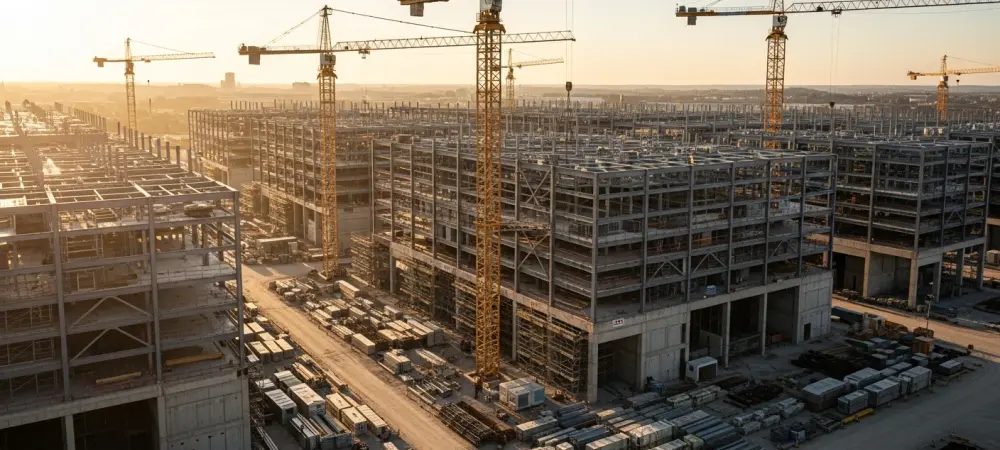
The global economy’s insatiable appetite for data has transformed vast, unassuming tracts of land into the most coveted real estate assets of the 21st century. In a move that underscores this trend, PGIM Real Estate has acquired a significant land parcel in Melbourne, earmarking it for a multi-stage data center campus with an initial investment of AU$1.2 billion. This transaction is more than a simple real estate deal; it is a powerful indicator of where institutional capital is flowing and a testament to Australia’s rising prominence in the global digital ecosystem. The investment signals immense confidence in the region’s capacity for growth and its ability to meet the escalating demands of a data-driven world.
The Digital Gold Rush Why Data Centers Are Today’s Prime Real Estate
Unpacking the PGIM Acquisition in Truganina
The cornerstone of PGIM’s new venture is a 20.7-hectare site in Truganina, a suburb strategically positioned within Melbourne’s industrial heartland. While the official purchase price remains undisclosed, industry reports place the land acquisition at approximately AU$165.6 million. This location was not chosen by chance; its proximity to existing infrastructure and connectivity hubs makes it an ideal spot for a facility designed to serve the high-capacity needs of modern cloud and enterprise clients.
The development is being managed through PGIM’s dedicated Global Data Center Fund, a vehicle backed by $2 billion in capital. The initial investment of AU$1.2 billion is slated for the first of three planned development phases, a figure that highlights the project’s immense scale. This phased approach allows for a flexible build-out, enabling the campus to scale in response to market demand over the coming years.
A Closer Look at the $1.2 Billion Investment
The substantial financial commitment reflects a clear strategy to build at a hyperscale level, catering to the largest technology companies in the world. The initial phase alone represents one of the most significant digital infrastructure investments in the region. Although critical details like the planned power capacity and a definitive construction timeline have not yet been made public, the investment figure itself suggests a facility capable of supporting tens, if not hundreds, of megawatts of IT load.
This move is not occurring in a vacuum. It is part of a larger wave of investment from global players who see data centers as a resilient and high-growth asset class. PGIM joins a cohort of institutional investors and specialized developers who are actively shaping the physical backbone of the internet, turning industrial land into critical digital utilities.
The Key Players Shaping Global Digital Infrastructure
PGIM Real Estate is a seasoned investor in this sector, with a history of successful ventures that provide context for its Melbourne ambitions. The firm’s strategy often involves partnerships with established operators, as seen in its past joint ventures with Equinix to develop hyperscale data centers. This experience gives them a deep understanding of the complex technical and operational requirements needed to deliver a world-class facility.
The company’s global footprint and dedicated fund allow it to execute a coordinated strategy across key markets. By leveraging its real estate expertise and financial strength, PGIM is positioning itself not just as a landlord but as a crucial enabler of digital expansion for the cloud giants and multinational corporations that power the modern economy.
Surging Demand and Market Momentum in Digital Infrastructure
Hyperscale Expansion Fuels Unprecedented Growth
The primary driver behind the Truganina project is the relentless expansion of hyperscale cloud providers. These technology behemoths require an ever-increasing amount of data center capacity to deliver services ranging from streaming and e-commerce to artificial intelligence and enterprise computing. Their need for large, efficient, and highly connected facilities is fueling a construction boom in key metropolitan areas worldwide.
This demand is creating a landlord’s market for developers who can secure the necessary land, power, and permits. The scale required by hyperscalers means that speculative development, once rare in the data center industry, is becoming more common as investors bet on continued absorption from these anchor tenants.
Melbourne’s Emergence as a Premier Digital Hub
Melbourne has rapidly solidified its position as a top-tier data center market in the Asia-Pacific region, attracting a surge of international investment. The city offers a stable political and economic environment, a skilled workforce, and a robust network of submarine cables connecting it to global markets. This combination of factors makes it a critical hub for deploying digital services across Australia and beyond.
PGIM’s investment is a powerful vote of confidence in the Melbourne market’s trajectory. Reports suggest the firm is already in discussions for a second data center site in the city, indicating a long-term strategy to establish a significant presence. This momentum is transforming Melbourne’s industrial landscape and cementing its role as a vital node in the global data network.
PGIM’s Strategic Global Vision and Investment Strategy
Building on a History of Data Center Success
The Melbourne acquisition is a logical next step in PGIM’s well-established global data center strategy. The firm has a track record of identifying and executing on opportunities in high-growth markets. This history provides a blueprint for success, blending real estate acumen with a sophisticated understanding of the technical demands of the digital infrastructure sector. By developing a portfolio of state-of-the-art facilities, PGIM is creating a platform that can serve the needs of global clients looking for consistent quality and operational excellence across different regions. This approach mitigates risk and allows the firm to capitalize on its deep industry relationships.
Connecting the Dots from Munich to Melbourne
PGIM’s strategy is inherently global, as evidenced by its recent activities in other key markets. A recent land acquisition in Munich for a planned 30MW facility demonstrates a parallel effort to capture demand in Europe’s core data center hubs. These investments are not isolated bets but are connected components of a broader vision to build a global network of digital infrastructure assets.
This global perspective allows PGIM to follow its clients as they expand, offering them capacity in the markets where they need it most. By linking major economic zones like Europe and the Asia-Pacific, PGIM is constructing a portfolio that mirrors the interconnected nature of the digital economy itself.
Overcoming the Hurdles in Data Center Development
The Challenge of Power Land and Logistics
Despite the strong demand, developing a hyperscale data center is fraught with challenges. Securing large parcels of suitably zoned land with access to massive amounts of power is the first and often most difficult hurdle. Utility providers must be able to deliver reliable, high-voltage electricity on a scale that can dwarf that of a small town, a process that can involve lengthy negotiations and infrastructure upgrades.
Beyond power and land, the logistics of constructing such a facility are immense. The global supply chain for critical equipment like generators, cooling systems, and switchgear can be complex and subject to delays. Successfully navigating these challenges requires deep expertise and careful planning.
Navigating Market Competition and Project Timelines
The race to build new capacity has created a highly competitive environment. Developers are not only competing for land and power but also for the attention of the handful of hyperscale tenants that dominate the market. Speed to market is a critical advantage, as tenants often need to deploy capacity on aggressive timelines.
Delays in permitting, construction, or utility activation can jeopardize a project’s success. As such, PGIM’s ability to execute its plan for the Truganina campus on schedule will be a key factor in its ultimate success and profitability.
The Regulatory Landscape for Australian Digital Infrastructure
Zoning Compliance and Environmental Considerations
Developing digital infrastructure in Australia requires navigating a complex web of local, state, and federal regulations. Gaining zoning approval for a facility of this scale is a significant undertaking, requiring extensive engagement with local councils and communities. Environmental impact assessments are also a standard part of the process, with a growing focus on energy efficiency, water usage, and sustainable design.
As data centers become more prominent features of the industrial landscape, regulatory scrutiny is likely to increase. Developers must be proactive in their approach to compliance and community relations to ensure a smooth path from acquisition to operation.
Data Sovereignty’s Impact on Local Investment
A growing global trend toward data sovereignty is also influencing investment decisions. Regulations requiring certain types of data to be stored within a country’s borders are compelling companies to build local infrastructure. This trend provides a powerful tailwind for the Australian data center market, as it ensures a baseline of domestic demand from government, finance, and other regulated industries.
This regulatory imperative de-risks investments like PGIM’s by creating a captive market for in-country data storage and processing. It transforms data centers from a purely commercial enterprise into a piece of critical national infrastructure.
A $1.2 Billion Bet on Australia’s Connected Future
What This Deal Signals for the Asia-Pacific Market
PGIM’s landmark investment in Melbourne is a clear signal that institutional capital views the Asia-Pacific region as a primary frontier for digital infrastructure growth. It validates Australia’s position as a stable and attractive market for large-scale development and is likely to spur further investment from competing funds and developers.
The deal also highlights a maturation of the market, where large, sophisticated players are undertaking multi-stage, campus-style developments. This signals a shift from smaller, opportunistic projects to long-term, strategic platform-building, reflecting the sustained and predictable nature of hyperscale demand.
Final Takeaways on a Landmark Investment
The acquisition of the Truganina site by PGIM was more than a transaction; it was a strategic move that reflects the fundamental reshaping of the industrial real estate landscape. The project’s success will ultimately depend on execution—securing power, navigating regulations, and attracting a flagship tenant. However, the initial investment itself serves as a powerful statement about the future.
This commitment to building at scale in Melbourne has solidified the city’s status as a critical digital gateway. It showed that the demand for data, and the physical infrastructure required to support it, has become one of the most powerful economic forces of our time, turning industrial land into the bedrock of a connected world.