

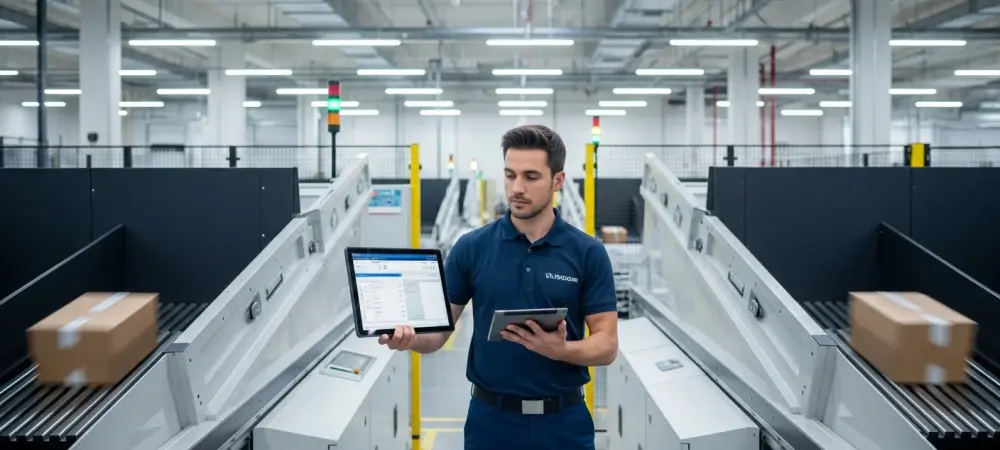
The relentless pressure of holiday fulfillment cycles acts as a ruthless industrial lie detector that separates genuine technological innovation from superficial laboratory demonstrations. During these high-stakes periods, the theoretical efficiency of a robotic arm or an autonomous mobile robot is secondary to its ability to survive the chaotic reality of a saturated warehouse floor. While many systems perform flawlessly in the sterile, controlled environments of a vendor’s headquarters, the actual value of automation is only confirmed when it faces the unpredictable surges of a peak season. These surges push hardware and software beyond their design limits, revealing whether a system is truly production-ready or merely an expensive experiment.
Evaluating Robotic Viability Amidst Extreme Operational Surges
Peak season creates a unique operational crucible where the primary objective shifts from optimizing individual tasks to maintaining an unbroken chain of throughput. In a controlled pilot program, engineers often curate the conditions to ensure success, selecting specific stock-keeping units that are easy to handle or maintaining a pristine environment. However, when volume spikes during a surge, these curated conditions vanish. Robotic systems must then contend with overflowing aisles, damaged packaging, and an influx of diverse product profiles that they may not have encountered during initial training phases.
Maintaining accuracy under such duress is the core challenge for modern automation. When a system encounters a high-pressure volume spike, even a minor drop in precision can lead to systemic backups. If a robot misidentifies an item or fails to navigate a crowded path, the resulting delay ripples through the entire facility, often requiring human intervention that negates the intended labor savings. Consequently, the ultimate metric for viability during these surges is not just the speed of the robot, but its ability to remain resilient amidst the chaotic environmental variables that characterize real-world logistics.
The Rising Stakes of Automation in Modern Logistics
The landscape of industrial automation is currently undergoing a massive transformation, with record-breaking surges in robot installations across the United States. This year alone, the industry expects approximately 45,000 new industrial robot installations, driven by a strategic shift toward reshoring and the democratization of advanced technology. Smaller operators now have access to automation that was once the exclusive domain of global retail giants, making the reliability of these systems more critical than ever. As labor shortages persist and consumer expectations for rapid delivery intensify, the pressure to deploy dependable robotics has reached a fever pitch.
A significant portion of this growth is occurring in brownfield facilities—existing warehouses that were never originally designed for autonomous systems. Proving that robotics can function reliably within these legacy structures during peak periods is essential for the long-term survival of supply chain operators. In these environments, the margins for error are razor-thin, and the failure of a new technological implementation during a peak window can result in devastating financial losses. Therefore, the transition from experimental adoption to standard operating procedure depends entirely on the technology’s performance during these extreme operational windows.
Research Methodology, Findings, and Implications
Methodology
The evaluation of robotic performance was conducted by shifting the focus from simple demonstration-state variables to production-readiness metrics. This involved a rigorous assessment of how systems behave when transitioned from sanitized pilot environments to the long tail of exceptions found in legacy warehouse settings. The study prioritized the tracking of “mean time between interventions” rather than just “up-time,” providing a clearer picture of how much human labor is actually required to sustain robotic operations during high-volume periods.
Additionally, the research involved a deep dive into the integration strategies between modern robotic hardware and legacy Warehouse Management Systems. By analyzing the communication lag and data reconciliation errors that occur when these two disparate technologies attempt to synchronize, the study identified critical friction points. Researchers monitored real-time material flow across multiple facilities, comparing the performance of facilities using traditional manual processes against those employing various levels of robotic integration during the busiest weeks of the year.
Findings
The investigation revealed that reliability is fundamentally a product of environmental interaction rather than just mechanical durability. On brownfield sites, small technical blips—such as a momentary loss of wireless connectivity or a slight misalignment with a legacy conveyor—often compounded into systemic failures when volume increased. It was found that systems lacking formal automated resolution workflows often ended up redirecting human labor toward “rescuing” robots rather than performing high-value fulfillment tasks.
Furthermore, the data highlighted that inaccuracies in item master data within legacy systems served as a primary source of friction. Human workers possess the intuition to compensate for missing dimensions or incorrect weight data, but robotic systems often hit a functional wall when faced with such discrepancies. When volume was low, manual data bridges could manage these errors; however, under high volume, these bridges collapsed. This created a situation where the automation was physically capable of moving the goods, but the underlying data infrastructure was insufficient to support the necessary decision-making speed.
Implications
These findings necessitate a shift in how the industry measures success, moving away from robot-specific uptime toward the measurement of total material flow and predictable degradation. If a system is going to fail or slow down, it must do so in a way that does not bring the entire operation to a standstill. Designers must begin treating exception handling as a formal, integrated workflow. Keeping humans “in the loop” should be a deliberate strategy rather than an emergency response, ensuring that the automation cycle remains fluid even when the robot encounters a situation it cannot resolve autonomously.
Moreover, there is a clear requirement for high-fidelity, real-time data reconciliation to bridge the gap between human intuition and robotic precision. To move forward, companies must invest as much in their data cleanliness and integration layers as they do in the physical robotic hardware. Without a robust data foundation, even the most advanced autonomous mobile robot will struggle to maintain the continuity of material flow required to survive a modern peak season. This realization is pushing the industry toward a more holistic view of automation as a synchronized ecosystem of software, data, and hardware.
Reflection and Future Directions
Reflection
Looking back at the trajectory of the industry, there was a visible disconnect between speculative automation experiments and the development of robust industrial tools. Many organizations initially viewed robotics as a plug-and-play solution, failing to account for the complexity of reconciling batch logic—a staple of legacy systems—with the real-time needs of autonomous hardware. The transition from successful small-scale pilots to scalable production proved to be far more difficult than many anticipated, primarily because the pilots rarely accounted for the sheer volume of exceptions generated during a surge.
The challenges encountered highlighted that the goal of automation should not be the total removal of humans, but the creation of a system where human intelligence is leveraged most effectively. Successful implementations were those that recognized the necessity of a collaborative environment, where the system could flag an issue and a human could resolve it remotely or locally without disrupting the entire facility’s rhythm. This shift in thinking marked the beginning of a more mature era in logistics technology.
Future Directions
The next phase of evolution will likely involve the development of AI-driven self-healing systems that can autonomously resolve data discrepancies and physical anomalies. By leveraging machine learning, future robots could potentially predict when an environment is becoming too chaotic and adjust their behavior or pathing in real-time to avoid a total stoppage. This proactive approach would move the industry away from reactive troubleshooting and toward a state of constant, optimized flow, regardless of the volume level.
In addition to internal intelligence, there is a growing need for more flexible API frameworks that allow for seamless, real-time synchronization between legacy infrastructure and next-generation robotics. Investigation into standardized communication protocols will be essential to ensure that a diverse fleet of robots from different vendors can operate harmoniously within a single facility. As these technological bridges become more sophisticated, the gap between the speed of digital information and the movement of physical goods will continue to shrink, leading to a more resilient global supply chain.
Transitioning from Experimental Automation to Dependable Industrial Capability
The high-pressure environment of peak season ultimately exposed the fragility of demo-ware while validating the strength of production-ready systems. It was observed that the most successful systems were those designed with the understanding that perfection is impossible in a warehouse. These robust systems did not just perform well under ideal conditions; they excelled because they possessed the internal logic to handle errors, the integration to understand their surroundings, and the reliability to keep moving when the workload tripled. The industry learned that the maturation of robotics depends on shifting the focus from individual robot performance to the continuity of the entire material flow.
Through the rigorous testing provided by operational surges, it became clear that the most valuable robotic assets were those that provided predictable results under stress. When the business was most vulnerable, these systems transformed from a source of operational anxiety into a dependable capability that carried the load. The focus moved toward creating an ecosystem where data and physical motion were perfectly synchronized, ensuring that the warehouse could breathe even during the most suffocating volume spikes. Ultimately, the lessons learned during these intense periods paved the way for a more stable and efficient future for the entire logistics sector.