
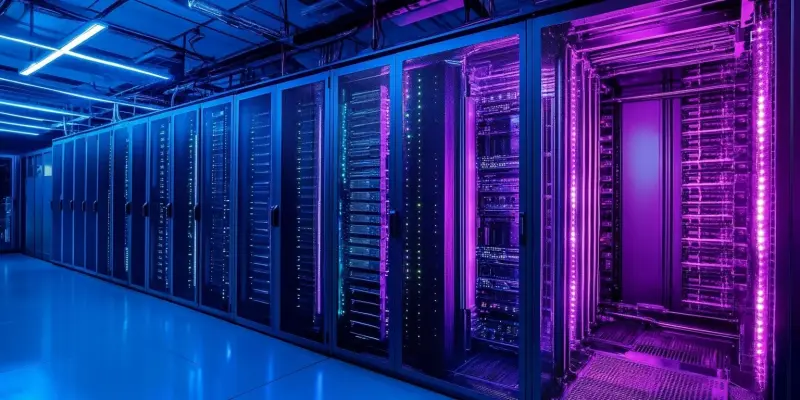
Patrizia and CenterSquare Invest in Aligned Data Centers’ Expansion

Article Highlights
Off On

In an era where the demand for digital infrastructure is skyrocketing, Patrizia and CenterSquare have strategically invested in Aligned Data Centers. This boost aims to support Aligned’s ambitious 5-gigawatt build-out, an endeavor crucial for meeting the expanding needs of digital economy entities. Although the exact financial details remain undisclosed, it is evident that this investment will significantly enhance Aligned’s previously announced commitments of $5 billion in equity and $7 billion in debt from January. James Muir of Patrizia underscored the immense potential of the investment, emphasizing how data centers play a pivotal role in the digital economy’s ecosystem. The move aligns with CenterSquare’s ongoing strategy to focus on high-growth real estate sectors, a point highlighted by Todd Briddell.

Expanding Data Center Capacity in the Americas

Aligned Data Centers has established a significant presence across the United States, with data campuses in Chicago, Dallas, Phoenix, Salt Lake City, and Northern Virginia. Expanding further, Aligned is developing new sites in Maryland, Ohio, Illinois, and Virginia. On the international front, Aligned expanded its reach by acquiring OData in Latin America. This acquisition adds Brazil, Chile, Colombia, and Mexico to its portfolio. Furthermore, the company holds a strategic investment in the Canadian company QScale, enhancing its North American operations.

Recently, Aligned secured a $12 billion funding round led by Macquarie Asset Management, its largest shareholder. This round drew participation from various unnamed global investors, reflecting confidence in Aligned’s growth strategy and underscoring the rising demand for data infrastructure. The collaboration between Patrizia, CenterSquare, Macquarie, and other investors strengthens Aligned’s market position and emphasizes capturing long-term value through capacity expansion.

In summary, substantial investments from Patrizia and CenterSquare in Aligned highlight the importance of strategic partnerships in a tech-driven world. This move reinforces the need for continuous growth and innovation to meet increasing digital demands. With significant backing and clear strategies, Aligned is well-positioned to play a crucial role in the digital economy’s infrastructure, ensuring it can meet future needs efficiently.

Explore more

How Firm Size Shapes Embedded Finance Strategy

The rapid transformation of mundane business platforms into sophisticated financial ecosystems has effectively redrawn the competitive boundaries for companies operating in the modern economy. In this environment, the integration of banking, payments, and lending services directly into a non-financial company’s digital interface is no longer a luxury for the avant-garde but a baseline requirement for economic viability. Whether a company

What Is Embedded Finance vs. BaaS in the 2026 Landscape?

The modern consumer no longer wakes up with the intention of visiting a bank, because the very concept of a financial institution has migrated from a physical storefront into the digital oxygen of everyday life. This transformation marks the definitive end of banking as a standalone chore, replacing it with a fluid experience where capital management is an invisible byproduct

How Can Payroll Analytics Improve Government Efficiency?

While the hum of a government office often suggests a routine of paperwork and protocol, the digital pulses within its payroll systems represent the heartbeat of a nation’s economic stability. In many public administrations, payroll data is viewed as little more than a digital receipt—a record of transactions that concludes once a salary reaches a bank account. Yet, this information

Global RPA Market to Hit $50 Billion by 2033 as AI Adoption Surges

The quiet hum of high-speed data processing has replaced the frantic clicking of keyboards in modern back offices, marking a permanent shift in how global businesses manage their most critical internal operations. This transition is not merely about speed; it is about the fundamental transformation of human-led workflows into self-sustaining digital systems. As organizations move deeper into the current decade,

New AGILE Framework to Guide AI in Canada’s Financial Sector

The quiet hum of servers across Canada’s financial heartland now dictates more than just basic transactions; it increasingly determines who qualifies for a mortgage or how a retirement fund reacts to global volatility. As algorithms transition from the shadows of back-office automation to the forefront of consumer-facing decisions, the stakes for oversight have never been higher. The findings from the