

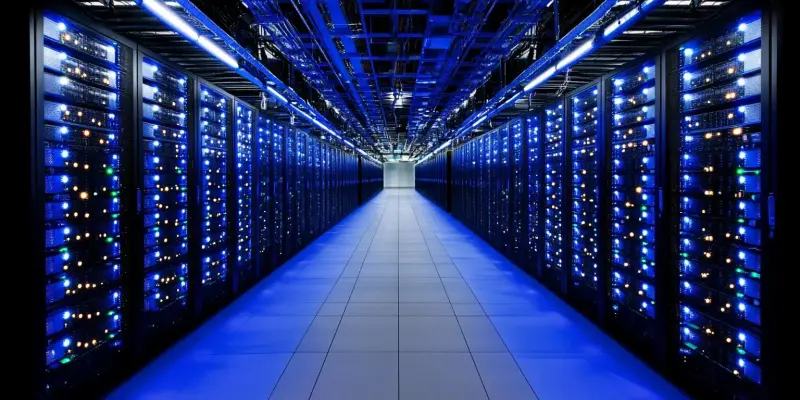
The increasing demand for data center capacity, driven by the rise of Artificial Intelligence (AI) applications, has led to heightened energy consumption, which reinforces the necessity for the data center industry to contribute significantly to a carbon-neutral future. The journey towards carbon neutrality in data center operations is complex, involving multiple factors such as construction materials, energy consumption, investment in renewable energy, and efficiency improvements. As the industry continues to grow, achieving carbon neutrality becomes a multifaceted challenge that requires strategic planning and substantial efforts.
The Challenge of Embodied Carbon in Construction
Data center buildings, by their very nature, cannot be carbon neutral due to the significant amount of embodied carbon present in the construction materials and processes. The construction of a data center involves extensive use of materials like steel and cement, which result in high carbon emissions during their raw material extraction, manufacturing, and transportation stages. This substantial carbon footprint necessitates a redefined goal, focusing on whether the net impact of a data center can be carbon neutral over time and how rapidly this can be achieved, rather than expecting the building itself to be carbon neutral.
Carbon neutrality is generally defined as the objective of reducing net human-caused greenhouse gas (GHG) emissions to zero. Although the physical infrastructure of a data center cannot achieve carbon neutrality by itself, efforts to capture carbon or reduce GHGs elsewhere, particularly through innovative electricity generation methods, can offset these emissions. Essentially, the operational aspects of data centers have the potential to compensate for the emissions from their physical structures through alternative strategies that contribute to the reduction of overall environmental impact.
Compensating for Carbon Emissions
To stride towards carbon neutrality in data center operations, it’s imperative that developers and operators compensate for the carbon cost of both construction and the energy used throughout a data center’s lifecycle. This can be done by initiating actions that prevent GHG generation in other sectors. Historically, data center operators have sought to offset their emissions by purchasing carbon credits. However, this approach has faced critique and is not deemed a sufficiently effective long-term solution. The growing consensus within the industry calls for more direct and substantial efforts to curtail environmental impacts meaningfully.
One theme traversing these efforts is the investment in sustainable power. Data center operators and cloud companies are increasingly exploring ways to have a positive environmental impact by investing in sustainable power sources. This endeavor not only helps secure the necessary power to run their operations but also fosters the development of additional renewable energy sources, thereby reducing reliance on fossil fuels. A collaborative and strategic investment in sustainable energy provision is key to reducing the carbon footprint of data center operations comprehensively.
Power Purchase Agreements and Renewable Energy Investments
Among the methods geared towards carbon neutrality is the adoption of Power Purchase Agreements (PPAs). Through PPAs, data center operators commit contractually to purchasing renewable power, which in turn funds the development of new renewable energy sources. This initiative helps to curtail the need for energy from fossil fuel sources. Despite the theoretical effectiveness of PPAs, practical implications show that they often lead to green power being rerouted from other potential users such as residential sectors, mainly because the development rate of sustainable power cannot keep up with the growing demand.
Hyperscalers, which are large-scale cloud service providers (CSPs), have undertaken more direct actions by investing in renewable energy projects and associated companies. This proactive stance allows them to ensure future power supplies by committing to consume portions of the newly generated capacity. Often, these CSPs prefer projects located closer to their data centers to minimize transmission challenges and associated costs. However, situations where renewable energy sources are not geographically proximate to the data centers bring about significant transmission network challenges, necessitating a re-evaluation of current infrastructure strategies.
Transmission Network Challenges and Government Policies
In dealing with transmission network challenges, some major CSPs have begun lobbying governments to permit them the authority to build their own transmission networks, with Ireland highlighted as a prime example. However, the classification of electricity grids as national security assets and critical infrastructure complicates this developmental pathway. Despite the high capital investment required for power infrastructure, hyperscalers benefit from controlling their entire supply chain, from energy generation to consumption. This control allows them to minimize challenges in managing their power dependencies.
In contrast, it is unrealistic to expect smaller data center operators to influence government policy or invest at the level of larger CSPs. Without the financial and political clout held by major CSPs, smaller operators face difficulties in achieving similar influence and impact. To address the increasing energy consumption and meet sustainability commitments, developers must assure their hyperscale customers of their dedication to environmental goals. However, this is increasingly challenging for those without the financial capacity to directly invest in renewable energy generation.
Collaborative Efforts and Innovative Operational Practices
The industry might see a potential future model where hyperscale CSPs collaborate differently with operators. Within this model, operators would focus on building the data center infrastructure, while CSPs would supply the renewable power. This collaborative approach aims to streamline efforts towards carbon neutrality, enabling CSPs to manage their supply chains more effectively and reflect clean power usage in their sustainability reports. Such partnerships could enhance the capabilities of data centers in achieving their environmental goals more feasibly and systematically.
Acknowledging the significant efficiency improvements in data centers over the past two decades, the article also highlights that further advancements yield diminishing returns over time. As the growth in data center usage accelerates, relying solely on efficiency improvements is insufficient to control escalating energy usage. One suggested innovative approach to achieve additional energy savings is by increasing operating temperatures in data halls. Implementing this measure requires leadership from major cloud operators and could deliver substantial energy savings across the sector, although it has not yet been widely adopted.
Commitment to Sustainable Development
The increasing demand for data center capacity, driven by the expansion of Artificial Intelligence (AI) applications, has significantly elevated energy consumption. This surge underscores the urgent need for the data center industry to play a crucial role in supporting a carbon-neutral future. The path to achieving carbon neutrality within data center operations is intricate and involves several critical factors. These include the selection of construction materials, managing energy consumption, investing in renewable energy sources, and enhancing operational efficiencies. As the industry continues to expand, the challenge of reaching carbon neutrality becomes increasingly complex and multifaceted. Success in this endeavor requires meticulous strategic planning and substantial efforts from all stakeholders. By addressing these varied aspects, the industry can move toward a more sustainable and environmentally friendly future, balancing growth with ecological responsibility.