

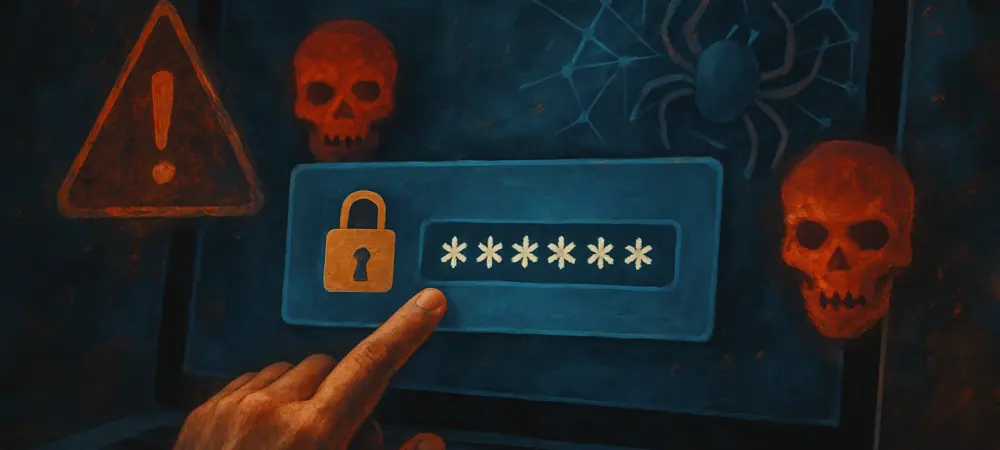
Navigating the Digital Lock: Why Passwords Matter
In an era where cybercrime costs are projected to reach staggering heights, a single weak password can unlock catastrophic consequences for individuals and organizations alike, highlighting the urgent need for robust security measures. Consider the chilling reality that billions of breached credentials circulate on dark web forums, waiting to be exploited by hackers through simple guessing or sophisticated attacks. This review delves into the critical realm of password security, exploring how this foundational technology continues to shape digital defenses in 2025, amidst evolving threats and user behaviors that often undermine its effectiveness.
The significance of robust password practices cannot be overstated in a landscape where data breaches expose sensitive information daily. From personal accounts to corporate systems, passwords remain the first line of defense against unauthorized access. Yet, their strength is frequently compromised by human error, making an in-depth analysis of current trends and solutions not just timely, but essential for safeguarding digital assets.
Analyzing the Core of Password Security
Historical Context and Persistent Flaws
Password technology emerged as a basic authentication mechanism in early computing systems, relying on simplistic strings that offered minimal protection. These rudimentary safeguards were quickly outpaced by cybercriminals who exploited predictable patterns and weak storage methods. Even today, the echoes of these early vulnerabilities linger, as many users and systems fail to prioritize complexity or encryption in password implementation.
The evolution of threats has exposed how foundational flaws in password design—such as lack of length or character diversity—continue to plague security frameworks. Historical breaches have demonstrated that without enforced policies, users often default to easily guessable terms, setting the stage for modern attacks like credential stuffing. This persistent gap between technology capability and user behavior forms a critical area of concern in password security assessments.
Modern Features and Implementation Challenges
Today’s password systems often incorporate requirements for length, special characters, and mixed cases, driven by heightened awareness of cyber risks. Organizations increasingly mandate these complex structures to fortify defenses, yet the user experience frequently suffers as a result. Remembering intricate passwords across multiple platforms becomes a daunting task, leading to workarounds that negate the intended security benefits.
Technical limitations also hinder effective deployment of strong password policies in some environments. Legacy systems may not support advanced encryption or multi-factor authentication integrations, leaving gaps that attackers exploit with ease. Moreover, the balance between security and usability remains elusive, as overly strict rules can frustrate users and prompt insecure habits like writing down passwords.
A significant trend in 2025 reveals that despite available technology, many still opt for convenience over safety, reusing passwords across accounts. Reports analyzing billions of breached credentials highlight that common choices like “12345” or “admin” dominate lists of compromised passwords, underscoring a disconnect between policy and practice. This persistent issue challenges the efficacy of password security as a standalone solution in digital protection.
Performance Against Cyber Threats
When evaluated against current cybercriminal tactics, password security often falls short due to predictable user patterns. Techniques such as phishing scams and infostealer malware target human vulnerabilities, bypassing even well-designed systems when users fall prey to deception. The widespread availability of stolen credential lists on illicit forums further amplifies the risk, enabling attackers to test vast combinations with minimal effort.
Real-world incidents paint a stark picture of password technology’s performance under pressure. High-profile breaches, such as one involving a prestigious museum where the password was simply the institution’s name, reveal how basic oversights can lead to monumental losses. These cases highlight that without robust implementation and user education, passwords remain a weak link in cybersecurity chains across industries like finance and healthcare.
The ongoing battle against password reuse also hampers performance metrics for this technology. Despite tools and guidelines promoting unique credentials for each account, many prioritize memorability, exposing multiple systems to risk from a single breach. This trend suggests that while password systems have advanced in theory, their real-world effectiveness hinges on addressing human factors alongside technical design.
Reflecting on Password Security’s Impact
Looking back, this exploration of password security underscores its pivotal yet problematic role in digital defense during 2025. The technology, while equipped with features to enforce complexity and resist brute-force attacks, stumbles against the backdrop of user complacency and evolving cyber threats. High-profile failures serve as sobering reminders that even the most iconic institutions are not immune to basic lapses in password practices.
Moving forward, the path to stronger digital safeguards demands a shift beyond traditional passwords toward innovative alternatives like passkeys and biometric authentication. Embracing password managers to generate and store unique, complex credentials emerges as a practical step for immediate improvement. These tools, coupled with sustained efforts to educate users on secure habits, offer a tangible way to bridge the gap between technology and behavior.
As cyber threats continue to adapt, a proactive stance becomes imperative for both individuals and organizations. Investing in layered authentication methods and staying abreast of emerging security solutions promises to fortify defenses against future risks. The journey of password security, while fraught with challenges, points to a horizon where integrated, user-friendly technologies could redefine trust in the digital realm.