

Security concerns regarding public networks have been addressed through scoped guest environments that separate user traffic from sensitive internal business data. This fundamental shift has redefined how municipalities and enterprises view the patch of sky above their physical properties. In the past, providing a wireless signal in a park or a transit hub was seen as a generous but expensive utility, often plagued by slow speeds and constant disconnects. However, the current landscape in 2026 reveals a sophisticated integration of high-speed connectivity and strategic data harvesting. Modern outdoor Wi-Fi deployments are no longer just about the convenience of checking an email while sitting on a bench; they have become the primary digital interface between the physical world and the digital consumer. By moving beyond basic internet access, organizations are now utilizing these coverage areas to build profiles of user engagement, transforming every device into a valuable data point that informs future business decisions and growth strategies.
The Economic Value: From Hardware to Behavioral Insights
While the global market for outdoor networking hardware continues to grow steadily from 2026 to 2030, the real financial explosion is occurring in the software and analytics layer that sits atop these systems. Industry analysts now project that the secondary market for behavioral insights will soar to over $71 billion by 2034, far outstripping the revenue generated by the sale of physical routers and antennas. This valuation gap highlights a critical realization for stakeholders: the infrastructure is a vehicle, but the data is the fuel. Businesses are moving away from viewing Wi-Fi as a cost center and are instead treating it as an investment in intelligence. By analyzing foot traffic patterns and dwell times in outdoor venues, companies can refine their operational strategies with precision. This shift is evident in large-scale recreational zones where the ability to track how a crowd moves through a space provides actionable value that hardware alone cannot offer to the modern enterprise. The monetization of these insights has created a self-sustaining ecosystem where the network pays for its own expansion through increased operational efficiency and targeted marketing. In the current economic climate, the return on investment for a high-density outdoor network is measured in seconds of engagement and the depth of customer loyalty. Organizations that once struggled to justify the expense of outdoor cabling and weatherized access points now see these projects as essential for capturing the behavior of their audience. When a user connects to a public network, they provide a digital breadcrumb trail that reveals their preferences without the need for invasive tracking methods. This allows venue operators to offer personalized promotions or adjust staffing levels in real-time based on actual demand rather than historical estimates. The network has evolved into a powerhouse of economic activity, where every bit of data collected translates into a distinct competitive advantage in an increasingly crowded global digital marketplace.
Technical Resilience: Conquering Environments and Engaging Users
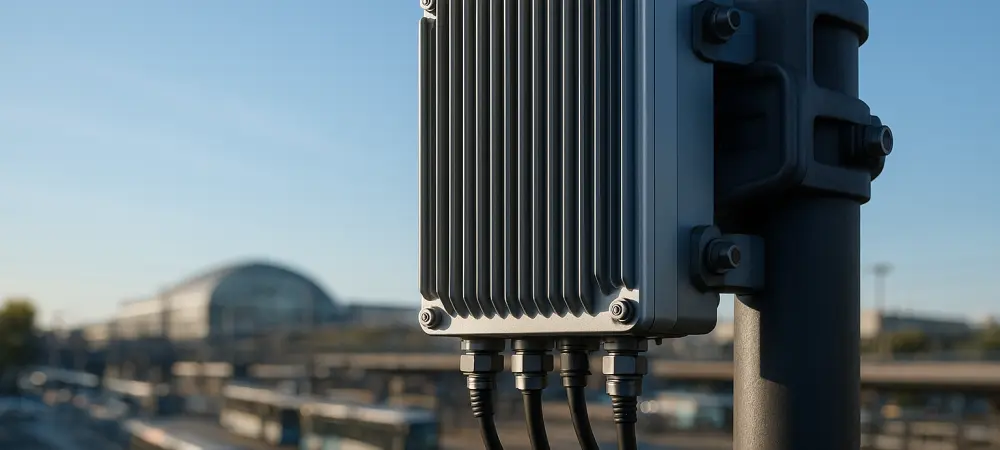
Overcoming the physical challenges of the natural environment has required a radical reimagining of how wireless hardware is designed and deployed in open-air settings. Historically, outdoor equipment was prone to failure due to moisture ingress, temperature fluctuations, and the steady degradation caused by intense ultraviolet radiation. Today, however, the industry has standardized on IP67-rated enclosures that provide a total seal against dust and allow for temporary immersion in water without damage to the internal electronics. These advancements ensure that connectivity remains stable even in the most hostile climates, from scorching desert environments to humid coastal regions. Furthermore, the development of specialized thermal management systems prevents internal components from overheating when exposed to direct sunlight for extended periods. This level of ruggedization has moved outdoor Wi-Fi from a fragile experimental phase into a dependable utility that matches the reliability of indoor office networks regardless of the external weather.
The implementation of advanced outdoor networking successfully resolved the tension between providing free access and maintaining high security. Decision-makers who moved early to adopt Wi-Fi 7 protocols found that the increased spectral efficiency allowed for a wider range of simultaneous high-bandwidth applications, such as augmented reality tours and real-time environmental monitoring. These organizations learned that the most effective strategy involved treating the network as a living data asset rather than static hardware. As a result, the focus shifted toward integrating AI-driven analytics that could predict crowd surges before they occurred, allowing for proactive resource allocation. By looking toward future-proof designs, including solar-powered nodes and modular upgrades, the industry ensured that these installations remained relevant for years. Ultimately, the successful transition to a data-centric model proved that the true value was found in the ability to anticipate user needs through the lens of continuous, high-quality connectivity.