

Introduction A Crack in the AI Infrastructure Boom
The relentless march of artificial intelligence, powered by gargantuan data centers, just encountered an unexpected and formidable obstacle in the form of investor caution. In a stunning development that sent ripples through the tech industry, asset manager Blue Owl Capital has withdrawn its financial backing from a landmark $10 billion AI data center project with Oracle. This move is far more than a simple deal falling through; it represents a significant crack in the foundation of the AI infrastructure boom.
The event highlights a growing financial scrutiny that is beginning to temper the industry’s unbridled enthusiasm. For months, the narrative has been one of exponential growth and limitless investment in the digital backbone required to power generative AI. However, Blue Owl’s exit suggests that the era of blank-check spending may be drawing to a close, replaced by a more sober assessment of the colossal costs and inherent risks involved in this capital-intensive arms race.
Project Background The High Stakes Michigan Data Center
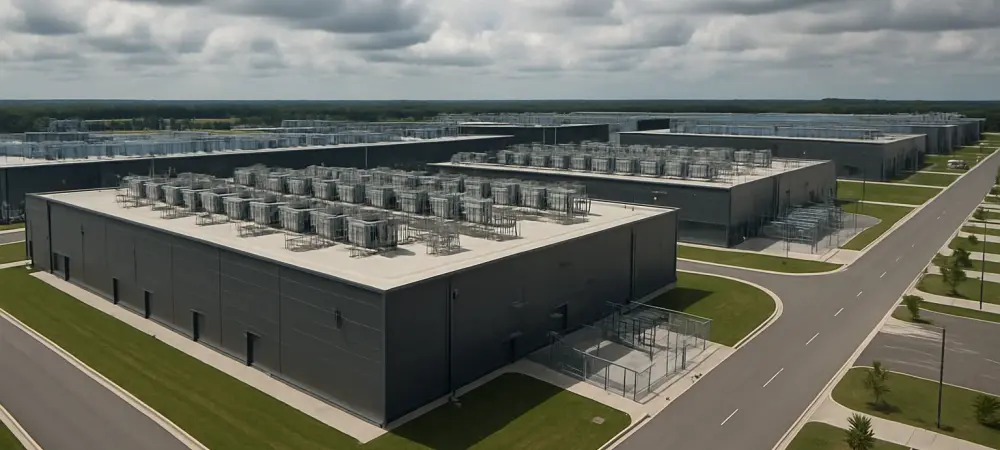
At the heart of this financial drama is a project of immense scale and strategic importance: a proposed $10 billion, one-gigawatt data center campus in Saline Township, Michigan. This facility was not just another server farm but a critical pillar in the global AI infrastructure, designed to meet the voracious computational demands of next-generation artificial intelligence models. Its advanced design, featuring a water-reducing closed-loop cooling system, underscored its forward-looking and ambitious nature.
The project’s significance was further amplified by its connection to some of the biggest names in technology. It was slated to be a key component of OpenAI’s “Stargate” initiative, a multi-year plan to build the supercomputing power needed for future AI breakthroughs. The partnership between technology titan Oracle and developer Related Digital was meant to bring this vision to life, making the Michigan campus a nexus of innovation and a symbol of the industry’s collaborative push into the future.
The Deal Collapses Unpacking the Financial Strain
The decision by Blue Owl Capital, once Oracle’s largest data center partner, was not made in a vacuum. It was the culmination of stalled negotiations and mounting unease among lenders who were beginning to balk at the sheer magnitude of the investment required. The financial ground beneath the AI gold rush appears to be shifting, with once-eager investors now taking a more cautious stance.
Shifting Market Sentiment
A core driver behind the collapsed deal was a palpable change in market sentiment. Lenders who were previously clamoring to fund AI-related projects have become increasingly wary of the astronomical costs associated with building out this infrastructure. The initial excitement is now tempered by a more rigorous analysis of long-term profitability and risk, leading to stalled negotiations as financiers began to question the sustainability of such massive capital outlays. This growing caution reflects a broader market realization that while the potential of AI is immense, the path to monetizing these vast and expensive data centers is not yet guaranteed. Consequently, the terms for financing are tightening as the financial community demands a clearer picture of returns before committing billions of dollars.
Spotlight on Oracle’s Debt
Compounding the general market anxiety were specific concerns centered on Oracle’s own financial health. The company’s rapidly increasing debt, which had ballooned to an eye-watering $105 billion, became a significant red flag for investors. This substantial liability raised questions about Oracle’s capacity to service its existing obligations while simultaneously taking on massive new financing for capital-intensive projects.
For lenders, this debt load made the prospect of extending further credit a much riskier proposition. It transformed what might have been a straightforward financing deal into a high-stakes gamble, prompting a deeper level of due diligence and ultimately contributing to the decision to step back.
Demand for Stricter Terms
As a direct consequence of both the shifting market sentiment and Oracle’s debt, lenders began pushing for more stringent financing conditions. The environment had become far less tolerant of risk, and investors were demanding tougher debt and leasing covenants to protect their capital. This included calls for stronger guarantees, higher interest rates, and more favorable terms that would shift a greater share of the risk onto Oracle and its partners. These demands reflected a fundamental power shift, where financiers, now in a stronger negotiating position, were no longer willing to offer the lenient terms that characterized the earlier phase of the AI boom.
Oracle’s Official Stance and a New Financial Lifeline
In response to the news, Oracle projected an air of strategic control rather than financial distress. The company’s official statement framed the departure of Blue Owl not as a failure but as a deliberate business decision made by its development partner, Related Digital. According to Oracle, Related Digital simply chose the “best equity partner from a competitive group,” suggesting the change was part of a planned and orderly process to secure the most favorable terms.
While one door closed, another appears to be opening. Following Blue Owl’s exit, private equity giant Blackstone has reportedly entered into discussions to become the new financier for the Michigan project. Although a final deal has not yet been confirmed, Blackstone’s involvement provides a potential lifeline. This development indicates that while the pool of willing investors may be shrinking, there are still major players with the capital and risk appetite to back these monumental AI infrastructure projects.
A Pattern of Pressure for the Tech Giant
This financing setback does not exist in isolation; it adds to a series of recent challenges for Oracle that suggest a period of mounting pressure. Not long ago, the company’s stock experienced a surprising 10% drop, a move that puzzled analysts given its otherwise strong earnings report. This market reaction hinted at underlying investor concerns about the company’s long-term strategy and its ability to execute on its ambitious AI promises.
Furthermore, reports have surfaced about delays on other Oracle data center projects, reinforcing the narrative that the practical reality of building at this scale is proving more complex and costly than anticipated. Together, these events paint a picture of a tech giant grappling with the immense operational and financial hurdles of competing at the highest level of the AI arms race, where even minor stumbles are magnified under the market’s watchful eye.
Reflection and Broader Impacts
The fallout from the collapsed deal offers a critical moment of reflection for Oracle and carries significant implications for the wider technology industry. It serves as a clear indicator that the financial landscape supporting the AI revolution is undergoing a fundamental transformation, moving from unbridled optimism to a more measured and disciplined approach.
Reflection
For Oracle, this situation crystallizes its central dilemma. The company’s strength lies in its bold vision and its aggressive push to build out a world-class AI infrastructure capable of competing with the industry’s biggest players. Its ambition is clear, and its strategic direction is aimed squarely at capturing a significant share of the future of computing.
However, its primary challenge is equally clear: the immense capital required to fund this vision. The intense scrutiny of its significant debt load has become a major obstacle, forcing the company to navigate a precarious path between its long-term goals and the immediate demands of a more cautious financial market.
Broader Impact
Beyond Oracle, this event signals a new phase of financial discipline for the entire AI sector. The era of “growth at all costs” is being replaced by a more mature investment climate where even dominant tech companies face tougher oversight. Investors are no longer content to simply fund the promise of AI; they are now demanding clear, sustainable financial models and a more prudent approach to capital expenditure.
This shift means that the AI gold rush is now subject to the timeless rules of financial accountability. The development underscores a critical turning point where the hype surrounding artificial intelligence is meeting the hard reality of balance sheets, forcing every player in the industry to justify their spending and prove their path to profitability.
Conclusion A Reality Check for the AI Arms Race
The withdrawal of Blue Owl Capital from Oracle’s ambitious data center project was more than a failed negotiation; it was a watershed moment. The episode encapsulated the core anxieties surrounding the AI boom—from shifting market sentiment and skyrocketing costs to the intense scrutiny of corporate debt—and highlighted Oracle’s urgent search for a new financial partner to keep its vision on track.
Ultimately, this development served as a powerful reality check for the entire industry. The immense capital demands of the AI arms race finally forced a new era of financial prudence, a change that reshaped the strategies of even the industry’s biggest players. It was a clear signal that ambition alone was no longer enough; in the quest to build the future of intelligence, sound financial footing had become the most critical asset of all.