

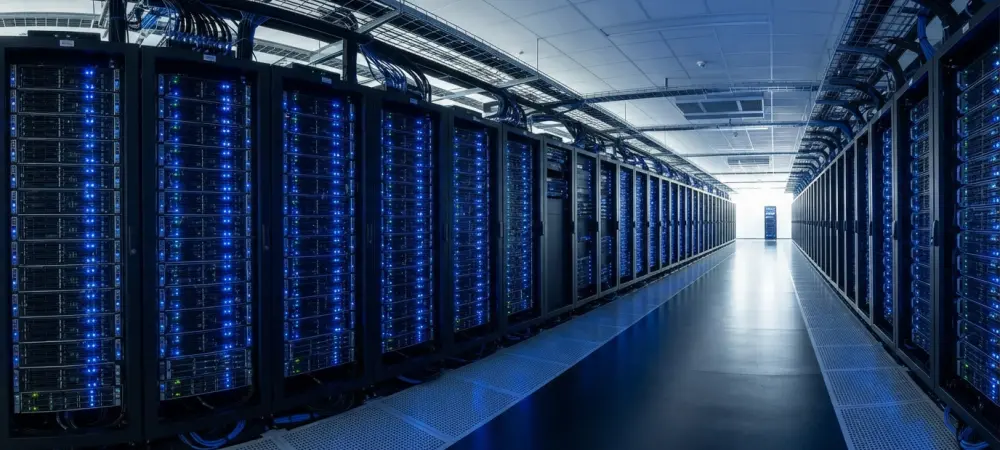
By the time the integration is complete in 2027, Oracle Cloud Infrastructure will offer a unique competitive edge by providing a choice of leading hardware options within a single cloud environment. This partnership represents a monumental shift in how hyperscale providers interact, moving away from closed ecosystems toward a more fluid, interoperable future. The decision to embed Google’s proprietary Tensor Processing Units into Oracle’s data centers addresses a critical bottleneck for developers who previously had to jump between disparate platforms to access specific silicon. As the industry moves through 2026 and into 2027, the demand for specialized hardware like TPUs has surged, particularly for projects involving frontier model training and massive-scale inference. This strategic alliance allows Oracle to host these advanced accelerators while providing the high-speed networking and power density required to run them effectively. It signals a new era where the availability of diverse compute resources is the primary differentiator in the enterprise cloud market.
Technical Foundations: Integrated AI Acceleration
The partnership introduces two distinct TPU architectures into the OCI portfolio, namely the TPU 8t and the TPU 8i. The TPU 8t is specifically engineered to handle the rigorous demands of training foundational models, offering significant performance gains for workloads that require massive parallel processing across thousands of nodes. On the other hand, the TPU 8i focuses on high-efficiency inference, making it ideal for the deployment of real-time applications where latency and cost are the most pressing concerns. These specialized chips are designed to optimize the performance-to-cost ratio, allowing engineering teams to scale their operations without seeing a proportional spike in their monthly expenditure. By integrating these systems directly into OCI, Oracle provides a seamless experience for those utilizing large-scale machine learning frameworks, ensuring that the hardware is physically located close to existing data storage and database services for minimal data transfer latency.
Supporting such high-performance hardware requires more than just installation; it necessitates a sophisticated physical and digital infrastructure. Oracle provides the necessary power management, advanced cooling systems, and low-latency networking fabrics that are essential for maintaining the stability of TPU clusters. This environment is particularly conducive to running mixture-of-experts architectures and long-context reasoning models, which have become the standard for agentic AI systems developed during 2026. Because these AI models require frequent communication between processing units, the underlying network performance of OCI plays a vital role in preventing data bottlenecks. Customers can now orchestrate complex workflows that leverage both standard GPUs and Google’s TPUs within the same virtual private cloud, simplifying the management of hybrid compute environments. This level of hardware choice ensures that enterprises can tailor their infrastructure to the specific mathematical requirements of their unique algorithms.
Strategic Shifts: Enterprise Cloud Procurement
Efficiency has become a central pillar of the cloud strategy as the energy requirements of modern data centers continue to escalate globally. The integration of TPUs into Oracle’s ecosystem provides a clear path toward better energy management, as these units are specifically designed to deliver more processing power per watt compared to general-purpose hardware. This efficiency is not merely a sustainability goal but a financial necessity for corporations running massive AI deployments around the clock. As enterprises evaluate their long-term infrastructure needs, the ability to select the most efficient chip for a specific task—be it training a large language model or serving millions of API calls—offers a significant competitive advantage. This partnership reflects a maturing market where the novelty of AI has been replaced by a focus on the economic feasibility of production-ready systems. By offering a one-stop shop for diverse silicon, Oracle positions itself as the preferred vendor for organizations that prioritize performance and fiscal responsibility.
The alliance between these two giants established a new framework for cloud interoperability that fundamentally changed how architects approached system design. By moving past the traditional boundaries of proprietary hardware, the industry moved toward a model where the specific needs of the workload dictated the infrastructure choice rather than the limitations of the provider. Forward-thinking leaders prioritized the migration of data into environments that supported this heterogeneous compute model, ensuring their teams possessed the flexibility to pivot between different accelerators as new models emerged. To capitalize on these advancements, technical departments began auditing their existing pipelines to identify which stages of the machine learning lifecycle could benefit from the specific performance characteristics of TPUs. These steps ensured that organizations remained agile, avoiding vendor lock-in while maximizing the return on investment for their most complex computational projects. The focus shifted toward building resilient, hardware-agnostic applications that thrived on diversity.