

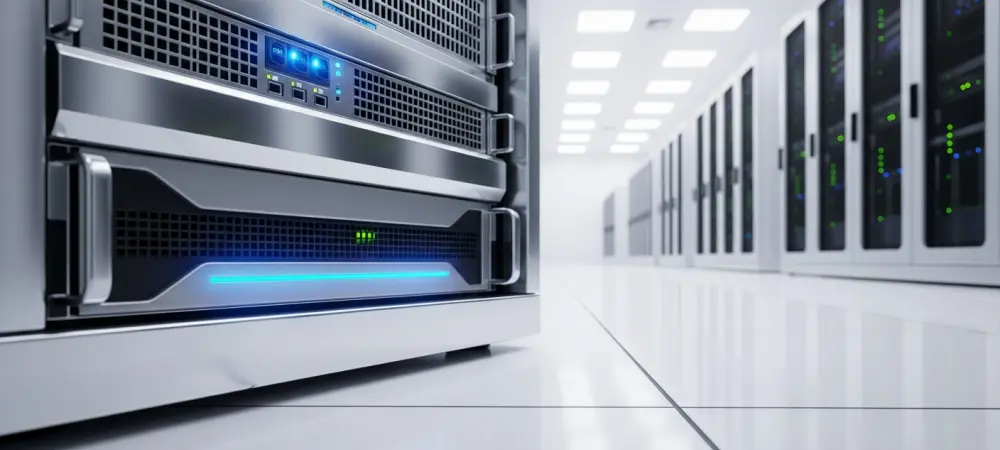
The historical momentum that once pushed nearly every enterprise database toward the centralized public cloud has finally encountered the immovable reality of data sovereignty and processing latency. For years, the digital transformation narrative focused exclusively on moving assets to massive hyperscale data centers. However, the rise of sophisticated artificial intelligence and strict global privacy laws has forced a rethink of this centralized model. Modern organizations find that the distance between where data is generated and where it is processed can mean the difference between a successful real-time application and a costly failure.
The objective of this exploration is to examine how the current technological landscape is adapting to these localized needs through the integration of private AI and hybrid cloud services. By answering the most pressing questions regarding data repatriation and edge computing, this analysis provides guidance for leaders navigating a world where the physical location of data matters as much as the software running it. Readers can expect to learn about the specific hardware and operational shifts that allow for cloud-scale performance within the confines of a private facility.
The scope of this content covers the recent hardware advancements in mid-scale database systems and the specialized software layers that enable private AI model execution. It addresses the challenges of managing distributed infrastructure and compares different market approaches to solving the “last mile” of cloud delivery. Ultimately, this discussion highlights how the fusion of engineered systems and autonomous management is creating a more resilient and flexible digital foundation for the next several years of innovation.
Key Questions: Exploring the Future of Distributed Data
Why Are Modern Enterprises Choosing to Repatriate Their Critical AI Workloads?
The initial rush to the public cloud provided undeniable benefits in terms of agility and cost reduction, but the limitations of that model became apparent as AI became a core business function. Regulatory mandates and data-residency requirements have become increasingly complex, often requiring that sensitive customer information remains within specific geographic borders or even within the physical walls of a company’s data center. For many industries, the risk of moving regulated data across the public internet for AI processing is simply too high, leading to a strategic reassessment of their infrastructure footprint.
This shift is backed by a growing trend of data repatriation, where organizations move workloads out of the public cloud and back to on-premises environments to gain better control. Research shows that nearly four-fifths of organizations have brought at least some AI tasks back into their own facilities to address these concerns. By keeping the data and the processing power in close proximity, companies can satisfy compliance officers while also eliminating the latency that typically plagues long-distance data transmissions. This movement ensures that critical business logic remains fast, secure, and fully under the organization’s jurisdiction.
What Technical Capabilities Define the Private AI Strategy at the Edge?
Private AI represents a fundamental departure from the consumer-grade AI models that rely on massive, centralized datasets held by third parties. Instead, this approach focuses on building and deploying models within a secure perimeter, allowing an organization to leverage its proprietary data without exposing it to the broader public. This is especially vital for the financial and healthcare sectors, where the privacy of the underlying data is a non-negotiable requirement. The goal is to provide the same level of intelligence found in the public cloud but with the ironclad security of a local installation.
To support this strategy, modern systems integrate features like vector search and specialized development tools that allow for the creation of local AI agents. These agents can interact with internal databases in real-time to provide insights, automate workflows, and enhance customer service without the data ever leaving the facility. Moreover, the use of private AI service containers allows for the execution of large language models on-site. By hosting both the model and the data in the same hardware environment, enterprises can achieve a level of operational efficiency and security that was previously only available to the largest tech giants.
How Does the Base Database Cloud@Customer X11 Simplify Regional Infrastructure?
Large-scale data centers are often overkill for regional offices, branch locations, or smaller manufacturing sites that still require robust database capabilities. Historically, these remote locations were forced to choose between underpowered local servers or the high latency of a distant cloud. The introduction of mid-scale engineered systems addresses this gap by providing a compact but powerful hardware solution designed for locations where space and cooling are limited. This allows a distributed enterprise to maintain a consistent technology stack from the central core to the furthest edge of the network.
The technical specifications of these systems are tailored for mission-critical, mid-scale workloads without requiring the massive footprint of traditional high-end hardware. With a compact 8U design, these systems house high-performance processors and substantial memory capacities that can handle intense data processing tasks locally. Furthermore, the use of all-flash storage ensures that data access remains lightning fast, while built-in mirroring and disaster recovery tools provide the resilience necessary for modern business operations. This combination of size and power makes it possible to deploy advanced cloud services in environments that were previously excluded from the hyperscale revolution.
In What Ways Does the Cloud Consumption Model Transform On-Premises Operations?
Managing on-premises hardware was traditionally a burden for IT departments, involving complex procurement cycles, manual patching, and constant monitoring for hardware failures. This “do-it-yourself” approach often led to fragmented environments where security updates were delayed and performance was inconsistent across different sites. However, the hybrid cloud model changes this dynamic by bringing the operational ease of the cloud directly into the customer’s data center. The infrastructure is managed remotely by the provider, which handles the mundane tasks of maintenance and lifecycle management.
Moreover, the commercial aspect of this model shifts the financial burden from large upfront capital expenditures to a more predictable consumption-based pricing structure. Organizations only pay for the capacity they actually use, which aligns costs with business value and eliminates the waste of over-provisioned hardware. This predictability is highly attractive to financial leaders who want to avoid the “sticker shock” of traditional hardware refreshes while still maintaining the performance of the latest technology. By offloading the operational and financial complexities, internal teams can finally focus on higher-value projects like application innovation and data strategy.
How Does Oracle Differentiate Its Integrated Systems From Competing Hyperscale Offerings?
The competitive landscape for hybrid cloud is crowded with offerings from all the major technology providers, each attempting to extend their reach into the private data center. Many of these competitors offer general-purpose hardware that acts as a bridge to their public cloud services, but they often lack the deep integration required for high-performance database workloads. This frequently forces customers to spend significant time and resources on integration, often resulting in a “Frankenstein” stack of hardware and software that is difficult to optimize and secure at scale. In contrast, an engineered system approach focuses on the synergy between the hardware, the database, and the AI software layer. Because these components are designed to work together from the start, they offer a level of performance and reliability that general-purpose servers cannot match. This reduces the complexity for the end user and provides a more cohesive platform for modern applications. For organizations already utilizing advanced database technology, this vertical integration offers a smoother transition and a more robust foundation for deploying private AI across a distributed global network.
Summary: Reinforcing the Value of Localized Cloud
The strategic expansion of the hybrid cloud portfolio provides a clear path for organizations that require mid-scale power in diverse locations. This approach democratizes AI infrastructure by bringing high-performance computing to the edge, ensuring that data processing remains close to the point of generation. By integrating advanced features like vector search and private AI containers directly into the database layer, the platform removes the traditional barriers between local security and cloud-scale intelligence.
The combination of a compact hardware footprint and an autonomous management model addresses the primary concerns of the modern CIO. Organizations now have access to a scalable, consumption-based system that offers the resilience and performance of an engineered solution without the operational overhead of legacy on-premises hardware. This evolution represents a significant step toward a unified enterprise fabric where the benefits of the cloud are available everywhere, regardless of the physical constraints of the facility.
Conclusion: Future-Proofing the Enterprise AI Fabric
The transition toward a more distributed and intelligent data architecture was marked by a fundamental shift in how leaders viewed the physical location of their assets. It was recognized that the era of the monolithic cloud was maturing into a more nuanced, decentralized reality where proximity and privacy took center stage. Oracle demonstrated that the trade-off between cloud agility and on-site control was no longer a necessary compromise for organizations seeking to modernize their operations. Moving forward, businesses should prioritize the audit of their remote and regional data requirements to identify where localized AI could provide the most immediate competitive advantage. Evaluating current legacy hardware against the efficiency of a managed, consumption-based hybrid model will likely reveal significant opportunities for cost savings and performance gains. As the digital landscape continues to evolve through 2026 and beyond, the integration of private AI at the edge will become the standard for any organization that values speed, security, and data sovereignty. Successful teams will be those that embrace this hybrid approach, ensuring their infrastructure is as flexible as the markets they serve.