

In today’s competitive manufacturing landscape, companies need technology solutions that streamline operations, improve productivity, and drive profitability. Microsoft Dynamics 365 Business Central (365 BC) is a comprehensive business management solution designed specifically for manufacturers. In this article, we will explore how Dynamics 365 BC for Manufacturing empowers companies to produce products efficiently, optimize scheduling, and enhance overall manufacturing processes.
Introduction to Microsoft Dynamics 365 Business Central (365 BC) for Manufacturing
Manufacturers face unique challenges, such as complex supply chains, demanding production schedules, and maintaining quality control. Microsoft Dynamics 365 BC for Manufacturing provides a holistic platform that integrates finance, manufacturing, and inventory tracking, enabling seamless collaboration and increasing operational visibility.
Overview of the integrated Finance, Manufacturing, and Inventory Tracking features in 365 BC
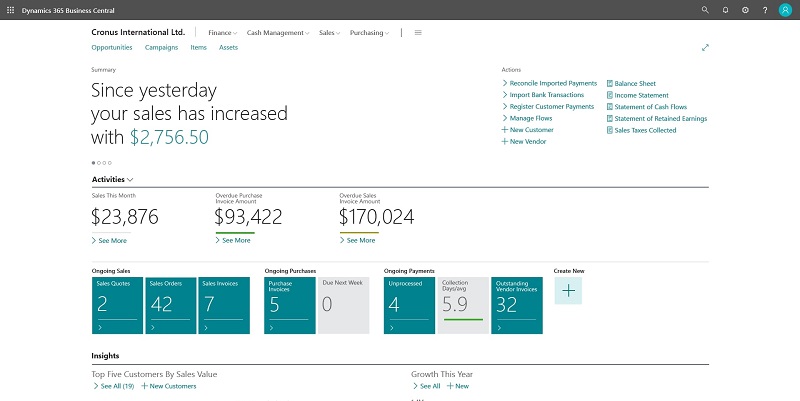
By combining multiple functionalities in one interface, Dynamics 365 BC simplifies manufacturing processes. The integrated system allows manufacturers to manage financials, monitor inventory levels, and track manufacturing operations, all from a centralized dashboard. This eliminates the need for multiple software solutions and enhances efficiency.
The Base version of Dynamics 365 BC Manufacturing (Essentials) offers essential tools for manufacturing companies. This includes the Jobs function, which enables efficient project management; Resource management, which optimizes resource allocation and tracks utilization; and Assembly capabilities, allowing for streamlined production assembly processes.
Expanded capabilities in the Advanced version of Dynamics 365 BC Manufacturing (Premium)
For manufacturing companies with more complex needs, the Advanced version of Dynamics 365 BC Manufacturing (Premium) provides additional features. This includes complete bills of material, enabling accurate tracking of components used for assembly, and efficient warranty management to effectively handle warranty claims and track associated costs.
Benefits of the Premium license for manufacturing clients
While the Base version provides essential manufacturing functionalities, the majority of manufacturing clients benefit from the Premium license. With its expanded capabilities, companies enjoy enhanced control over production processes, improved traceability, and better management of warranty-related issues. This ultimately leads to improved customer satisfaction and increased profitability.
Integration of third-party apps to enhance Business Central’s functionality
To cater to unique manufacturing needs, Business Central allows seamless integration with third-party applications. These apps can complement the core functionalities of the system by providing additional features for specific requirements, such as demand planning, product lifecycle management, and shop floor control.
Utilization of third-party apps by manufacturing clients to meet production management goals
Over two-thirds of manufacturing clients utilizing Business Central leverage third-party apps to meet their production management goals. These apps bridge the gap between standard ERP functionality and industry-specific requirements, enabling manufacturers to achieve greater efficiency and competitiveness.
Cost comparison between Dynamics 365 BC Essentials and Premium versions
The cost of Dynamics 365 BC Essentials is approximately 30% less than the Premium version. Companies must carefully evaluate their specific needs and determine whether the additional functionalities provided by the Premium license justify the investment. For organizations with complex manufacturing processes, the increased benefits and productivity gains of the Premium version often outweigh the additional cost.
Simplified setup process for the Base version, resulting in time and resource savings during implementation
The setup process for the Base version of Dynamics 365 BC Manufacturing is generally less complex compared to the Premium version. This simplicity translates into time and resource savings during implementation, allowing manufacturers to quickly adopt the system and start realizing the benefits.
Overview of feature-rich Microsoft apps available for advanced manufacturing needs
Microsoft offers a variety of feature-rich apps that address advanced manufacturing needs. These apps integrate seamlessly with Dynamics 365 BC and provide solutions for areas such as advanced demand forecasting, capacity planning, machine integration, and advanced quality control. By leveraging these apps, manufacturers can further optimize their operations and stay ahead of the competition.
Microsoft Dynamics 365 Business Central for Manufacturing empowers organizations to streamline operations, optimize scheduling, and enhance overall manufacturing processes. With its integrated functionalities, seamless third-party app integration, and flexible licensing options, Dynamics 365 BC proves to be a scalable and comprehensive solution for manufacturers of all sizes. By capitalizing on its features, manufacturing companies can improve efficiency, reduce costs, and drive greater profitability.