

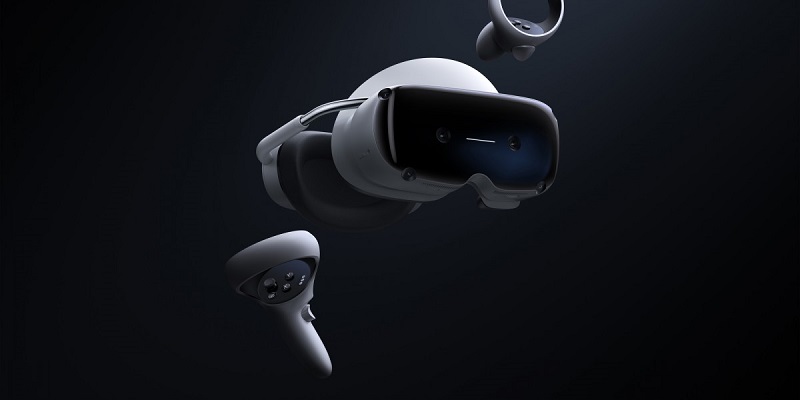
At the Augmented World Expo (AWE) in 2023, Oppo announced the launch of its first mixed reality (MR) Glass headset. The headset is designed to deliver an immersive experience for gaming, remote collaboration, and education. It is equipped with advanced technology and features that make it stand out in the market.
Oppo announced the MR Glass headset at AWE 2023
Oppo’s announcement of the MR Glass headset at AWE 2023 has generated a lot of excitement among technology enthusiasts. The glass headset is designed to provide an immersive experience to users and comes with the latest technology, including the Snapdragon XR2+ chipset from Qualcomm.
The use of Snapdragon XR2+ chipset from Qualcomm
The Oppo MR Glass headset is powered by the Snapdragon XR2+ chipset from Qualcomm. This chipset is known for its processing power, which is ideal for delivering high-quality MR (mixed reality) experiences. The chipset will ensure that users can enjoy smooth and lag-free performance while using the headset.
Availability of Oppo MR Glass as a Snapdragon Spaces Development Kit in China later this year
Oppo has announced that its MR Glass headset will be available as a Snapdragon Spaces development kit in China later this year. This will allow developers to create MR applications and experiences for the headset. The development kit is expected to boost development and innovation in the MR space.
Features of the Headset
The Oppo MR Glass headset comes with several advanced features, including binocular video pass-through (VPT) with pancake lenses, dual front RGB cameras, and a 120Hz refresh rate. These features are designed to provide an immersive experience for users.
Inclusion of joystick controllers, SuperVOOC fast charging, and a heart rate monitor
The Oppo MR Glass headset comes bundled with two joystick controllers, which will help users navigate the MR environment easily. Additionally, the headset comes with the proprietary SuperVOOC fast charging, which will allow users to charge the device quickly. To ensure the safety of users, the headset comes equipped with a heart rate monitor.
The target market for Oppo MR Glass is developers and enterprise customers
The Oppo MR Glass headset is designed for developers and enterprise customers, aiming to create immersive experiences for gaming, remote collaboration, and education. Its focus on developers and enterprise customers will drive innovation and development in the MR space.
Competition from Microsoft HoloLens and Magic Leap One
The Oppo MR Glass headset will face stiff competition from the Microsoft HoloLens and the Magic Leap One. However, Oppo is confident that its headset will carve a niche for itself in the market. The Oppo MR Glass is expected to offer a competitive price, making it accessible to a wider range of users.
Oppo AR Glass: Designed to Deliver Immersive Experiences
The Oppo MR Glass headset is designed to deliver immersive experiences in gaming, remote collaboration, and education. The headset’s advanced features and technology aim to provide users with an experience that is unmatched in the market.
Oppo’s MR Glass will be distributed through EnlightXR in China starting from the second half of this year
The Oppo MR Glass headset will be distributed through EnlightXR in China from the second half of this year. This will ensure that the headset is accessible to a wider range of users and that it reaches its target market effectively.
The Oppo MR Glass headset is a significant innovation in the MR space. Its advanced features and technology aim to provide users with an immersive experience in gaming, remote collaboration, and education. The headset’s focus on developers and enterprise customers will drive innovation and development in the MR space. The Oppo MR Glass is expected to offer tough competition to the existing players in the market. With its pricing and accessibility, the Oppo MR Glass is poised to propel MR into the mainstream.