

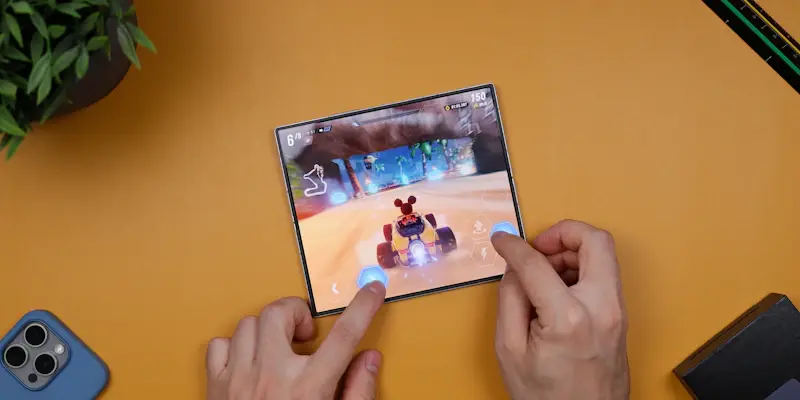
As the technology world eagerly awaits the launch of the OnePlus Open 2, formerly known as the Oppo Find N5, it is becoming increasingly clear that this new device is set to revolutionize the foldable phone market with its unprecedented thinness. Fueled by a series of tantalizing teasers and promotional materials, the excitement continues to build for what promises to be one of the most significant advancements in mobile technology to date.
Unmatched Device Thinness
The OnePlus Open 2’s exceptional thinness has become its most talked-about feature, especially after a recent promotional image shared by Oppo. This image suggests that the upcoming foldable will be even slimmer than the iPad Pro, which boasts a thickness of 5.1 mm in its 13-inch model. If accurate, this would indeed set a new record for foldable devices, currently held by the Honor Magic V3 at 9.2 mm when closed. The implications of such a thin design extend beyond aesthetics, potentially affecting factors like ease of use, portability, and even overall user experience.
Dynamic Marketing Strategy
Billy Zhang, the Oppo President of Overseas Marketing, has been at the forefront of generating buzz around the OnePlus Open 2. Through a series of carefully crafted teasers, he has managed to capture the tech community’s attention, fostering a sense of anticipation and curiosity. By sharing comparative images that highlight the new foldable’s thinness against other popular devices, Zhang has effectively positioned the OnePlus Open 2 as a game-changer in the world of foldable smartphones. The marketing campaign’s success lies in its focus on one key aspect—thinness—an area where the device seems poised to outshine its competitors.
Speculated Features and Enhancements
Beyond its impressive thinness, the OnePlus Open 2 is rumored to come with several significant upgrades. These include improved waterproofing capabilities and the powerful Qualcomm Snapdragon 8 Elite chipset, promising a substantial performance boost over its predecessor. Despite the focus on a slim profile, there are strong speculations that the new foldable will feature a large battery and enhanced power management. Given the larger surface area of foldable phones, the OnePlus Open 2 is expected to accommodate larger battery packs, addressing one of the main concerns of foldable phone users.
Building Anticipation and Expectations
As tech enthusiasts eagerly await the arrival of the OnePlus Open 2, it is becoming increasingly evident that this eagerly anticipated device is poised to revolutionize the foldable phone market. The OnePlus Open 2 is generating unprecedented buzz, primarily due to its remarkable thinness. Predictions indicate that this new entry into the foldable phone arena could set new standards for design and functionality.
Promotional material and tantalizing teasers have only fueled the fire, building excitement among both consumers and industry experts alike. As the tech community waits in breathless anticipation, the launch of the OnePlus Open 2 is shaping up to be one of the most significant milestones in recent mobile technology advancements.
In a market that is constantly evolving, the OnePlus Open 2 promises to bring a fresh wave of innovation and design. The excitement surrounding its release is a testament to the device’s potential impact. It stands as a beacon of technological progress, symbolizing the incredible advances that await the mobile phone industry.