

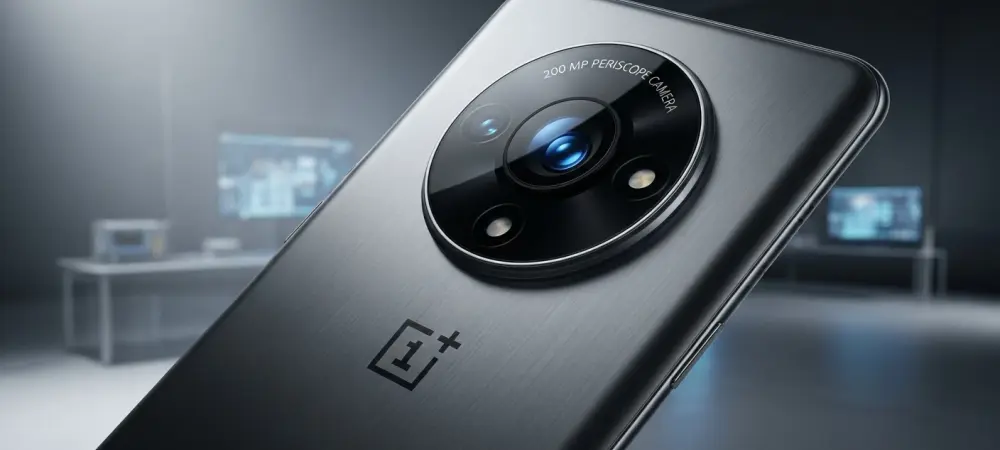
The boundary between professional DSLR equipment and the pocket-sized smartphone has blurred into near invisibility as mobile sensors push the limits of optical physics. In the current landscape of mobile innovation, OnePlus is preparing to shatter existing benchmarks by integrating a staggering 200 MP periscope lens into its latest flagship. This development marks a transition from mere incremental updates to a bold reimagining of how users interact with distance and detail.
The High-Resolution Shift in Mobile Telephotography
Smartphone photography has reached a point where digital zoom is no longer a blurry afterthought, but a high-resolution powerhouse capable of rivaling dedicated optics. While the industry previously focused on primary sensor pixel counts, the battleground has shifted toward the periscope lens, where OnePlus is preparing to make its most significant hardware leap yet.
This transition reflects a fundamental change in consumer expectations. Modern users demand the ability to capture crisp images from the back of a stadium or the edge of a canyon without carrying heavy gear. By prioritizing the secondary telephoto lens, OnePlus acknowledges that the primary wide-angle sensor has reached a plateau, leaving the zoom lens as the new frontier for genuine innovation.
Why the 200 MP Milestone Matters for Flagship Evolution
The push for ultra-high-resolution telephoto sensors reflects a growing demand for “lossless” digital cropping and professional-grade zoom capabilities. As mobile users increasingly rely on their devices for concerts, travel, and detailed portraiture, the integration of massive sensors like the 200 MP unit addresses the limitations of traditional small-format zoom lenses. This move signals a clear intent to compete directly with imaging heavyweights, ensuring the flagship remains relevant in an era dominated by computational photography.
Furthermore, this evolution is about more than just a higher number on a spec sheet. Large sensors allow for better light intake and more sophisticated data processing. By moving away from low-resolution zoom modules, the brand ensures that every frame captured at a distance retains the texture and color accuracy previously reserved for close-range shots, effectively democratizing professional-level photography for the average enthusiast.
Technical Specifications of the OnePlus 16 Imaging System
The centerpiece of the device is the Samsung ISOCELL HP5 sensor, a high-performance component that brings 200 MP resolution to the periscope module. While the telephoto lens sees a massive upgrade, the hardware maintains a balanced profile by carrying over the 50 MP primary and ultrawide sensors from the previous generation. This specific configuration targets a 3x optical zoom range that serves as a foundation for extreme high-fidelity digital magnification.
Engineers have reportedly paired this sensor with a 65 mm focal length and an f/2.6 aperture. This combination is designed to maximize light gathering while maintaining a slim enough profile to fit within a modern smartphone chassis. By focusing on a 3x native zoom, the system can leverage pixel-binning to produce sharp 12.5 MP images or utilize the full 200 MP canvas for aggressive cropping that mimics a 10x or 20x optical reach.
Insider Reports and the Shared Hardware Ecosystem
Reports from prominent industry leakers, including Digital Chat Station and Smart Pikachu, highlight a strategic alignment between OnePlus and its sister brands, Oppo and Realme. By utilizing the same high-end sensor found in devices like the Realme GT 8 Pro and Oppo Find X9 Pro, OnePlus benefits from a shared hardware ecosystem that streamlines production and optimizes imaging algorithms. This collaborative approach allows for faster refinement of the software needed to handle such massive data throughput.
Expert consensus suggested that while external design changes remained iterative, the internal shift toward this 200 MP architecture represented the defining characteristic of the current flagship lineup. This shared supply chain meant that the specialized glass elements and actuators required for the periscope assembly were manufactured at a scale that allowed for higher quality control. Consequently, the device emerged as a peak performer within a broader family of elite imaging tools.
Practical Implications for High-Fidelity Mobile Photography
The transition to a 200 MP periscope camera offered tangible benefits for users who required more than just a standard zoom. With such a high pixel count, the device allowed for significant cropping after a photo was taken without sacrificing clarity, effectively mimicking the performance of much longer focal lengths. For enthusiasts, this meant better performance in varied lighting conditions through advanced binning technology and the ability to capture portraits with natural compression. Moving forward, the focus shifted toward optimizing the artificial intelligence required to process these massive files without shutter lag. Future developments will likely explore how to integrate these high-resolution telephoto lenses with real-time video features, such as 8K zoom recording and enhanced object tracking. As the hardware continues to evolve, the emphasis will remain on creating a seamless bridge between the raw power of the 200 MP sensor and the intuitive software that makes professional results accessible to everyone.