

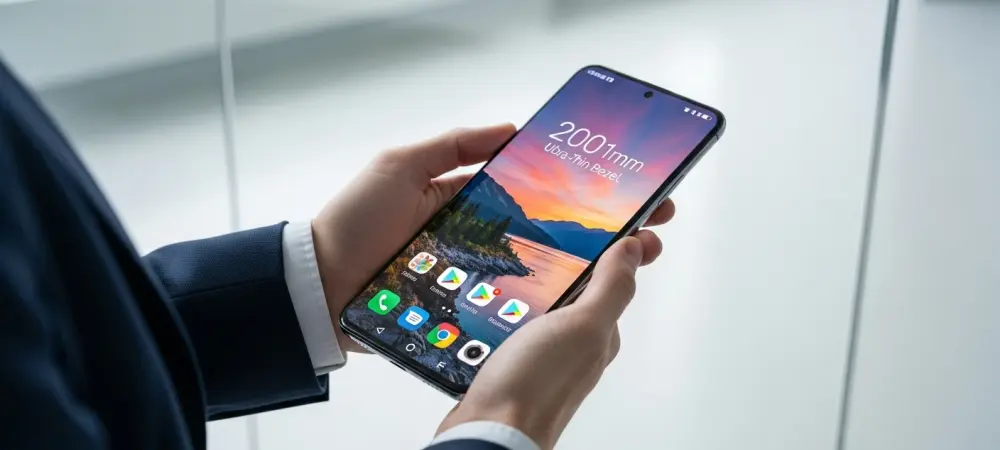
The relentless pursuit of hardware perfection has historically forced manufacturers to choose between aesthetic elegance and the raw endurance required by modern digital lifestyles. The OnePlus 16 Flagship emerges as a direct response to this dilemma, signaling a departure from the iterative design cycles that have characterized the industry recently. By prioritizing radical battery density and visual immersion, the device attempts to redefine the relationship between the user and the mobile interface. It represents a synthesis of engineering breakthroughs that target the core frustrations of high-end smartphone enthusiasts.
Defining the Next Generation of Mobile Technology
Modern mobile technology is currently undergoing a fundamental shift away from gimmicky additions toward substantial utility and structural refinement. The OnePlus 16 is built upon the principle of “invisible tech,” where the hardware facilitates a seamless experience without demanding constant attention through charging or notification management. This context is vital, as the broader market has begun to prioritize long-term reliability over the flashy, high-refresh features that dominated previous years.
Core Hardware and Performance Breakthroughs
Achieving Visual Seamlessness: The Sub-1mm Boundary
Reducing the bezel to less than 1mm requires a total overhaul of the display driver architecture. By utilizing a sophisticated fold-under design for the screen circuitry, OnePlus has managed to eliminate the “chin” that traditionally limited the immersion of flat panels. This engineering feat provides a canvas that feels entirely unconstrained, allowing the software to dominate the physical form factor in a way that predecessors could not match.
Redefining Battery Longevity: The 9,000mAh Powerhouse
The transition to a 9,000mAh capacity is achieved through the implementation of next-generation silicon-carbon anode technology. This chemistry allows for significantly higher energy density without increasing the physical volume of the device to an unwieldy degree. Consequently, the handset offers a three-day endurance profile, effectively removing the “range anxiety” that has plagued the flagship segment since the transition to high-resolution displays.
Computational Excellence: The Snapdragon 8 Elite Gen 6
Powering this hardware is the Snapdragon 8 Elite Gen 6, a chipset designed specifically for sustained efficiency under heavy thermal loads. While competitors often prioritize peak performance bursts that lead to throttling, this integration focuses on architectural stability. This ensures that demanding applications, such as real-time generative AI processing, run smoothly without compromising the structural integrity or heat profile of the massive battery cell.
High-Resolution Photography: Precision and Multispectral Accuracy
The imaging array introduces a 200-megapixel periscope telephoto lens that captures an unprecedented level of detail at extreme focal lengths. However, the true innovation lies in the 2-megapixel multispectral sensor. This component analyzes the light spectrum beyond the capabilities of standard RGB sensors, correcting for artificial lighting inconsistencies and ensuring that skin tones and natural landscapes are rendered with professional-grade color fidelity.
Emerging Trends in Flagship Development
Industry trends are currently moving toward a philosophy of “hardware permanence,” where devices are expected to last longer both in daily use and over their total lifespan. We are seeing a marked shift away from integrated gaming fans or mechanical triggers in favor of sleek, durable designs. This reflects a changing consumer demographic that values a professional aesthetic and extreme battery density over niche, performance-heavy gaming features that often compromise device slimness.
Market Positioning and Real-World Applications
This technology finds its most significant impact in sectors requiring high-autonomy devices, such as remote fieldwork and professional mobile journalism. The ability to record high-bitrate video or manage complex datasets without a power source for days is a game-changer for specialists working in the field. Furthermore, the color accuracy provided by the multispectral sensor positions the device as a legitimate secondary tool for photographers who require reliable color matching during on-site shoots.
Technical Hurdles and Industry Obstacles
Despite these advancements, managing the thermal dynamics of a 9,000mAh cell remains a significant challenge. Charging such a dense energy source quickly without degrading the chemistry requires complex pulse-charging algorithms and robust cooling materials. Additionally, regulatory bodies have begun to scrutinize the safety of high-density lithium-based cells, potentially creating hurdles for global distribution if standards regarding energy concentration are tightened in the coming years.
The Road Ahead for High-Performance Mobile Devices
The trajectory for future mobile development points toward a complete disappearance of the physical frame. We are likely to see even more radical shifts in display technology, perhaps moving toward modular components or flexible substrates that further enhance durability. OnePlus is clearly positioning itself to lead this evolution, focusing on the intersection of extreme battery science and minimalist design to maintain a competitive edge in a saturated premium market.
Conclusion: A New Standard for the Smartphone Industry
The arrival of this flagship successfully pushed the boundaries of what consumers expected from mobile endurance and visual clarity. By integrating a massive 9,000mAh battery within a refined, slim chassis, the design team proved that technical limitations regarding power density were not insurmountable. This shift toward functional minimalism and extreme longevity provided a necessary correction to the trend of over-engineered, power-hungry features. Ultimately, the industry moved toward a future where the device functioned as a more reliable companion for professional and creative endeavors.