

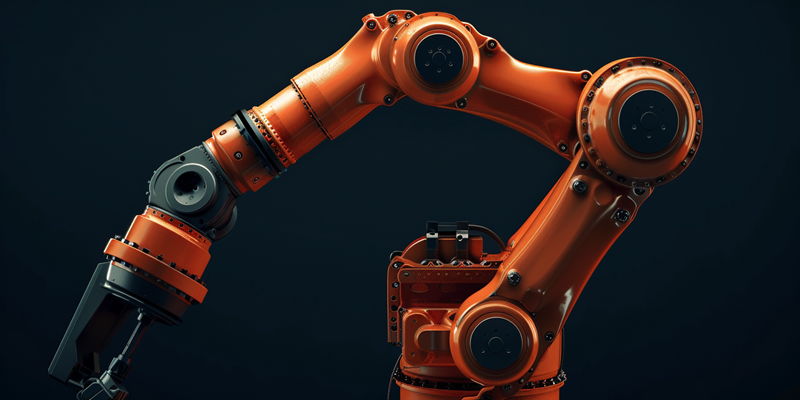
In an industry marked by rapid technological advancements, OMRON and Neura Robotics stand at the forefront of innovation. Their strategic alliance is set to introduce a new era in manufacturing, featuring cognitive robots equipped with Artificial Intelligence (AI), which promises to enhance efficiency and revolutionize workplace dynamics.
Transformative AI-Powered Robots
Unveiling the OMRON Intelligent Cognitive Robot Series
OMRON, a household name in industrial automation, is joining forces with Neura Robotics GmbH, a trailblazing entity in cognitive robotics. Together, they are set to unveil the OMRON Intelligent Cognitive Robot (iCR) series at the Automate trade show in Chicago. This pioneering technology, derived from Neura Robotics’ MAiRA line, comes loaded with AI, integrated sensors, and a user-friendly interface, designed to redefine flexibility, productivity, and safety in manufacturing environments.
The iCR series showcases the future of industrial operations, where robots not only perform tasks but also think and learn from their actions. The live 3D bin-picking demonstration at Automate will give attendees a glimpse of how AI can simplify and enhance manufacturing processes by effectively dealing with complex tasks that have traditionally been challenging for automatons.
The Synergy of Advanced Technology
OMRON’s Sysmac control platform will also be highlighted at the event for its ability to streamline complex operations. This platform exemplifies the collaborative synergy between OMRON and Neura Robotics, which aims to lead the market into a new chapter of industrial automation. The safety features integrated into the iCR series robots allow them to recognize and safely interact with human workers, paving the way for a cooperative future where human ingenuity and robotic precision coexist.
Leaders in Automation Converge
Visions of David Reger and Olivier Welker
David Reger of Neura Robotics and Olivier Welker of OMRON Robotics and Safety Technologies Inc. are the visionary leaders behind their respective companies. As they prepare to showcase the transformative potential of the iCR series, their articulation of this technological innovation is expected to galvanize the industry. They are intent on redefining global manufacturing standards, showcasing their commitment to remaining pioneers in the automation sector.
Their presence at Automate demonstrates an ambition that extends beyond the boundaries of current industrial processes. By integrating cognitive robotics into the manufacturing landscape, Reger and Welker are not just adapting to the evolving technological milieu—they are actively shaping it.
A Prognosis of Manufacturing Technologies
In the swiftly evolving landscape of technology, two industry pioneers—OMRON and Neura Robotics—have formed a significant alliance. Together, they are spearheading a new chapter in the realm of manufacturing, with the deployment of cognitive robots empowered by cutting-edge Artificial Intelligence (AI). This strategic partnership is anticipated to bring about transformative changes to manufacturing efficiency and workplace operations. By harnessing AI’s capabilities, these robots will not only perform tasks with enhanced precision but are also expected to adapt and learn from their environment. The collaboration between OMRON and Neura Robotics marks a step forward towards an innovative future where smart machines play a critical role in driving productivity and redefining the manufacturing industry’s landscape. Their move heralds a future where the synergy between human workers and intelligent automation creates unprecedented operational excellence in production facilities.