

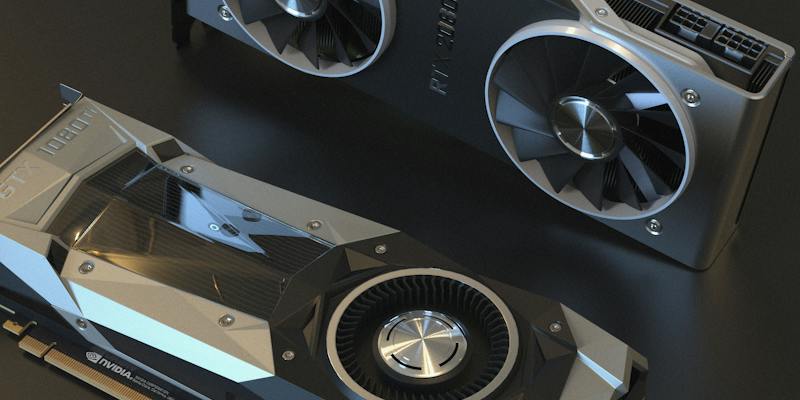
Nvidia’s RTX 4070 Ti Super graphics card is generating considerable excitement in the gaming community, and leaked benchmarks have shed light on its potential performance capabilities. Set to release next week, this revamped GPU promises significant improvements over its predecessors. In this article, we will delve into the leaked benchmarks and explore what they imply for the RTX 4070 Ti Super.
OpenCL Performance: Outpacing the RTX 4080
According to leaked benchmarks, the RTX 4070 Ti Super achieved a score of 229,043 in the OpenCL test. Notably, this puts it only 5% behind the current RTX 4080 GPU, which is touted as one of Nvidia’s fastest GPUs to date. The close performance proximity between the two is a testament to the substantial leap in power offered by the Ti Super variant.
Vulkan Performance: Surpassing the RTX 4080
In the Vulkan test, the RTX 4070 Ti Super boasted an impressive result of 222,435, outperforming the RTX 4080 by 7%. This indicates that the Ti Super has an edge when it comes to handling Vulkan, a powerful API favored by many gaming enthusiasts. The leap in performance showcased by the RTX 4070 Ti Super in this area is striking.
Geekbench Performance: Eye-Opening Improvements
The leaked benchmarks indicate that the RTX 4070 Ti Super surpasses its predecessor, the RTX 4070 Ti, by a substantial margin. In Geekbench tests, the Ti Super variant recorded an 11% and 26% improvement, respectively. These figures are nothing short of impressive and are bound to catch the attention of gamers seeking the utmost performance.
Caveats to Consider
While the leaked benchmarks indicate a promising leap in performance for the RTX 4070 Ti Super, it is important to consider certain caveats. Benchmark results are not always indicative of real-world gaming performance, and it is essential to wait for comprehensive reviews and comparisons before drawing definitive conclusions.
Expected Performance Uplift: Rumors and Speculations
Rumors surrounding the RTX 4070 Ti Super suggest a performance uplift of around 15% compared to its predecessor, the RTX 4070 Ti. However, more conservative estimates peg the improvement at roughly 10%. Nonetheless, both scenarios point towards a significant boost in performance for gamers and content creators.
Comparison with RTX 4080: Closing the Gap
When comparing the RTX 4070 Ti Super to the RTX 4080, the leaked benchmarks indicate a performance difference of around 5% to 10%. This suggests that the Ti Super variant is approaching the capabilities of the RTX 4080, which itself is rumored to be discontinued. The RTX 4070 Ti Super’s performance could potentially rival that of its higher-end counterpart, offering a more accessible and budget-friendly option.
Implications for Pricing and Availability
With the RTX 4070 Ti Super poised to deliver impressive performance, one key aspect to consider is its pricing. If Nvidia manages to strike a balance between performance and affordability, the RTX 4070 Ti Super could become a highly sought-after GPU. Additionally, rumors of the RTX 4080’s discontinuation might further drive interest in the Ti Super variant.
Potential Demand and Stock Issues
As with any highly anticipated product, the RTX 4070 Ti Super is expected to generate substantial demand upon its release. Coupled with the possibility of limited stock, this may result in the graphics card selling out quickly. Gamers eager to acquire a powerful and reasonably priced GPU should be prepared to act swiftly to secure their purchase.
The leaked benchmarks for Nvidia’s RTX 4070 Ti Super paint a promising picture of its performance capabilities. With its impressive OpenCL and Vulkan benchmark scores, as well as substantial improvements over its predecessor, this graphics card has the potential to captivate gamers and content creators alike. While it is crucial to consider the caveats associated with leaked benchmarks, the RTX 4070 Ti Super appears to be a highly competitive and affordable option, challenging even the high-end RTX 4080. As its release approaches, enthusiasts eagerly await comprehensive reviews to put these leaks into perspective and determine the true prowess of this exciting GPU.