

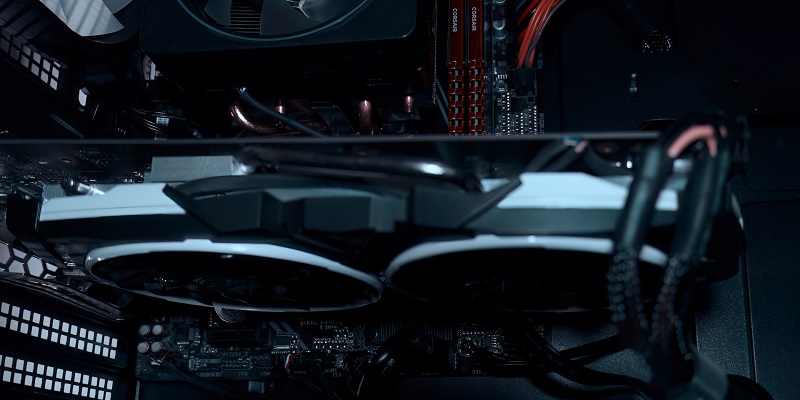
NVIDIA recently launched its RTX 4000 SFF Ada graphics card, which offers incredible power efficiency gains for GPUs. This small form factor (SFF) graphics card is a workstation-grade Ada GPU that is well-suited for both gaming and entry-level workstation efficiency. In this article, we will take a look at the features and capabilities of the NVIDIA RTX 4000 SFF Ada graphics card, including the results of synthetic testing and a comparison of power efficiency and performance. We will also explore the possibility of DIY modifications and analyze the pros and cons of this graphics card to give you a comprehensive overview.
The NVIDIA RTX 4000 SFF Ada: Overview
The NVIDIA RTX 4000 SFF Ada is the smallest workstation-grade GPU that you can buy on the market. The card is an excellent choice for those who do not wish to compromise on the quality of their gaming and entry-level workstation performance and desire minimal setup space. The NVIDIA RTX 4000 SFF Ada is designed with 16GB of on-board GDDR6 memory and eight Ray Accelerators to accelerate real-time ray tracing. Furthermore, it boasts a 255W TDP and 48 RT Cores while maintaining high energy efficiency.
Testing of the graphics card
The card was tested using a variety of synthetic applications, including 3DMark, as well as games. While this card is not specifically optimized for gaming, it still outperformed many other devices in the market due to its high energy efficiency. This makes it an excellent choice for those who may want to explore diverse gaming experiences with different genres and graphical styles.
Power efficiency comparison
The new graphics card consumes 63% less power than the RTX 3060 Ti. This translates to a reduction in power usage of up to 160W, without compromising on performance. Specifically, the NVIDIA RTX 4000 SFF Ada graphics card’s power supply requirements range from 300 to 350 watts, which is relatively low compared to other GPUs in this range.
Performance Comparison
At the same time, the performance of NVIDIA RTX 4000 SFF Ada graphics card was noted to have a 70% jump over its predecessor, the RTX A2000. This means that users can expect to see an improvement in both gaming and productivity performance.
For those who want, it is also possible to customize or create a DIY mod for the graphics card by using a passive heatsink and still get the same level of performance without the noise. Because of its high efficiency and low power consumption, a passive cooling system is ideal for people looking to switch to a more sustainable energy source while maintaining their required GPU performance.
Pros & Cons
The NVIDIA RTX 4000 SFF Ada graphics card is not free of drawbacks, and it is critical to weigh these cons against its many pros before making a purchase decision. For example, the video output is Mini DisplayPort only, and it is quite expensive at 220,000 yen including tax as of May 2023. However, it is compatible with full HD/high frame rate and WQHD PC gaming, supports AI double speed interpolation DLSS 3, and supports hardware encoding of next-generation codec AV1 with high compression and image quality.
Considering all of these factors, the NVIDIA RTX 4000 SFF Ada graphics card has received great recommendations from multiple outlets due to its exceptional AI, gaming, and entry-level workstation efficiency. The card also supports the latest features, such as DLSS 3, AV1 Encoding, Unlimited Simultaneous Encodes, and workstation-specific optimizations and feature support such as NVIDIA Mosaic. Moreover, users can enjoy running generative AI on this graphics card in an efficient manner.
Workstation efficiency
In summary, the NVIDIA RTX 4000 SFF Ada graphics card is a powerful and efficient choice for those looking for a quality workstation or gaming option. It is an excellent choice for those who require high-performance computing power and an eco-friendly option without breaking the bank. This graphics card is arguably the best in its class when it comes to power efficiency, making it a fantastic investment for both individuals and small businesses looking to enhance their computing experience.
The NVIDIA RTX 4000 SFF Ada graphics card is a product that advances the state of graphics technology and energy efficiency, making it an outstanding choice for gamers and workstation users alike. It offers an innovative design and impressive performance, all while being impressively power-efficient. Its new features, including DLSS 3 and AV1 Encoding, are a significant step forward in gaming and workstation use that will surely set new performance standards in the market. Given these advantages, we strongly recommend the NVIDIA RTX 4000 SFF Ada graphics card to all gaming and workstation users who desire top-tier performance and an energy-efficient graphics card.