

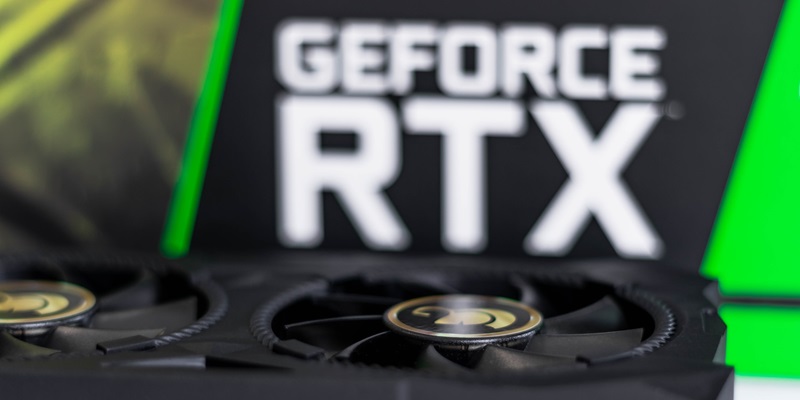
NVIDIA is known for its cutting-edge graphics cards that deliver exceptional performance in the gaming and professional computing realms. Recent reports suggest that NVIDIA has the capability to adjust prices as needed. In this article, we will delve into the upcoming RTX 40 SUPER series and explore its highly anticipated competitive performance.
Comparison of RTX 4080 SUPER and RX 7900 XTX
The RTX 4080 SUPER, which is set to retail at $999 US, will be a formidable competitor to AMD’s RX 7900 XTX, currently priced between $899-$999 US. The close pricing range indicates an intense battle between these two high-end graphics cards, offering gamers and PC enthusiasts a difficult decision to make.
Superior Features of the RTX 4080 SUPER
With faster ray tracing performance and slightly lagging raster performance in comparison to its non-SUPER counterpart, the RTX 4080 SUPER aims to bridge this gap by leveraging additional cores, higher clocks, and increased memory bandwidth. These improvements are expected to optimize overall performance, providing users with visually stunning and smooth gaming experiences.
Overview of the RTX 4070 Ti SUPER
Launching at the $799 US price point, the NVIDIA GeForce RTX 4070 Ti SUPER presents itself as an attractive option in the GPU market. With faster performance and 16 GB of memory, it poses a significant threat to AMD’s Radeon RX 7900 XT, intensifying the rivalry between the two tech giants.
Enthusiast Appeal of the RTX 4070 Ti
The RTX 4070 Ti boasts a 15% uplift in performance compared to its predecessor, making it an intriguing choice for gaming enthusiasts seeking cutting-edge performance. Its competitive pricing and enhanced capabilities may position this GPU as a popular choice among those craving top-tier gaming experiences.
NVIDIA’s Pricing Strategy
One interesting aspect of NVIDIA’s pricing strategy is the company’s reluctance to officially price-cut their products. Instead, they choose to introduce new products with equivalent performance at lower price points. This approach ensures that gamers and professionals can always access the latest technology without feeling cheated by price drops.
Introducing the RTX 4070 SUPER
Taking aim at AMD’s Radeon RX 7800 XT and Radeon RX 7900 GRE, which retail for $499 US and $649 US respectively, the RTX 4070 SUPER enters the market at a competitive $599 US price point. This pricing places it strategically against its AMD counterparts, leveraging its superior performance and NVIDIA’s trusted brand reputation.
Coexistence of RTX 4070 and 4070 SUPER
While the RTX 4070 SUPER debuts to challenge the competition, the non-SUPER version of the RTX 4070 will continue to be available, catering to consumers who are price-conscious without compromising on excellent performance. The RTX 4080 and RTX 4070 Ti non-SUPER variants will largely be replaced by their ‘SUPER’ counterparts, offering upgraded features and performance.
Specifications of the RTX 4080 SUPER
The highly anticipated RTX 4080 SUPER is expected to utilize the AD103-400 GPU (PG139 SKU 355) with a whopping 10,240 cores, 320 TMUs, 112 ROPs, and 64 MB of L2 cache. These impressive specifications pave the way for remarkable performance and capabilities in graphics-intensive tasks and gaming scenarios.
Expected Performance of the RTX 4080 SUPER
The performance gain of the RTX 4080 SUPER over its non-SUPER variant is estimated to be around 3-5%. While it may not seem like a significant leap, custom models of the graphics card are projected to deliver even greater performance boosts of up to 10%. This indicates the potential for enhanced gaming experiences and optimized productivity tasks.
NVIDIA’s RTX 40 SUPER series is poised to challenge the competition with its competitive pricing and impressive performance capabilities. The introduction of these ‘SUPER’ variants augments the existing lineup, providing users with more choices and improvements without compromising on quality. As gamers and professionals eagerly await the launch of these GPUs, the industry eagerly awaits the next breakthrough in graphics technology.