

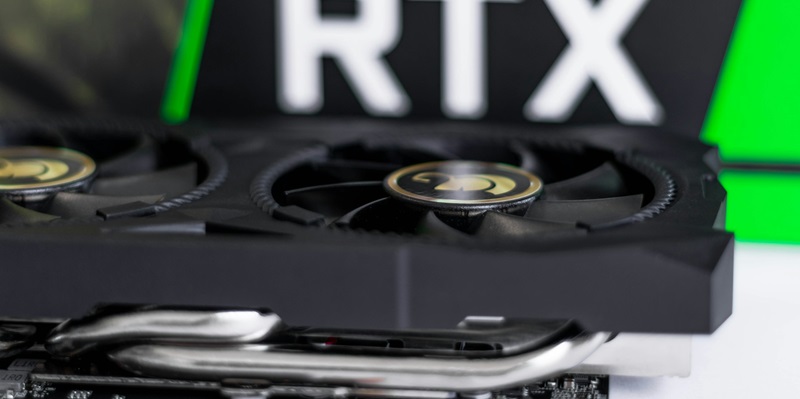
As the field of AI computing accelerates, companies are vying to power the next generation of artificial intelligence. Nvidia, known for its GPUs, has made a successful pivot into AI. But the landscape is shifting, with players like Cerebras and Groq bringing fresh competition to the table. Each innovator is carving out a niche with unique approaches to AI hardware, signaling a dynamic change in how we might train and run AI models in the future.
Navigating the New AI Hardware Frontier
The Impressive Scale of Cerebras
Cerebras Systems has thrown down the gauntlet with its CS-1 processor, designed from the ground up for deep learning. This chip is nothing short of a technical marvel, boasting 400,000 cores across its Wafer Scale Engine (WSE). The scale is incomprehensible when cast against Nvidia’s robust offerings. Comparatively, Nvidia’s tensor core GPU feels dwarfed, serving as a stark illustration of the leaps being made in chip technology. Unlike past chips that have largely been about incrementally increasing the efficiency and power of existing architectures, the Cerebras CS-1 represents a paradigm shift. With over two trillion transistors, it promises unparalleled capacity for AI model training.
Moreover, the WSE by Cerebras seems poised to redefine efficiency in data centers. Massive reductions in the time required to train complex models may soon be a reality, a significant advantage for firms grappling with the computational demands of advanced AI. If Cerebras delivers on its promises, Nvidia may face the challenge of catching up in terms of sheer processing power and efficiency.
Groq’s Efficient Innovations
In contrast to the monumental scale of Cerebras, Groq is charting its course through efficiency with its tensor streaming processor (TSP). The company’s processors offer a novel approach by executing tasks in a deterministic manner, unlocking new possibilities for AI computing’s speed and reliability. Groq’s TSPs are specifically designed to complement existing CPUs and GPUs, offering specialized performance that excels at specific tasks like machine learning inference. This targeted design could allow them to supersede traditional hardware in specialized applications.
Groq’s focus lies in reducing latency to the bare minimum, providing nearly instantaneous AI processing capabilities. It’s particularly relevant in machine learning applications, where speed can be a critical factor. The young company innovates with a lean, purpose-driven architecture that could outperform Nvidia’s more generalist GPUs in certain domains. Significant for industries that rely on real-time decision-making, Groq’s approach to AI hardware underscores the importance of tailored solutions in a competitive market.
AI Computing: The Future Landscape
Nvidia’s Staying Power
Despite the competition, Nvidia remains a formidable presence in AI computing. Its GPUs are well-established as versatile accelerators for different workloads, including gaming, professional visualization, data centers, and autonomous machines. They offer developers a blend of power and efficiency that’s hard to match. Furthermore, Nvidia’s substantial investment in software—such as its CUDA platform—creates a strong ecosystem that encourages developers to continue using its hardware.
Nvidia also continues to innovate, with its GPUs and potential future chips pushing the envelope in terms of AI capability. Their technology’s adaptability will likely keep them relevant as AI applications become increasingly ubiquitous. The company’s established market presence and robust support infrastructure offer advantages that newcomers will need significant resources to overcome.
The Promise of Specialization
As AI computing races ahead, several firms are competing to dominate the burgeoning field of artificial intelligence. Nvidia, originally famed for its gaming GPUs, has effectively shifted gears, now pioneering in AI technologies as well. Nevertheless, the playing field is evolving rapidly with new contenders like Cerebras and Groq introducing innovative solutions that challenge the status quo. These companies are each developing distinctive hardware approaches for AI applications, signaling an impending shift in methodologies for both training and deploying AI models. This evolution is creating a dynamic and competitive market for AI computing, where breakthroughs are set to redefine the capabilities of artificial intelligence infrastructures. As such, the future of AI hardware looks to be as varied as it is promising, with each player contributing to a more diverse technological ecosystem.