

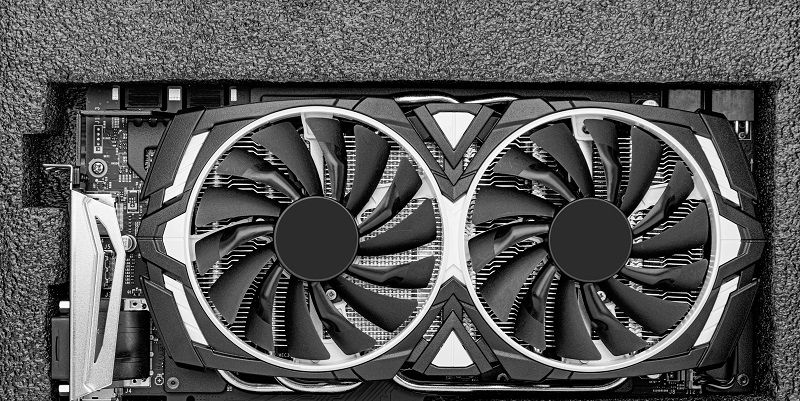
Nvidia, the prominent technology company, continues to push the boundaries of GPU technology with its latest announcement of upgrading the Grace Hopper ‘Superchip.’ Just a few months into its lifecycle, the chip has already received an incredible enhancement, transitioning from HBM3 to the newer and faster HBM3e memory. This upgrade marks a significant milestone in the field of graphics processing, offering unparalleled speed and performance.
Announcement of HBM3e Upgrade
In a recent announcement, Nvidia unveiled its plan to upgrade the memory of the Grace Hopper GPU, replacing the existing HBM3 with HBM3e. This decision comes merely two months after its initial release and demonstrates Nvidia’s commitment to delivering cutting-edge technology. The improved memory technology in HBM3e promises to double the speed compared to its predecessor, enhancing the chip’s capabilities to a remarkable extent.
Unveiling of Upgraded Grace Hopper
At the highly anticipated SIGGRAPH event, Nvidia CEO Jensen Huang took the stage to unveil the upgraded version of Grace Hopper. With great anticipation, he introduced the state-of-the-art chip, showcasing its unparalleled capabilities and defining it as a game-changer in the world of graphics processing.
Improved Memory Capacity
One of the most notable advantages of the upgraded Grace Hopper ‘Superchip’ lies in its expanded memory capacity. In comparison to the original version, the new chip now boasts an astounding 282GB of HBM3e memory, a drastic increase from the previous 96GB of HBM3. This substantial jump in memory capacity sets the stage for unprecedented performance and efficiency.
Enhanced Memory Bandwidth
The upgrade to HBM3e not only amplifies the memory capacity, but also significantly enhances the memory bandwidth of the Grace Hopper GPU. Each chip now supports up to 5TB/s of memory bandwidth, with a dual-chip system reaching a staggering 10TB/s. This breakthrough in memory bandwidth ensures lightning-fast data processing and seamless multitasking capabilities.
Grace Hopper Specifications
Alongside the upgraded memory, the Grace CPU is equipped with advanced features. With 72 Arm Neoverse V2 cores and up to 480GB of LPDDR5 memory, the GPU can now access a higher capacity memory, further enhancing its overall performance and efficiency. This comprehensive package ushers in a new era of GPU technology with unmatched processing power.
The scalability of Grace Hopper is one of its key aspects. The architecture allows for significant expansion, with the potential to connect two cards over NVLink, creating a base node with a staggering 144 Arm Neoverse cores and up to 10TB/s of memory bandwidth. The ability to scale up this system opens up vast opportunities for computationally-intensive tasks and complex modeling.
Room-Sized Setup and Future Applications
Jensen Huang, never one to shy away from bold statements, described the Grace Hopper setup as the “world’s largest GPU.” This characterization stems from its coherent connections and immense computational power, making it the setup of choice for training large language models. The room-sized configuration promises to revolutionize language processing and artificial intelligence, paving the way for groundbreaking discoveries in various industries.
Sampling and Availability Timeline
According to Huang, the upgraded version of Grace Hopper will be sampled to Nvidia’s partners by the end of 2023. The general availability of the chip is expected in the second quarter of 2024, opening up opportunities for researchers and developers worldwide to harness its immense power and capabilities.
As the demand for Nvidia’s H100 GPUs continues to soar, it remains to be seen how the company will prioritize their usage, either as standalone GPUs or bundled with the Grace Hopper ‘Superchip’. Nonetheless, the upgrade to HBM3e, combined with the impressive specifications and scalability of the Grace Hopper GPU, sets a new benchmark for GPU technology. The announcement signifies Nvidia’s commitment to pushing the boundaries of what is currently possible and revolutionizing the field of graphics processing. Exciting times lie ahead as the upgraded Grace Hopper ‘Superchip’ takes center stage in the world of high-performance computing and AI.