

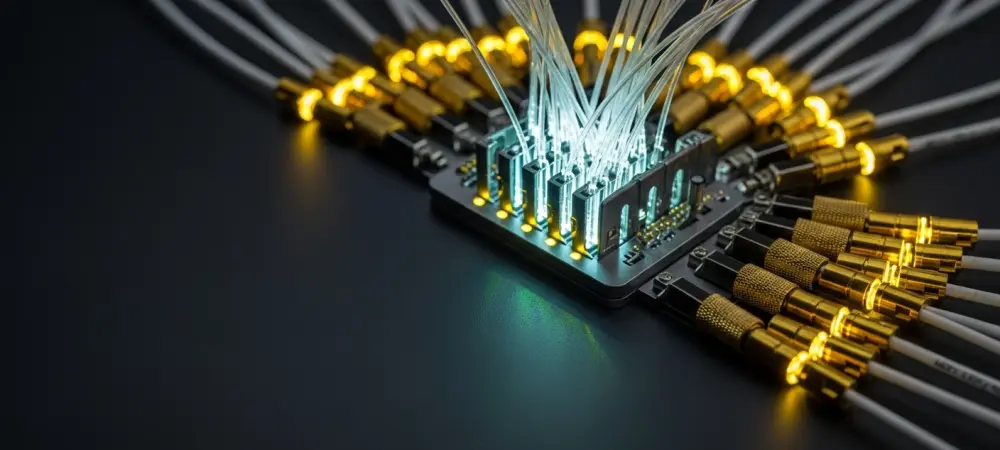
The silicon landscape has reached a critical juncture where raw mathematical throughput is no longer the sole arbiter of dominance in the global intelligence race. As enterprises move toward deploying autonomous entities that can plan, reason, and execute code, the traditional separation between the central processor and the graphics accelerator has become a significant architectural bottleneck. NVIDIA’s introduction of the Vera CPU addresses this structural deficiency, pivoting away from general-purpose server design toward a specialized orchestrator. This market shift signals that the era of simple chatbots has ended, replaced by an “agentic” economy where infrastructure must manage complex logic and tool interaction with unprecedented fluidity. The primary objective of this analysis is to evaluate how the Vera CPU redefines data center efficiency by prioritizing orchestration over mere calculation. This transition from model-centric AI to agentic AI requires a processor that functions as the primary commander of the machine intelligence factory. Performance is now being measured by responsiveness and the ability to manage thousands of concurrent tasks rather than just floating-point operations. By delivering a significant boost in efficiency compared to traditional rack-scale processors, this architecture aims to lower the total cost of ownership for organizations scaling large-scale autonomous services throughout 2026 and beyond.
From Calculation to Orchestration: The Evolution of AI Architecture
Historically, the central processing unit functioned as a secondary player in the AI stack, largely relegated to managing basic inputs and operating system tasks while GPUs performed the heavy lifting. However, the rise of reasoning-heavy workloads has shifted the industry’s focus. Modern AI agents must interact with external tools, validate streaming data, and execute iterative logic, tasks that create high overhead for traditional server chips. This evolution has rendered standard data center architectures increasingly inefficient, as the demand for real-time decision-making outpaces the capabilities of general-purpose silicon designed for the previous decade’s web and database applications. The shift toward agentic computing highlights a growing consensus that the infrastructure supporting intelligence must be as specialized as the models themselves. As autonomous software entities become more prevalent in 2026, the bottleneck has moved from the calculation of neural network weights to the management of agent workflows. This historical pivot mirrors earlier transitions in computing where specialized hardware eventually replaced general-purpose components to meet the needs of a maturing market. Understanding these background factors is essential for grasping why the move to a dedicated AI orchestrator is a logical step for the next phase of global digital transformation.
Engineering the Vera Architecture: 88 Cores of Specialized Power
Redefining Efficiency: The Olympus Core and Spatial Multithreading
At the heart of the Vera CPU are 88 custom-designed “Olympus” cores, which are engineered specifically to handle the logic required by AI runtime engines and complex data analytics pipelines. A standout innovation within this architecture is NVIDIA Spatial Multithreading, a technology that allows each core to execute two tasks simultaneously without the performance degradation typically seen in standard hyperthreading. This is a critical advancement for cloud service providers operating in multi-tenant environments, where thousands of independent AI agents must run concurrently on the same hardware. By focusing on deterministic efficiency rather than raw clock speed, the processor effectively doubles the output for every watt of power consumed.
Breaking Memory Barriers: 1.2 TB/s Bandwidth
Agentic AI requires massive amounts of data to be moved rapidly between memory and the processor to maintain “thought” continuity and context. To address this requirement, the Vera CPU is equipped with second-generation LPDDR5X memory, achieving a staggering 1.2 TB/s of bandwidth. This provides twice the speed of standard server CPUs while utilizing half the power, a feat achieved through a sophisticated high-speed memory subsystem. This subsystem is further enhanced by the second-generation NVIDIA Scalable Coherency Fabric, which significantly reduces internal latencies and ensures that AI agents can access vast datasets without the stuttering often observed in less specialized hardware configurations.
Unified Synergy: NVLink-C2C and the Vera Rubin Platform
The true potential of the Vera CPU is realized through its integration with the broader ecosystem via NVLink-C2C (Chip-to-Chip) technology. This interconnect provides 1.8 TB/s of coherent bandwidth, which is roughly seven times faster than the PCIe Gen 6 standard. In the Vera Rubin NVL72 platform, this technology allows the CPU and GPU to share a unified memory pool with virtually no overhead. This seamless coordination is vital for reinforcement learning, where the system must constantly update its strategies based on GPU calculations and CPU-managed logic. By blurring the lines between the processor and the accelerator, the architecture creates a cohesive computing environment optimized for the highest levels of machine intelligence.
The Future of Scale: Liquid Cooling and Global AI Factories
The physical footprint of AI infrastructure is evolving toward extreme density and sustainability to meet the rising energy demands of 2026 and the years to follow. The introduction of a liquid-cooled Vera CPU rack that integrates 256 processors is a response to this trend, supporting over 22,500 independent CPU environments. This modular approach, based on the NVIDIA MGX architecture, allows hyperscalers and enterprises to scale their operations to unprecedented levels. We are seeing a rapid shift toward these “AI factories,” where specialized silicon and advanced cooling allow for massive deployments of autonomous agents that were previously too energy-intensive to be practical.
Emerging economic and regulatory trends are also forcing a rethink of data center design, emphasizing the need for higher performance per square foot. The move toward liquid cooling is no longer just an option for niche high-performance computing but a necessity for mainstream AI infrastructure. As global markets demand more autonomous services, the ability to deploy dense, energy-efficient clusters will define which organizations can stay competitive. The industry is likely to witness a consolidation of computing resources into these highly optimized factories, where the synergy of specialized hardware leads to more sustainable and cost-effective intelligence at scale.
Strategic Implementation: Navigating the Shift to Agentic Infrastructure
For organizations looking to capitalize on this technological leap, the transition to specialized infrastructure requires a significant shift in IT strategy. Businesses should prioritize the optimization of their data pipelines to take full advantage of the high memory bandwidth, ensuring that their AI agents are never starved of information. Early adoption data suggests that real-time streaming and coding agents benefit most from the reduced latency offered by this new architecture. To maximize the return on investment, leaders should evaluate the platform as a unified solution rather than viewing the CPU in isolation, as the synergy between the cores and the accelerators is where the most significant gains are realized.
Furthermore, professionals should focus on redesigning software architectures to be “agent-first,” moving away from traditional request-response models. By aligning software development with the capabilities of spatial multithreading, companies can achieve much higher density in their cloud deployments. IT departments are encouraged to begin testing modular configurations that can grow alongside their AI needs. Preparing for this shift now involves auditing current thermal and power capabilities to ensure that the facility can support the high-density racks that will define the next decade of autonomous computing.
A New Foundation for Autonomous Intelligence
The unveiling of the NVIDIA Vera CPU marked a definitive turning point in the history of computing, as it positioned the processor as a specialized engine for the era of agentic AI. By addressing the critical bottlenecks of memory bandwidth, task orchestration, and energy efficiency, the architecture provided the necessary foundation for a world populated by autonomous digital agents. The industry witnessed a major transition where the focus shifted from raw data processing to the intelligent execution of complex, multi-step actions. This technological rollout successfully bridged the gap between calculation and reasoning, establishing a new standard for how data centers were built and managed in a rapidly evolving market.
Looking forward, the successful integration of these systems required a proactive approach to hardware density and software optimization. Organizations that embraced the unified memory and high-speed interconnects of the Vera platform found themselves better equipped to handle the demands of reinforcement learning and real-time autonomous reasoning. The focus on efficiency and scalability ensured that the expansion of AI remained sustainable even as the complexity of models continued to grow. Ultimately, this move into specialized orchestration silicon defined the infrastructure of the decade, proving that the path to true machine intelligence was paved with specialized, high-bandwidth architecture.