

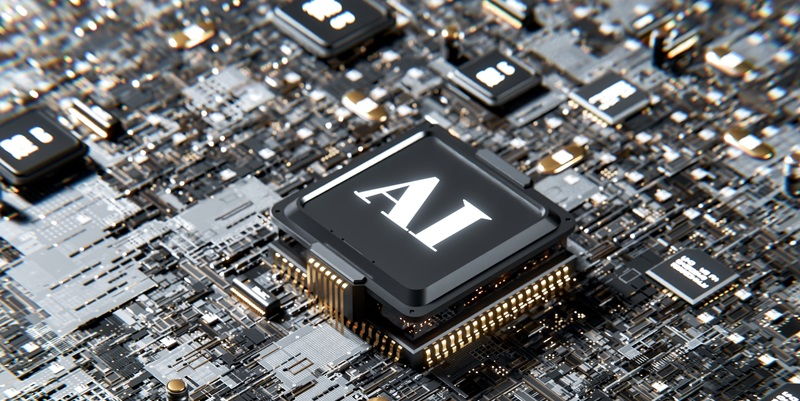
Nvidia, a global leader in advanced computing solutions, has recently announced its groundbreaking AI computing platform, Nvidia HGX H200. Powered by the cutting-edge Nvidia Hopper architecture and the latest GPU offering, the Nvidia H200 Tensor Core, this revolutionary system is set to redefine the boundaries of AI and high-performance computing (HPC).
Enhanced GPU performance
The NVIDIA H200 GPU brings forth an unprecedented leap in performance with its integration of HBM3e, a high-bandwidth memory that is 50% faster than the current HBM3 technology. This upgrade enables the delivery of a staggering 141GB of memory at a mind-boggling speed of 4.8 terabytes per second. Comparatively, this doubles the memory capacity and provides 2.4 times more bandwidth than its predecessor, the NVIDIA A100. These enhancements signify a quantum leap in computational power for accelerated AI workflows.
Improved performance
The introduction of the Nvidia H200 marks a significant milestone in performance advancements. By leveraging its superior architecture and groundbreaking technology, Nvidia is pushing the boundaries of what can be achieved in AI computing. The result is a platform that enables faster and more efficient deep learning, delivering unparalleled performance to cater to the demands of today’s data-driven world.
Availability and configurations
Users eagerly awaiting the arrival of the H200-powered systems will not have to wait much longer, as shipments are scheduled to commence in the second quarter of 2024. The Nvidia H200 Tensor Core GPU will be made available on HGX H200 server boards in both four- and eight-way configurations, providing users with the flexibility to tailor the system to their specific needs.
Performance capabilities
An eight-way HGX H200 system, for example, takes performance to a stratospheric level, delivering over 32 petaflops of FP8 deep learning compute power. This immense processing capacity, coupled with an impressive 1.1TB of aggregate high-bandwidth memory, cements the HGX H200’s position as the industry leader in providing exceptional performance for generative AI and HPC applications. With such remarkable capabilities, the possibilities for cutting-edge research and innovation are limitless.
Versatile Deployment
Nvidia understands the diverse range of data center requirements and, thus, has designed the H200 to be a versatile solution. Whether it is an on-premises setup, a cloud-based infrastructure, a hybrid-cloud environment, or edge computing, the H200 can be seamlessly deployed to meet the demands of any data center configuration. Additionally, the H200 will also be made available on the GH200 Grace Hopper Superchip platform, further extending its versatility and accessibility.
Collaboration with HPE
In a synergistic partnership, Nvidia and Hewlett Packard Enterprise (HPE) have joined forces to offer a comprehensive turnkey system that takes AI development and supercomputing to new heights. Building on the success of Isambard-AI, their previous collaboration utilizing HPE’s Cray EX supercomputer technology combined with Nvidia GH200 Grace Hopper Superchips, the new turnkey system aims to support the development of generative AI. This remarkable system comprises preconfigured AI and machine learning software, liquid-cooled supercomputers, accelerated compute capabilities, advanced networking solutions, high-capacity storage, and comprehensive support services.
Integration with HPE Cray Technology
Capitalizing on the same architecture as Isambard-AI, the new turnkey system seamlessly integrates with HPE Cray supercomputing technology. Powered by Nvidia Grace Hopper GH200 Superchips, this integration amplifies the system’s ability to accelerate AI model training by 2-3 times. As a result, AI research centers and large enterprises will benefit from expedited development and deployment of powerful AI models, opening up new frontiers of innovation.
General availability
Excitingly, the new turnkey system will be readily accessible to global markets, with HPE making it available in over 30 countries starting in December. This widespread availability ensures that AI research centers, enterprises, and organizations around the world can harness the transformative power of AI and usher in the next era of technological advancements.`
With the announcement of the Nvidia HGX H200, powered by the state-of-the-art Nvidia Hopper architecture and the groundbreaking Nvidia H200 Tensor Core GPU, the world of AI computing is about to witness a paradigm shift. Faster, more efficient, and incredibly powerful, the H200 promises to propel AI and HPC applications to unprecedented heights. Combined with the collaboration between Nvidia and HPE, the future of generative AI and supercomputing is set to achieve groundbreaking milestones, truly reflecting the limitless potential of the innovative technologies driving our world forward.