

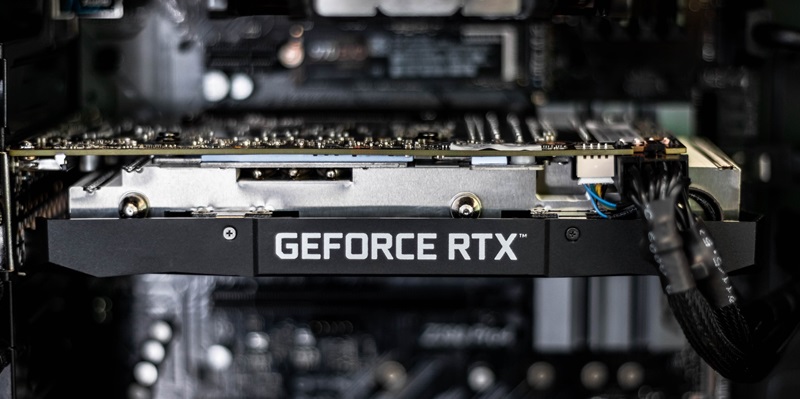
Today, NVIDIA is making waves in the gaming community with the release of its highly anticipated second card within the ‘SUPER’ portfolio – introducing the power-packed GeForce RTX 4070 Ti SUPER graphics card. Aimed squarely at avid gamers and enthusiasts, this new addition is set to redefine the gaming experience with its impressive features and specifications.
Features and specifications
NVIDIA’s GeForce RTX 4070 Ti SUPER has been purposefully designed to cater to high-fidelity and high-refresh rate 1440p gaming. With its superior rendering capabilities, this graphics card ensures you can enjoy visuals that are more vibrant, detailed, and realistic than ever before. But that’s not all – the inclusion of a whopping 16 GB of VRAM takes it a step further, guaranteeing a very playable and immersive 4K gaming experience as well.
Pricing and Comparison
With a price tag of $799 US at MSRP, the GeForce RTX 4070 Ti SUPER proves to be a worthy investment for gamers who seek top-of-the-line performance without breaking the bank. What’s interesting is that its pricing remains the same as its non-SUPER variant, the GeForce RTX 4070 Ti. However, NVIDIA has strategically replaced the non-SUPER variant with the SUPER version, essentially providing an enhanced product without any additional cost to the consumer.
Taking a closer look at its VRAM capabilities, the GeForce RTX 4070 Ti SUPER now matches the VRAM capacity of its high-tier counterparts, such as the RTX 4080 and the soon-to-be-released RTX 4080 SUPER. This significant upgrade ensures that gamers can fully harness the power of the graphics card without experiencing any bottlenecks.
Competitor Comparison
A key question that arises is whether the GeForce RTX 4070 Ti SUPER can hold its own against fierce competition, specifically the RX 7900 XT, which boasts upgraded core and VRAM. Today, we address this burning question by offering an in-depth analysis of a few premium custom models to accurately gauge the performance and capabilities of the GeForce RTX 4070 Ti SUPER in comparison to its rival.
Custom Model Review: GALAX GeForce RTX 4070 Ti SUPER SG White OC
One custom model that stands out is the GALAX GeForce RTX 4070 Ti SUPER SG White OC variant. This variant not only delivers powerhouse performance but also boasts visually stunning aesthetics with its white-themed design. In addition, it offers overclocking capabilities, allowing users to push the card’s performance limits and unlock even greater potential.
The GeForce RTX 4070 Ti SUPER has arrived as a mid-cycle upgrade, presenting enthusiasts with a glorious opportunity to elevate their gaming experience to new heights. With its impressive specifications, including high-fidelity 1440p gaming, substantial VRAM capacity, and attractive pricing, this graphics card is poised to become the go-to choice for gamers who demand nothing short of exceptional performance. As we compare it to competitors like the RX 7900 XT, it becomes evident that NVIDIA has once again raised the bar, solidifying their position as a leader in the gaming industry. So, if you’re ready to take your gaming to the next level, the GeForce RTX 4070 Ti SUPER is here to make your dreams a reality.