

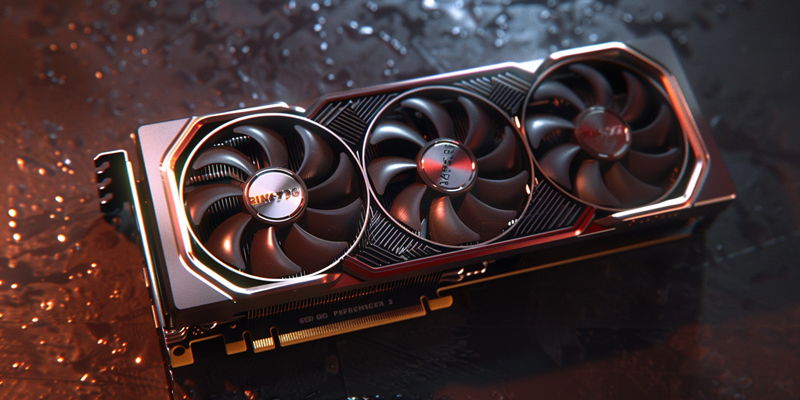
As the technological world braces for the next paradigm shift, Nvidia is flexing its muscles, ensuring that everyone recognizes its GPUs as the front runners in the emerging era of AI-enhanced personal computing. In a landscape gradually shifting toward dedicated Neural Processing Units (NPUs) for specialized AI tasks, Nvidia remains steadfast in its belief that its GPUs, empowered by RTX technology, are the superior choice. During a recent internal meeting, Nvidia posited its GPUs as heavyweights in the computational arena, boasting an immense 1,300 TOPs over the NPU’s 45 TOPs. This assertion comes at a time when integrating AI into every aspect of computing, including gaming, creativity, and general-purpose PCs, seems to be just over the horizon.
Nvidia’s Compelling Argument for GPU Superiority
Understanding the magnitude of Nvidia’s highlighted performance metrics requires a deeper dive into what this means for the end-user. With the promise of over 1,300 TOPs, Nvidia’s GPU technology is geared to bring an unprecedented level of AI functionality to personal computers. From gamers benefiting from AI-enhanced graphics and deep learning super sampling (DLSS) to professionals relying on GPU acceleration for machine learning algorithms and video editing, Nvidia’s GPUs plan to underpin the very fabric of their users’ digital experiences. Their bold positioning is not unfounded; with over 100 million users to date, they have built an impregnable fortress around their market share with seasoned battle flags like the implementation of DLSS since as early as 2018.
The discussion of GPU superiority is not just about numbers; it speaks volumes about the practical applications and real-world impact of Nvidia’s technology. As computing increasingly intertwines with AI, Nvidia is not only promising but delivering a more immersive, efficient, and intelligent PC experience. Beyond gaming, their GPUs are set to be the building blocks for a new age of content creation, scientific research, and broad AI application deployment. This powerful technology, according to Nvidia, will serve as the backbone for the future’s AI cloud-based behemoths designed for thousands of TOPs and large-language model scalability.
Nvidia’s Vision of AI Integration in Gaming and General Computing
As the tech world prepares for a major shift, Nvidia is making it clear that its graphics processing units (GPUs) with RTX technology are at the forefront of this transformation. Even with the rise of specialized AI chips known as Neural Processing Units (NPUs), Nvidia asserts that its GPUs are far ahead in performance. In a recent company meeting, Nvidia showcased the power of its GPUs, which offer a colossal 1,300 trillion operations per second (TOPs), dwarfing the NPU’s 45 TOPs. This comes at a pivotal time, as AI integration seems inevitable across all sectors of personal computing, from gaming to creative applications and everyday tasks. Nvidia’s message is clear: its GPUs are not just holding their ground but are also poised to lead the next wave of AI-imbued computing.