

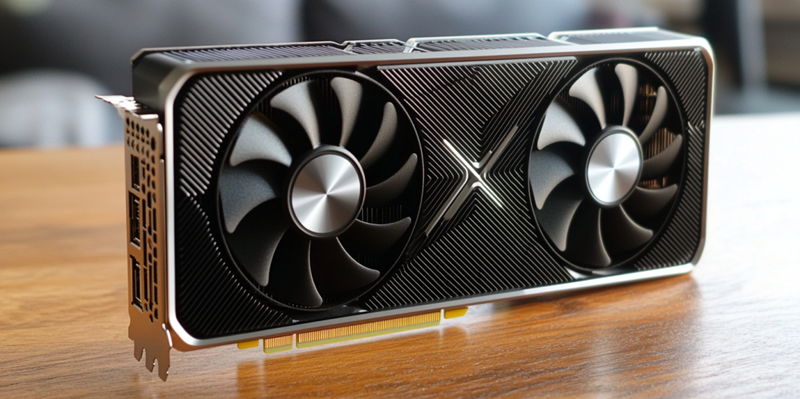
NVIDIA, a leader in AI and GPU technology, is on the verge of a significant transition that promises to impact the tech industry profoundly. The company is considering adopting a socket-based design for its upcoming Blackwell Ultra "B300" AI GPUs, intended for GB300 servers. This shift from the current onboard (OAM) design to a more modular approach aims to bring enhanced performance, efficiency, and maintainability to the forefront. The new design facilitates easier installation and replacement of components, much like traditional CPUs, promising substantial improvements in both production processes and hardware maintenance.
Introduction of a Socket-Based Design
With the new socket-based design, NVIDIA intends to make a substantial leap from its existing OAM design, where GPUs and Grace CPUs are permanently soldered onto the server motherboard. This new approach allows components to be easily installed or replaced, much like traditional CPUs. The current OAM design, while effective, poses challenges in terms of maintenance and upgrades, which the socketed design aims to alleviate. By making this transition, NVIDIA hopes to simplify the hardware layout and offer a more flexible and efficient solution for enterprises relying heavily on AI computations.
The primary advantage of this shift is the simplified manufacturing process. By eliminating Surface Mount Technology (SMT) requirements, NVIDIA can streamline production, reducing complexity and potential points of failure. This design change could translate to significant cost savings and efficiency improvements in the manufacturing pipeline. Additionally, manufacturers will no longer need to worry about entire servers becoming obsolete due to a single faulty component. This modularity offers a high degree of future-proofing, allowing for easier system upgrades and replacement of individual components without requiring a complete system overhaul.
Additionally, the modular nature of socketed GPUs facilitates easier maintenance and upgrading. Companies no longer need to discard entire motherboards due to faulty GPUs, reducing waste and downtime. This reusability aspect makes the new design both economically and environmentally beneficial, allowing for quicker and more cost-effective replacements. The socket-based design also means that companies can better manage their hardware inventory and replacement cycles, contributing to more efficient and reliable AI infrastructure. This shift aligns with broader industry trends that favor modularity and flexibility in hardware design, providing tangible benefits for both producers and end-users.
Benefits of Choosing a Socket-Based Design
The adoption of socket-based GPUs introduces several key benefits. Firstly, it improves yield rates in manufacturing. In the current scenario, a single faulty GPU can render an entire motherboard unusable, leading to significant waste. The socketed design mitigates this issue, as only the malfunctioning GPU needs replacement, not the entire board. This advantage alone can translate into significant savings and efficiency improvements in the production process. By allowing for targeted replacements, companies can reduce both the financial and environmental costs associated with hardware failure, marking a considerable step forward in sustainable technology practices.
Moreover, the ease of maintenance is a critical advantage. For data centers and enterprises relying on high-performance AI computations, downtime can be detrimental. The modular design allows for swift GPU swaps, ensuring systems remain operational with minimal interruption. This not only enhances reliability but also maximizes operational efficiency. The ability to quickly replace faulty components without the need for extensive downtime also supports higher uptime rates, which are crucial for businesses dependent on continuous data processing and real-time AI applications. Increased reliability and shortened maintenance windows translate into better service quality and customer satisfaction.
Another consideration is the economic impact on related industries. Companies like Foxconn and LOTES, specializing in interconnect components and sockets, stand to benefit from increased demand. This interdependence highlights the broader positive ripple effect of NVIDIA’s design shift within the tech manufacturing ecosystem. By adopting a socketed design, NVIDIA can drive growth and innovation not just within its own operations but across an array of ancillary industries involved in manufacturing and supplying these components. This collaborative growth can lead to advancements in the technologies used by these companies, fostering an environment of shared innovation and progress.
Potential Drawbacks and Trade-Offs
While the benefits are profound, the transition to socketed GPUs is not without its trade-offs. One primary concern is the potential for slight performance degradation. Sockets can introduce higher latency compared to soldered connections, potentially affecting the peak performance of the GPUs. However, this drawback is generally considered minor relative to the gains in flexibility and maintainability. The industry consensus reflects an understanding that while some performance concessions might be necessary, the overall advantages in terms of ease of use and cost savings make the transition worthwhile. Engineers will likely dedicate efforts to mitigating any latency issues to ensure the impact on performance is minimal.
This shift also requires modifications in engineering and design paradigms. Engineers must account for the physical and thermal characteristics of socketed components, ensuring the design maintains optimal cooling and performance. Despite these challenges, the consensus within the industry suggests that the practical benefits outweigh the performance trade-offs. Companies are willing to navigate these complexities because the long-term gains in operational efficiency and hardware flexibility hold substantial promise. Incorporating robust thermal management solutions and optimizing socket designs will be key to overcoming any potential drawbacks and ensuring the new GPUs perform at their best.
Despite these potential drawbacks, the industry trend leans towards modularity for greater long-term benefits. This shift aligns with a broader movement within tech hardware towards more flexible and maintainable systems, emphasizing a balance between peak performance and operational practicality. As companies increasingly prioritize the ability to efficiently manage and upgrade their technological assets, the demand for modular solutions is expected to grow. This industry-wide trend signals a commitment to creating more adaptable and sustainable technology infrastructure that can keep pace with rapid advancements without necessitating frequent and costly overhauls.
Technological Enhancements: FP4 Technology
In tandem with the design changes, NVIDIA’s new B300 series GPUs will incorporate advances in AI computation, particularly through the adoption of Floating Point 4 (FP4) technology. This enhancement significantly boosts inference capabilities, making these GPUs particularly suited for real-time AI applications and model predictions. By focusing on inference performance, FP4 technology supports the high-speed, high-precision computations required for complex AI tasks. This focus on inference aligns with the growing importance of real-time decision-making and data processing in modern AI applications, making these GPUs a valuable addition to any AI-driven infrastructure.
FP4 technology is pivotal for enhancing the performance and efficiency of AI workloads. Current models, like the B200 series, already excel in AI performance, and the B300 series promises to push these boundaries further. For businesses and data centers relying on AI for critical operations, this leap in technology represents a substantial improvement in capability. The enhancements brought by FP4 technology will enable faster processing of AI models, leading to quicker insights and more responsive AI systems. As a result, businesses can expect improved performance in applications such as machine learning, natural language processing, and computer vision.
By implementing FP4, NVIDIA ensures that the new GPUs are not only about ease of use but also about sustaining and advancing AI performance. The emphasis on inference capabilities underscores NVIDIA’s commitment to staying at the cutting edge of AI technology, providing tools that meet the growing demands of AI-powered solutions. This dual focus on flexibility and performance highlights NVIDIA’s strategic approach to innovation, aiming to deliver practical, high-performance solutions that cater to the evolving needs of the AI community. The incorporation of FP4 technology is a clear indicator of NVIDIA’s dedication to maintaining its leadership position in the AI and GPU markets.
Comparative Analysis with AMD’s Approach
NVIDIA, a frontrunner in the fields of AI and GPU technology, stands on the brink of a transformative shift that could significantly alter the tech industry. The company is weighing the adoption of a socket-based design for its next-generation Blackwell Ultra "B300" AI GPUs, designated for GB300 servers. This change would move away from the existing onboard (OAM) architecture to a more modular approach, bringing heightened performance, efficiency, and ease of maintenance into the spotlight. The new design would simplify the installation and replacement of components, akin to how traditional CPUs are managed. This promises notable advancements in both manufacturing processes and hardware upkeep, making the hardware more reliable and easier to handle. NVIDIA’s potential shift could usher in a new era where AI GPUs are not only faster and more efficient but also easier to manage and update, reducing downtime and operational costs. As NVIDIA leads the charge in this innovative direction, the tech world watches closely, anticipating the profound impact this could have on the future of computing.