

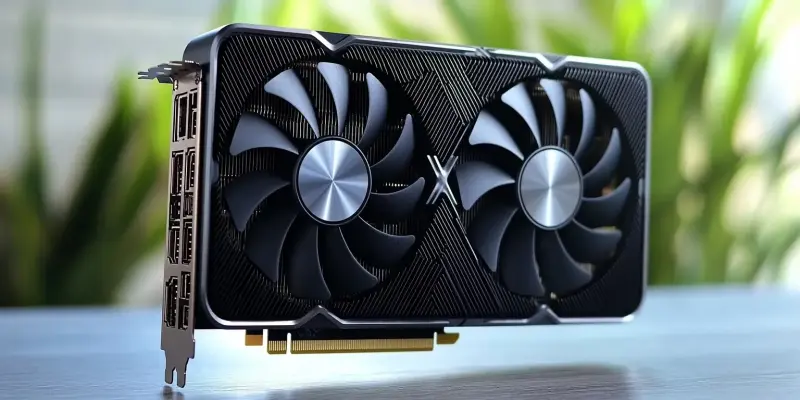
In a spectacular leap forward for artificial intelligence capability, NVIDIA’s new GeForce RTX 5090 graphics card is redefining performance benchmarks with its unparalleled prowess in AI inference tasks. This GPU demarcates a significant advancement over the competition, most notably surpassing AMD’s RX 7900 XTX in handling complex AI models. One of the standout aspects of the RTX 5090 is its fifth-generation Tensor Cores, which deliver a level of processing speed that was previously unattainable for consumer-level hardware. By doubling the performance of AMD’s offerings, the RTX 5090 sets a new standard for running high-end large language models on local systems, which is a highly sought-after capability in today’s tech-driven world.
Simplified AI Model Deployments with NVIDIA
The ease of accessing and running complex AI models like DeepSeek’s R1 on NVIDIA’s new RTX 5090 is another feather in the cap for this cutting-edge GPU. Users can run these models just as seamlessly as they would operate a typical internet-based chatbot, thanks to the comprehensive guide NVIDIA has published. This guide is essential for ensuring users can experiment securely and efficiently with the advanced features of the new GPU. Additionally, developers and businesses looking to leverage the 671-billion-parameter DeepSeek-R1 model will find it available as a preview on NVIDIA’s build platform. This model can deliver an impressive 3,872 tokens per second on an NVIDIA HGX ##00 system.
Looking beyond the standalone capabilities of the RTX 5090, NVIDIA’s broader infrastructure and support ensure that developers and enterprises can deploy these models seamlessly. The API for these models will soon be downloadable as part of the NVIDIA AI Enterprise software platform. This platform not only simplifies AI deployments with standardized APIs but also prioritizes security and data privacy—critical considerations in today’s data-centric environment. This comprehensive support framework enhances the ease and efficiency with which businesses can harness the power of NVIDIA’s GPUs for edge AI applications on consumer PCs.
In essence, the RTX 5090 is not just pushing the envelope in terms of AI performance; it is also revolutionizing how easily and securely these capabilities can be deployed and utilized. NVIDIA’s infrastructure complements the hardware advancements, making it a dominant choice for anyone aiming to utilize AI for complex, high-end applications. With this new release, NVIDIA has established itself as the leader in making powerful AI tools accessible and manageable, paving the way for even more innovation in artificial intelligence and machine learning.