

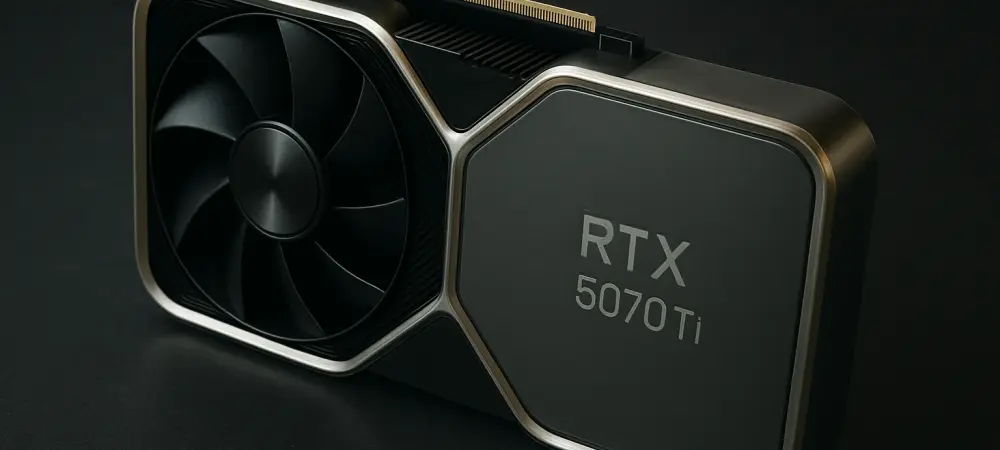
Imagine a world where breathtaking visuals at 1440p resolution are no longer the privilege of high-end GPU owners, but a reality for gamers on a tighter budget. Picture diving into the neon-drenched streets of a futuristic cityscape with ray tracing enabled, without the fear of stuttering frame rates. This is the promise of a new contender in the graphics card arena, poised to redefine what mid-range hardware can achieve. As gaming demands soar and technologies like AI upscaling become mainstream, the need for accessible yet powerful GPUs has never been greater. Enter a card that aims to bridge the gap between premium performance and affordability, setting a new benchmark for enthusiasts and casual players alike.
Setting the Stage for a Mid-Range Revolution
In an era where every frame counts, the mid-range GPU market has become a battleground for innovation and value. This particular graphics card emerges as a standout, built on cutting-edge architecture to tackle the demands of modern gaming at 1440p. It represents a strategic move by its manufacturer to cater to gamers who crave high-fidelity experiences without the exorbitant price tag of flagship models. With advanced ray tracing and AI-driven upscaling at its core, this GPU seeks to democratize premium features, making them available to a broader audience.
Beyond just specs, the significance of this card lies in its timing. As game developers push boundaries with increasingly complex visuals, the gap between budget and high-end hardware has widened. This GPU steps into that void, offering a compelling alternative for those unwilling to compromise on quality or performance. Moreover, it arrives amidst fierce competition, with rival technologies vying for dominance in upscaling and rendering efficiency. Understanding its place in this dynamic landscape is key to appreciating the impact it could have on gaming trends over the next few years.
Diving Deep into Features and Performance
AI-Driven Upscaling with DLSS 4
One of the standout features of this GPU is its implementation of the latest iteration of Deep Learning Super Sampling, known as DLSS 4. This technology harnesses artificial intelligence to upscale lower-resolution images to near-native quality, dramatically boosting frame rates in the process. Unlike traditional rendering methods, it intelligently reconstructs details, delivering crisp visuals that rival higher resolutions without the performance cost. In titles that support it, the difference is palpable—smooth gameplay in even the most demanding scenes. Testing across a variety of modern games reveals that this upscaling tech provides a significant edge, often achieving performance uplifts of 30% or more compared to native rendering at 1440p. What’s particularly impressive is the balance struck between image fidelity and speed. Artifacts or blurring, common in earlier upscaling attempts, are largely absent here, showcasing years of refinement in the AI algorithms. However, compatibility remains a consideration, as not all games support this feature at launch, though the library continues to expand rapidly.
This technology also positions the card as a forward-thinking choice for gamers. With developers increasingly integrating such upscaling into their titles, the GPU’s ability to leverage AI ensures it remains relevant in the face of future software demands. Compared to competing upscaling solutions, it often delivers superior visual clarity, especially in Quality mode, making it a preferred option for those prioritizing a polished experience over raw numbers.
Mastery of Ray Tracing
Ray tracing, once a luxury feature reserved for top-tier hardware, is another area where this card excels. It handles light, shadow, and reflection calculations with remarkable finesse, bringing lifelike realism to supported games. In visually intensive titles like sprawling urban adventures or sci-fi epics, the GPU maintains steady performance even with ray tracing cranked to high settings, a testament to its dedicated hardware for such workloads. Benchmarking shows frame rate consistency that competitors often struggle to match, with 1% lows—the measure of worst-case stuttering—remaining impressively high. This means fewer jarring dips during gameplay, which is crucial for immersion in fast-paced or cinematic experiences. Against alternatives in the same price bracket, the advantage becomes clear in scenarios demanding complex lighting effects, where it can outperform by double-digit percentages.
Yet, ray tracing still comes with a caveat: not every game justifies the performance hit, and some titles show minimal visual gains for the resource cost. For gamers focused on competitive play where raw speed trumps aesthetics, this feature might see limited use. Nevertheless, for those drawn to cutting-edge graphics, the card’s prowess in this domain marks it as a standout in the mid-range category, pushing the boundaries of what’s possible at this price point.
Hardware Specs and Design Ingenuity
Under the hood, this GPU boasts a robust set of specifications tailored for efficiency and power. With a substantial core count and generous memory bandwidth, it handles multitasking between rendering and texture streaming with ease. Power efficiency has been a focus, ensuring that thermal output remains manageable even under prolonged gaming sessions, thanks to an optimized cooling design that keeps noise levels in check.
The physical build reflects thoughtful engineering, with a compact form factor that fits comfortably in most modern PC cases, while still supporting advanced cooling solutions. This balance of performance and practicality extends to power consumption, which, while higher than some budget options, stays within reasonable limits for its class. Such design choices make it a versatile pick for system builders looking to pair it with a range of hardware configurations.
Stability is another highlight, with the card demonstrating resilience in stress tests across various workloads. Whether powering through extended gaming marathons or handling rendering tasks for content creation, it maintains consistent output without thermal throttling. This durability, combined with forward-compatible specs, suggests a product built not just for today’s demands but for the challenges of tomorrow’s applications as well.
Competitive Dynamics in the Mid-Range Arena
The mid-range GPU sector is more crowded than ever, with major players battling to capture the attention of cost-conscious gamers. This card enters a field shaped by rapid advancements in upscaling and rendering tech, where consumer expectations for high performance at lower costs continue to rise. Its arrival aligns with a broader industry trend toward integrating AI and real-time ray tracing into accessible price tiers, reflecting a shift in how value is defined in this space.
Against its closest rival from a competing brand, often priced more competitively, the GPU holds its own through superior technological refinement, particularly in AI upscaling and ray-traced performance. However, pricing remains a sticking point—regional disparities can make alternatives more appealing in certain markets. Additionally, the growing maturity of competing upscaling frameworks means the performance gap is narrowing, challenging this card to justify its premium through ecosystem support and long-term compatibility.
This competitive tension underscores a pivotal moment for mid-range hardware. As developers and consumers alike gravitate toward features once exclusive to flagship products, GPUs like this one must innovate relentlessly to stay ahead. The emphasis on balancing raw power with smart software solutions hints at a future where mid-tier cards could rival high-end models in all but the most extreme scenarios, reshaping purchasing decisions in the process.
Real-World Impact Across Gaming Genres
In practical use, this graphics card shines brightest at 1440p resolution, delivering stellar results across a spectrum of gaming genres. From visually stunning open-world titles with heavy ray tracing to fast-paced shooters prioritizing frame rates, it adapts seamlessly to diverse demands. Players can expect smooth experiences in graphically intense scenes, with upscaling smoothing out potential bottlenecks without noticeable loss in detail.
Specific scenarios highlight its versatility—for instance, in competitive gaming, the GPU’s frame consistency ensures minimal input lag or stuttering, giving players an edge in high-stakes matches. Meanwhile, for content creators dabbling in video editing or 3D rendering, the raw computational power offers a budget-friendly alternative to pricier workstation cards, handling moderate workloads with aplomb. This dual appeal broadens its target audience significantly.
Unique use cases further cement its value. In simulation games requiring both graphical fidelity and performance stability, the card strikes an ideal balance, catering to niche communities often overlooked by mainstream hardware reviews. Such adaptability suggests it’s not just a gaming GPU but a multifaceted tool for modern PC users, capable of meeting a range of creative and recreational needs without breaking the bank.
Navigating Challenges and Constraints
Despite its strengths, this GPU faces hurdles that could temper enthusiasm for some buyers. A primary concern is its price positioning, which, while more accessible than high-end models, still sits above several competing options offering comparable performance in certain contexts. In markets with inflated costs due to supply chain dynamics, this discrepancy becomes even more pronounced, potentially alienating budget-focused consumers.
Technical limitations also warrant consideration. Power draw, though optimized, may strain older systems or budget power supplies, necessitating upgrades for some users. Compatibility with legacy hardware or software can occasionally pose issues, though regular driver updates aim to mitigate such friction. These factors highlight the importance of assessing one’s existing setup before investing in the card, as hidden costs could emerge during integration.
Market challenges add another layer of complexity, with supply constraints occasionally impacting availability. Efforts to address these through expanded production and ecosystem partnerships are ongoing, but fluctuations in demand can still frustrate prospective buyers. While not deal-breakers, these obstacles underscore the need for careful evaluation, ensuring the card aligns with both performance expectations and practical realities of ownership.
Looking Ahead at Mid-Range GPU Evolution
Peering into the horizon, the trajectory for this GPU appears promising, buoyed by potential advancements in its core technologies. Future iterations of AI upscaling could further refine image quality and compatibility, potentially extending its lifespan as new games emerge with even greater demands. Driver optimizations, already a focus for the manufacturer, are likely to unlock additional performance over time, enhancing value for early adopters. The broader impact on gaming and adjacent industries also merits attention. As mid-range cards like this one normalize features such as ray tracing, mainstream adoption could accelerate, influencing how developers approach game design in the coming years, perhaps from now through 2027. This shift might democratize access to cutting-edge visuals, reshaping expectations across budget segments and inspiring innovation in software optimization.
Long-term, the card’s role in pushing technological boundaries at this price point could redefine market dynamics. Its ability to balance power, efficiency, and accessibility sets a precedent for what mid-range hardware can achieve, potentially pressuring competitors to elevate their offerings. For gamers and creators, this signals an exciting era where premium experiences become increasingly attainable, provided ongoing support and updates sustain its relevance.
Reflecting on a Game-Changing Contender
Looking back, the journey through this GPU’s capabilities painted a picture of a mid-range titan that punched well above its weight. Its blend of AI upscaling, ray tracing excellence, and solid hardware design carved a niche for gamers and creators who sought premium performance without the flagship price. Challenges like pricing and compatibility occasionally dimmed its shine, but the overall package delivered on its promise of accessible high-fidelity gaming.
For those considering the next steps, weighing specific needs against budget constraints proved essential. Gamers with a focus on ray tracing or diverse game libraries found a reliable ally here, while those prioritizing value might have explored alternatives. A practical approach involved checking system compatibility and monitoring regional pricing trends to maximize the investment. As the GPU market continues to evolve, keeping an eye on software updates and emerging titles will ensure this card remains a relevant powerhouse for years to come.