

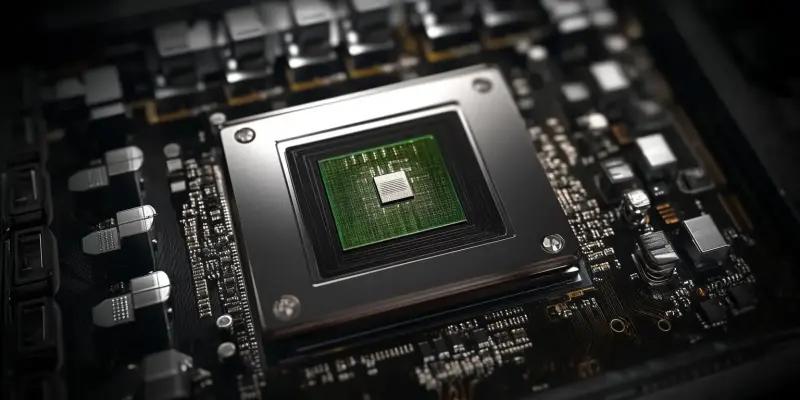
The highly anticipated release of Nvidia’s RTX 5060 Ti graphics card is generating much excitement and speculation in the tech world, as the company has announced a launch date of April 16 of this year.Nvidia’s strategy for dominating the budget-tier graphics card segment comes into sharper focus as leaks reveal incremental enhancements in specifications and competitive pricing aimed at enticing a wide range of consumers. Following the releases of the RTX 5070 and 5070 Ti earlier this year, the market is keenly waiting to see how the RTX 5060 Ti will perform and impact Nvidia’s position in the competitive landscape.
Market Strategy and Leak Confirmation
Nvidia’s approach appears to center around offering substantial value at an attractive price point.Recent leaks suggest the RTX 5060 Ti will provide slight improvements over its predecessor, the 4060 Ti, while maintaining similar pricing. Specifically, consumers can expect to pay around $400 for the 8 GB variant and around $500 for the 16 GB counterpart.The pricing strategy aims to make high-performance graphics accessible to enthusiasts and casual users alike, solidifying Nvidia’s foothold in the budget-friendly sector.
Support for these rumors has been bolstered by early listings of pre-built desktop systems featuring the RTX 5060 and 5060 Ti. Stormcraft’s RTX 50 series model, for example, starts at $1,299, reflecting a minor price uptick compared to comparable 4060 systems. Similarly, CyberPowerPC briefly listed a pre-built system on Best Buy for $1,149 before its removal. These listings add credibility to the suggested launch timeline and price range, implying that both consumers and vendors are gearing up for the announcement.
Technical Specifications and Performance Enhancements
Noteworthy details about the RTX 5060 and 5060 Ti highlight several improvements in technical specifications.According to leaks, the 5060 Ti will feature 4,608 CUDA cores, while the standard 5060 will have 3,840 cores. Users can also expect to benefit from 28 Gbps of GDDR7 VRAM, allowing for a memory bandwidth of 448 GB/s. Although clock speeds have not yet been officially confirmed, subtle increases are anticipated, promising slight performance boosts compared to the previous models.Power consumption forecasts suggest the RTX 5060 Ti will require around 180W, while the standard RTX 5060 should draw about 150W. These power requirements indicate efficient energy use while delivering improved graphical performance. Such enhancements are designed to appeal to users seeking a balance between power and affordability, ensuring these graphics cards cater to the needs of a diverse range of gaming and professional applications.
Competitive Landscape and Market Implications
The tech world is buzzing with anticipation over Nvidia’s highly anticipated release of the RTX 5060 Ti graphics card. The excitement has reached new heights as Nvidia has officially announced the launch date of April 16 this year.This latest addition to their lineup is expected to shake up the budget-tier graphics card market. Leaks have revealed that the RTX 5060 Ti will come with incremental enhancements in its specifications, coupled with competitive pricing.Nvidia’s strategy clearly aims to attract a broad range of consumers, solidifying its dominance in this segment. The impending release follows the earlier launches of the RTX 5070 and 5070 Ti, which set the stage for what enthusiasts and industry watchers expect to be another game-changer.The market is keenly observing to gauge how the RTX 5060 Ti’s performance will influence Nvidia’s standing in the competitive graphics card landscape. The reception of this new card could significantly impact Nvidia’s position against its rivals, making April 16 a pivotal date for the company and tech enthusiasts alike.