

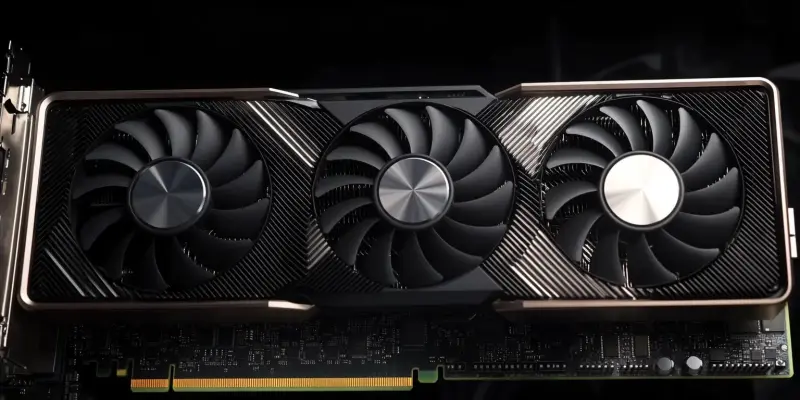
The graphics card industry has always been rife with speculation and anticipation, and the recent rumors surrounding Nvidia’s forthcoming RTX 5060 and 5060 Ti are no exception. Positioned at the lower end of Nvidia’s Blackwell GeForce lineup, these cards are expected to cater to various user needs with differing specifications. Enthusiasts, however, have mixed feelings about these upcoming GPUs, particularly concerning their VRAM configurations.
VRAM Configuration and Performance Concerns
Controversial 8GB VRAM on RTX 5060
Recent leaks suggest that while the RTX 5060 Ti will feature 16GB of VRAM, the standard RTX 5060 will only sport 8GB. This revelation has sparked considerable debate among the gaming community and tech enthusiasts. The controversy stems from previous criticisms of the RTX 4060’s memory limitations, which many believed hindered its performance in more demanding scenarios. Despite being part of a new generation, maintaining the same 8GB configuration could potentially limit the RTX 5060, especially as gaming technology continues to advance.
The RTX 5060, with its 8GB of VRAM, may face challenges in future-proofing and handling higher resolutions like 1440p. Many users are concerned that this amount of memory will not be sufficient for optimal performance in upcoming game titles and applications requiring more intensive graphical processing power. These apprehensions underscore a broader issue in the GPU market: the balance between cost, performance, and future capability. As more games and applications demand higher VRAM for better textures and smoother gameplay, sticking to 8GB might seem like a step backward rather than forward, prompting questions about Nvidia’s strategy.
Improved Bandwidth but Unsurprising VRAM
Both the RTX 5060 and 5060 Ti are rumored to share the same board (PG152) and the GB206 Blackwell chip, with a 128-bit memory bus. This uniformity would be accompanied by GDDR7 VRAM, running at 28Gbps, projected to achieve a memory bandwidth of 448GB/s. While this represents a considerable improvement over the RTX 4060 series, enhancing overall performance, it does not entirely alleviate concerns regarding the modest VRAM capacity of the RTX 5060. For many users, the bandwidth increase is welcome but not sufficient to overshadow the potential limitations of an 8GB VRAM.
In contrast, the RTX 5060 Ti, equipped with 16GB of VRAM, appears more capable of handling the demands of modern gaming and applications. This variant positions itself as a more future-proof option for users willing to invest in enhanced performance. However, the disparity between the two models raises questions about Nvidia’s approach to segmentation within its GPU lineup. The introduction of higher bandwidth might assist the RTX 5060 in certain scenarios, but the fundamental issue of memory capacity may continue to haunt it. Enthusiasts argue that Nvidia should align both improvements in bandwidth and VRAM to truly benefit the user experience, especially given the growing needs of modern software.
Market Competition and Release Speculations
Speculated Release Period and Market Impact
The release of these new GPUs is speculated to occur between late February and March 2025, aligning with previous rumors about their launch window. This timing is crucial for Nvidia as it aims to position itself competitively within the evolving market. The company must navigate not only internal segmentation strategies but also external pressures from industry competitors. The RTX 5060 and 5060 Ti’s introduction during this period would be strategic, setting the stage for comparisons with other GPUs launched around the same time.
Nvidia’s approach to VRAM allocation among different GPU tiers adds another layer of complexity. The RTX 5060 Ti’s supposed 16GB of VRAM contrasts sharply with the rumored 12GB for the RTX 5070, further complicating the company’s segmentation strategy. Historically, Nvidia has sometimes provided lower-tier models with more VRAM than their slightly superior counterparts, a move not often favored by enthusiasts and industry analysts. Given the close release dates, it is intriguing to speculate whether the RTX 5060 Ti might indeed outpace the RTX 5070 in terms of memory. This disparity could potentially affect market perceptions and consumer choices, emphasizing the need for a clearer, more cohesive strategy from Nvidia.
Competitive Landscape and Intel’s Influence
The graphics card industry is always buzzing with speculation and excitement, and recent rumors about Nvidia’s upcoming RTX 5060 and 5060 Ti are no different. These cards, expected to be the more affordable options in Nvidia’s Blackwell GeForce lineup, aim to meet a variety of user needs with their diverse specifications. However, the reception among tech enthusiasts is mixed, mainly due to concerns about the VRAM configurations. These GPUs are intended to provide a balance between performance and cost, appealing to both casual and more serious users. The anticipation for their release is palpable, as many are eager to see how these new models will perform in real-world scenarios. Enthusiasts are particularly cautious, wondering if the VRAM will be sufficient for future gaming and professional applications. Overall, the RTX 5060 and 5060 Ti are generating significant interest and debate within the tech community, as everyone awaits more detailed information and official announcements from Nvidia.