

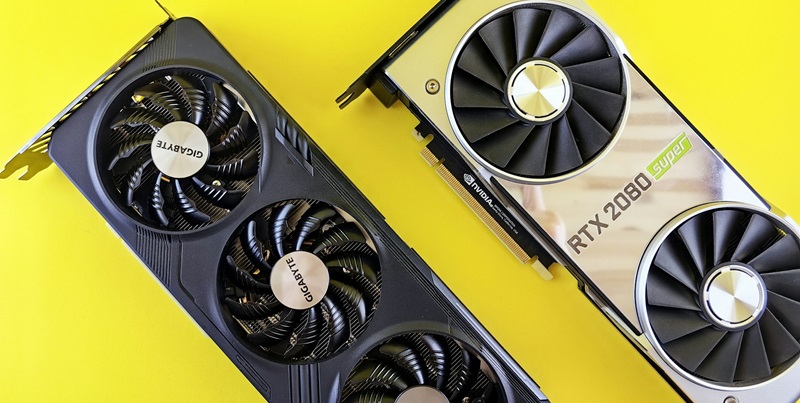
NVIDIA, the leading technology company, has introduced its latest offering in the graphics card market – the GeForce RTX 4070 Ti SUPER. This highly anticipated GPU is specifically designed to cater to the needs of high-fidelity and high-refresh rate gaming at 1440p resolution, with the added advantage of delivering a very playable 4K experience, thanks to its 16 GB VRAM capacity.
Pricing and Availability
The GeForce RTX 4070 Ti SUPER is priced at $799 US at MSRP, aligning with the price point of its predecessor, the GeForce RTX 4070 Ti Non-SUPER GPU. However, the Non-SUPER variant has now been completely replaced by the more advanced 4070 Ti SUPER. This move ensures that consumers get better value for their investment, with enhanced features and improved performance.
Enhanced VRAM and Performance
One of the key upgrades in the GeForce RTX 4070 Ti SUPER is its VRAM capacity, which is now comparable to that of higher-tier GPUs such as the RTX 4080 and the soon-to-be-released RTX 4080 SUPER. With 16 GB of VRAM, this GPU promises smoother multitasking, better asset streaming, and improved texture quality, resulting in a more immersive gaming experience. Additionally, NVIDIA has increased the core counts and optimized the performance per dollar value of its Ada family, boosting overall performance and efficiency.
Addition to the ‘SUPER’ Portfolio
NVIDIA’s ‘SUPER’ portfolio continues to expand with the release of the GeForce RTX 4070 Ti SUPER. This portfolio aims to provide mid-cycle upgrades that offer substantial improvements over existing graphics cards. By increasing core counts, offering additional VRAM across certain variants, and enhancing the performance per dollar value, NVIDIA continues to push the boundaries of gaming technology.
Target Audience and Purpose
The GeForce RTX 3070 Ti SUPER is specifically designed for gamers who prioritize high-fidelity visuals and smooth gameplay at 1440p resolution. With its upgraded features and powerful performance capabilities, this GPU is expected to deliver exceptional gaming experiences in demanding AAA games. Moreover, it ensures future-proofing, allowing gamers to stay ahead of the curve as more graphically intensive titles are released.
Competition and Comparison
The competition in the graphics card market continues to be intense, with rival companies constantly striving to outdo each other. The GeForce RTX 4070 Ti SUPER will be competing against its competitor’s RX 7900 XT, offering tough competition with its upgraded core and VRAM. The improved VRAM capacity is a significant advantage that allows the GPU to handle demanding games and advanced visual effects with ease.
NVIDIA’s release of the GeForce RTX 4070 Ti SUPER reinforces its commitment to providing gamers with cutting-edge technology and exceptional performance. With a focus on high-fidelity visuals, smooth gameplay, and improved VRAM capacity, this GPU is set to deliver unparalleled gaming experiences. The mid-cycle upgrade brings substantial improvements over its predecessor, making it an attractive choice for gamers looking to enhance their gaming setup. As technology continues to advance, NVIDIA’s offerings ensure that gamers remain at the forefront of the gaming world, embracing the future of immersive and visually stunning gameplay.