

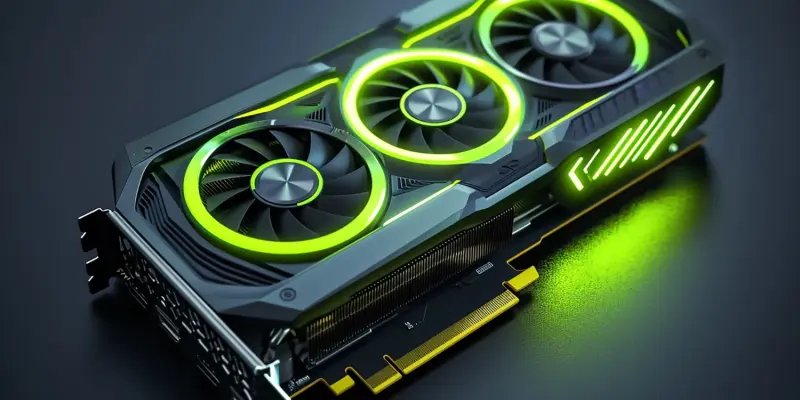
Nvidia, a leader in AI and computing technologies, is making strides in integrating optical technology into its networking chips to enhance efficiency and reduce power consumption. This move centers on co-packaged optics, a method that uses laser light for data transmission. This approach promises speed and energy efficiency far superior to traditional copper connections. Nvidia has chosen to implement this technology in its networking chips rather than its flagship GPUs due to reliability issues. Despite these challenges, the integration of optical technology marks a significant step forward in advancing data transmission capabilities.
The Challenges and Advantages of Optical Technology
The primary advantage of co-packaged optics lies in its potential to vastly improve energy efficiency and data transmission speeds compared to conventional copper connections. By using laser light instead of electrical signals, optical technology reduces power consumption and mitigates heat generation, addressing a significant challenge in modern data centers and computing environments. However, Nvidia CEO Jensen Huang has indicated that while co-packaged optics show great promise, they are not yet reliable enough for deployment in GPUs. The inherent reliability and maturity of copper connections still make them a more dependable choice for these high-performance processors.
Despite the current limitations in reliability, Nvidia is not deterred from leveraging co-packaged optics where they can offer clear advantages. The company has turned its attention to networking chips, particularly those used in switches. These applications are less dependent on the absolute reliability required for GPUs and can benefit significantly from the enhanced efficiency offered by optical technology. This balance between innovation and practical application allows Nvidia to push the boundaries of what is possible while still maintaining robust performance and dependability.
Innovations in Networking Solutions
In the ongoing quest to enhance AI computing infrastructure, Nvidia has introduced the Quantum-X and Spectrum-X networking switches. These switches represent a major leap in integrating optical communications with electronic circuits on a large scale. The result is a network solution that is better equipped to handle the immense data loads required by modern AI factories. These factories, which connect millions of GPUs across various sites, stand to benefit significantly from the reduced energy consumption and operational costs enabled by these new switches.
The advancements in Nvidia’s networking solutions include improved power efficiency, better signal integrity, network resiliency, and faster deployment. These improvements are crucial in an era where the demand for AI computing power is escalating rapidly. By adopting optical technology in these networking chips, Nvidia is setting a new standard for what is possible in hyperscale and enterprise networks. This move also underscores the company’s commitment to innovation and sustainability, addressing the growing energy demands of modern data centers and AI applications.
Future Prospects and Industry Trends
The push towards integrating optical technology into networking chips is part of a broader industry trend aimed at mitigating the escalating power consumption and heat generation associated with traditional copper connections. As the demand for AI computing continues to rise, the need for more efficient and sustainable solutions becomes increasingly urgent. Nvidia’s strategic focus on co-packaged optics highlights the potential of this technology to revolutionize data transmission and processing in environments where efficiency and scalability are paramount.
Several other players in the industry are also exploring similar technologies. Startups like Ayar Labs are working on making co-packaged optics more reliable and cost-effective. The CEO of Ayar Labs, Mark Wade, has emphasized the necessity of optics for building larger servers that are free from the limitations of copper. While the deployment of co-packaged optics in GPUs may still be a few years away, the continued development and refinement of this technology indicate that its broader adoption is on the horizon.
Pioneering Optical Integration
Nvidia, a prominent player in AI and computing technology, is advancing in the realm of optical technology by integrating it into its networking chips. This strategic move aims to boost efficiency and cut down on power usage. The focus is on co-packaged optics, a technique that employs laser light to transmit data. This method offers significantly greater speed and energy efficiency compared to traditional copper connections. Although Nvidia faces some reliability issues with this technology, which is why it’s being implemented in networking chips rather than its flagship GPUs, the integration of optical technology into their products represents a notable advancement in data transmission capability. By adopting co-packaged optics, Nvidia is addressing the growing demands for faster and more efficient data processing solutions in today’s world and positioning itself at the forefront of innovation.