

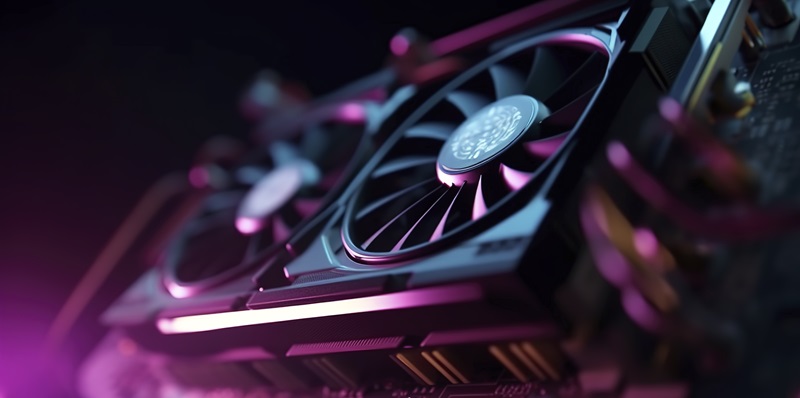
In the world of graphics cards, leaks and rumors often generate a lot of excitement and speculation. Recently, leaker Kopite7kimi shared some intriguing information about the upcoming Nvidia GPUs. The focus was primarily on the highly anticipated RTX 4080 Super, but details about the RTX 4070 Super and RTX 4070 Ti Super were also mentioned. Let’s delve into the leaked specifications and explore what these potential GPUs may offer.
RTX 4080 Super specs
According to Kopite7kimi’s leak, the RTX 4080 Super is rumored to boast an impressive 10,240 CUDA cores. This significant increase in core count suggests a substantial performance boost over its predecessor, the RTX 3080. Furthermore, the leak suggests that the RTX 4080 Super will be built on the AD103 GPU architecture. If this information holds true, gamers and professionals alike can expect a power-packed GPU capable of handling demanding tasks with ease.
RTX 4070 Super Specs
Moving on to the RTX 4070 Super, the leak indicates that it will utilize the AD104 GPU. However, the core count for this variant is said to be slightly lower at 7,168 CUDA cores. This reduction in cores compared to the full configuration of the AD104 chip is understandable, as it positions the RTX 4070 Super as a slightly less powerful option compared to its Ti counterpart.
RTX 4070 Ti Super Specs
The leaked information also sheds light on the RTX 4070 Ti Super, a model that falls between the RTX 4080 Super and the RTX 4070 Super. Speculations suggest that this GPU might use either the AD103 architecture with 8,448 CUDA cores or possibly even the AD102 architecture. However, it is intriguing to note that using the AD102 architecture for the RTX 4070 Ti Super instead of the RTX 4080 Super seems illogical. The question remains as to why Nvidia would repurpose the AD102 chips for this model instead of the higher-end RTX 4090.
Doubts and uncertainty
While Kopite7kimi shared these specifications, they also expressed doubts about their accuracy, particularly concerning the RTX 4070 Ti Super. It is essential to understand that leaks and rumors in the tech industry can often be unreliable or based on outdated information. In this case, even the leaker disagrees with some other sources, further adding to the uncertainty surrounding these specifications.
Shifting plans and changing specifications
It is crucial to recognize that the leaked information is several weeks old, and Nvidia’s plans may have shifted since then. The GPU market is highly dynamic, with constant advancements and changes. As a result, specifications can be fluid, and exact models and names may vary. Therefore, it is essential to approach this leak with a grain of salt and acknowledge the potential for everything to change in the forthcoming months.
Confirmation of RTX Super Refreshes
Although the leaked information might not be entirely accurate, what we can reasonably expect is Nvidia’s plan to introduce RTX Super refreshes soon. These refreshes, which are anticipated to arrive in early 2024, will likely offer enhanced performance and improved features compared to the current RTX lineup. While the exact specifications may remain uncertain for now, it is safe to assume that Nvidia is working on delivering notable upgrades to their graphics cards.
Nvidia’s goal for the RTX 4080 Super
Considering the reputation that the RTX 4080 has gained, it is reasonable to assume that Nvidia will strive to make the Super variant much better received. With the leaked specs indicating a significant increase in CUDA cores, the RTX 4080 Super aims to offer a substantial improvement in performance over its predecessor. If Nvidia succeeds in achieving this goal, the RTX 4080 Super could potentially earn a place among the best graphics cards available on the market.
The recent leak regarding Nvidia’s upcoming GPUs has generated significant buzz among tech enthusiasts. However, it is crucial to approach this leaked information with caution, considering the doubts expressed by the leaker themselves and the rapidly evolving nature of the industry. While the provided specifications may not be entirely accurate, Nvidia’s plans for RTX Super refreshes are likely to materialize. As we look forward to the future, it remains to be seen how Nvidia will solidify these specs and what innovations they will bring to the table.