

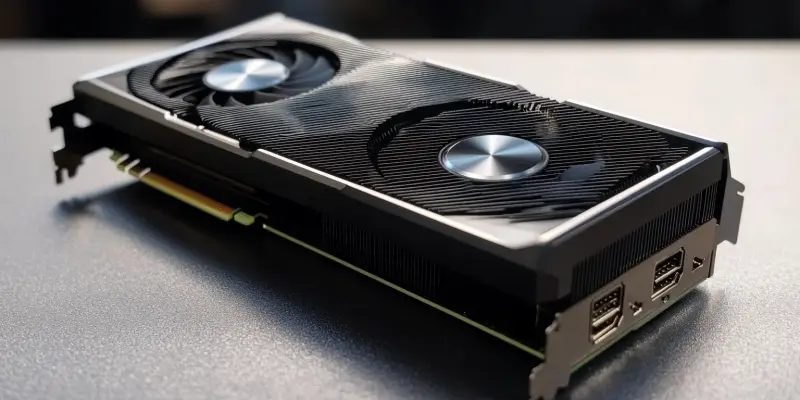
In what could be an unexpected revelation, images of the Nvidia GeForce RTX 5080 graphics card have apparently been leaked online through photos of the MSI Gaming Trio edition’s retail packaging. This development, first spotted on the now-deleted ChipHell forum post and later reported by VideoCardz, has sparked a mixture of excitement and caution within the tech community. The anticipated announcement of the RTX 5080 at CES 2025 has been somewhat preempted, aligning with existing rumors suggesting this will be the first Nvidia Blackwell GPU to hit the market. Eager eyes are now turning toward January 21, 2025, as a potential release date.
Unveiling Speculations Through Leaked Images
Detailed Examination of the Retail Packaging
The leaked images show the front and back of the retail box, seemingly confirming exciting new specs for the RTX 5080. If the leak holds any legitimacy, then the GPU will boast 16GB of GDDR7 memory alongside a 256-bit memory bus, akin to what is seen in the RTX 4080. These specifications collectively hint at a significantly more powerful card that could deliver stellar 4K gaming performance. The inclusion of GDDR7 memory alone could render the RTX 5080 a front-runner in consumer graphics technology. Also noteworthy is the possible use of the PCIe 5.0 interface standard, which would mark the RTX 5080 as the first consumer card to adopt this standard, thus promising greater data transfer speeds and improved overall efficiency.
Further bolstering the speculation, the RTX 5080 is rumored to house Nvidia’s GB203-400 Blackwell GPU, comprising 10,752 CUDA cores. Should Nvidia retain the same Streaming Multiprocessor (SM) structure from the preceding Lovelace architecture, the RTX 5080 would feature 84 SMs. This segmentation could be expected to include 84 ray-tracing cores and equally numbered tensor cores. This represents about a 5% increase in core counts compared to the RTX 4080 Super. While these specifics remain unverified due to their absence in the leaked photos, they paint a promising picture for those eagerly awaiting the newest advancements in graphics processing.
Professional and Gaming Performance
The potential positioning of the RTX 5080 as a ‘professional’ GPU has raised eyebrows among PC gamers who fear this may negatively impact its gaming performance. Concerns are primarily rooted in the possibility of skewed optimizations favoring professional applications over typical gaming scenarios. Nevertheless, the card is rumored to be about 10% faster than the current RTX 4090, although it could share similar power consumption ratings to the Lovelace flagship, balancing power efficiency with performance.
With mounting speculation, the community has reacted with a blend of excitement and wariness, awaiting Nvidia’s official confirmation. Beyond gaming, the enhancements brought by the Blackwell architecture could leverage the RTX 5080 for diverse applications such as AI workloads, 3D modeling, and real-time ray tracing. The balance Nvidia manages to strike between professional-grade performance and gaming capability will likely determine the broader reception of the RTX 5080. For now, these leaks function as an intriguing teaser for what Nvidia could unveil at CES 2025, leaving a trail of eager anticipation in their wake.
Anticipation for CES 2025
Awaiting Official Confirmation
The anticipation surrounding CES 2025 has only amplified with the potential leak of the RTX 5080. Enthusiasts and professionals alike are keenly awaiting official details that could confirm or dispel the current crop of rumors. The leaked photos, while promising, remain unverified, inviting both excitement and skepticism among the tech community. Given the potential implications of the leaked specifications, Nvidia’s formal reveal is expected to be a notable event, shedding light on what the future holds for high-end graphics cards.
As industry watchers monitor developments, it is clear that the discussion around the RTX 5080 will persist, fueled by both leaked information and speculative analysis. The stakes are high for Nvidia to meet, or even exceed, the expectations set by the rumored features. The CES platform provides an optimal stage for Nvidia to validate the fervor or provide new insights that may shift current expectations. Until then, the excitement surrounding the RTX 5080 serves as a testament to the ever-evolving landscape of graphics technology.
Future Implications and Expectations
In an unexpected turn of events, images of the Nvidia GeForce RTX 5080 graphics card have seemingly leaked online. These images, showing the MSI Gaming Trio edition’s retail packaging, first appeared on a now-deleted ChipHell forum post and were later reported by VideoCardz. This revelation has caused a buzz in the tech community, blending excitement with caution. The hype is tied to the anticipated announcement of the RTX 5080 at CES 2025, a significant event that has been somewhat preempted by this leak. Rumors indicate that the RTX 5080 will be the first Nvidia Blackwell GPU to launch, sparking even more curiosity. Enthusiasts and industry insiders alike are now keenly eyeing January 21, 2025, as a potential release date for this groundbreaking graphics card. As this date approaches, speculation and discussions are intensifying, reflecting both the high expectations and the potential impact of Nvidia’s newest offering on the market.