

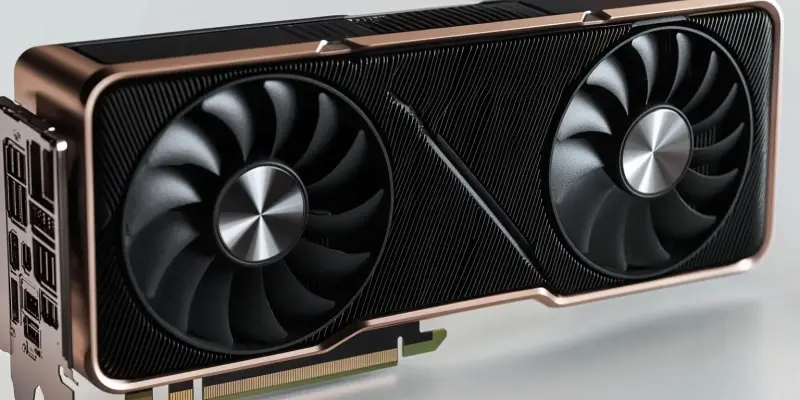
Recent discussions have raised concerns among tech enthusiasts regarding potential issues in Nvidia’s RTX 50-series laptop GPUs, specifically revolving around missing ROPs (Raster Operations Pipelines). Reports from reputable German publications Heise Online and HardwareLuxx suggested that Nvidia has been instructing notebook manufacturers to conduct additional tests on their RTX 50 laptops. According to these reports, the problem affected over 0.5% of standalone cards, causing the detailed testing to eliminate impacted GPUs from reaching consumers. While these claims caused quite a stir, Nvidia has categorically denied them.
Nvidia responded by assuring that the extensive testing being conducted on the RTX 50 laptops is simply part of routine quality assurance measures. The company emphasizes that the missing ROPs issue is confined to specific standalone models like the RTX 5090 and 5070 Ti, not the laptop GPUs. Despite the company’s reassurances, skepticism remains prevalent. Past instances, such as the problems discovered with the RTX 5080 model, which were only acknowledged after users provided tangible proof of defects, have left users wary of potential undisclosed issues. Nonetheless, Nvidia stands firm in its stance, denying any widespread issues in the RTX 50 laptop GPUs.
The additional testing and quality assurance processes may result in delays for RTX 50 laptop releases. Originally scheduled for March, the release could potentially extend to April as manufacturers work to meet Nvidia’s stringent testing requirements. These delays might grant a closer examination of Nvidia’s quality control processes, potentially revealing whether any new firmware or BIOS updates will be required to address underlying issues. The postponement could be a crucial period for observing Nvidia’s response to these allegations and whether it will indeed prevent any defective GPUs from reaching the market.
While Nvidia addresses the controversy, AMD has quietly positioned itself as a plausible rival in the graphics card market. AMD’s new RX 9070 XT and 9070 GPUs are emerging as solid competitors to Nvidia’s RTX 5070 Ti, boasting similar performance benchmarks but at a more consumer-friendly price point. For those consumers who are hesitant about the potential issues plaguing Nvidia’s next-generation graphics cards, AMD’s offerings seem to provide a viable alternative. The RX 9070 XT and 9070 GPUs have garnered positive attention as safer options, which could sway the market in AMD’s favor amid Nvidia’s current scrutiny.