

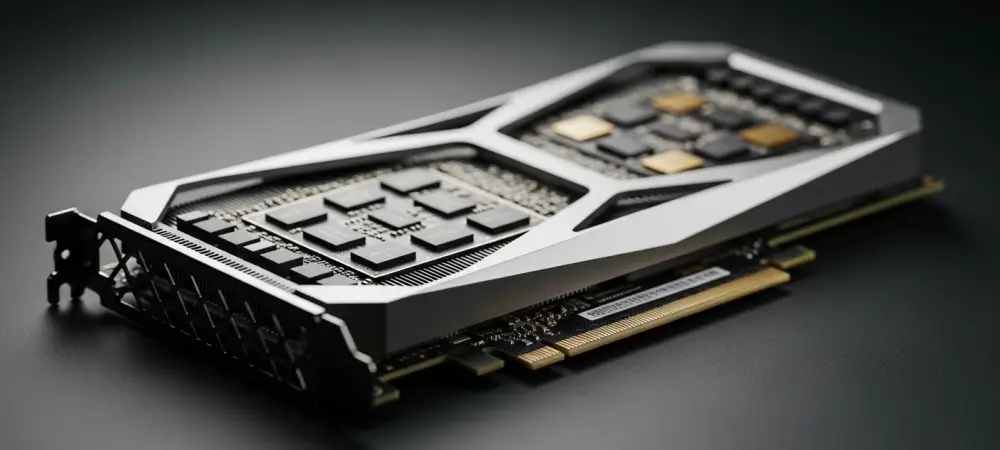
Just as the industry begins to fully grasp the immense power of the Blackwell architecture, newly discovered hardware identifiers suggest NVIDIA is already preparing a significant expansion of its flagship AI platform. The NVIDIA Blackwell architecture represents a significant advancement in the data center and AI sectors. This review explores the evolution of the technology, its key features, performance metrics, and the impact it is having on various applications. The purpose of this review is to provide a thorough understanding of the technology, its current capabilities, and its potential future development.
The Blackwell Architecture: Context and New Developments
The Blackwell architecture is the cornerstone of NVIDIA’s dominance in AI and high-performance computing, serving as the successor to the highly influential Hopper generation. Its original lineup was designed to deliver unprecedented performance for training and inferencing large language models and other complex AI workloads. However, the recent discovery of five new PCI hardware identifiers signals a strategic expansion of this product line. These new IDs point toward unannounced variants, suggesting NVIDIA is diversifying its offerings to meet more specific enterprise demands and solidify its market position. This development shifts the conversation from what Blackwell is, to what it is becoming.
Analyzing the New Blackwell Variants
The emergence of these new GPU identifiers provides a glimpse into NVIDIA’s evolving strategy for the data center. Each new model designation likely corresponds to a product tailored for a specific niche within the broader enterprise market, allowing for more granular optimization of performance, power, and cost for customers.
The Expanded GB110 and the Emergence of GB120
The high-performance GB110 GPU already powers NVIDIA’s top-tier Blackwell Ultra lineup, and a new identifier for it suggests a potential revision or a new configuration for a specialized server system. Such a variant could offer slight performance enhancements or efficiency improvements based on manufacturing refinements. More intriguing is the appearance of the GB120, a completely new GPU in the Blackwell family. Its position is currently unknown, but it could represent either a new flagship product that surpasses the GB110 or a custom-designed chip with unique features tailored for a specific, large-scale enterprise partner.
Unpacking the New GB112 GPU
The discovery of three distinct identifiers associated with a new GB112 GPU is particularly telling. This multiplication of variants strongly implies customization for NVIDIA’s various server platforms, such as DGX, HGX, and MGX.
These different versions of the GB112 could feature varying memory configurations, different power targets, or firmware optimizations designed to maximize performance within these specific, integrated systems. This approach allows NVIDIA to deliver fine-tuned solutions rather than a one-size-fits-all product.
Strategic Positioning and Production Ramp-Up
This expansion coincides with reports of NVIDIA increasing its production of current Blackwell chips. The strategy appears two-fold: meet the immense existing demand while simultaneously introducing more specialized variants to capture every segment of the enterprise market. This move allows the company to fine-tune its product stack and maximize revenue before the next major architectural release.
Target Markets and Enterprise Applications
The evidence overwhelmingly points to these new GPUs being destined for the enterprise and data center sectors. Their architectural identifiers align with NVIDIA’s professional-grade silicon, not its consumer-focused products. Any speculation that these chips could be part of a consumer gaming refresh is unfounded, as such products would be built upon different, GB200-series silicon.
Market Implications and Unanswered Questions
While a broader product line offers more choice, it also introduces potential challenges. A highly segmented Blackwell family could create market confusion for enterprise customers trying to select the optimal hardware for their needs. Moreover, optimizing software and driver support across multiple new silicon variants presents a significant technical hurdle for NVIDIA to overcome.
The Road to Rubin and Beyond
The Blackwell expansion serves as a critical strategic bridge to the company’s next-generation Rubin architecture. By diversifying its current offerings, NVIDIA can address immediate market needs and experiment with configurations that may inform the design of future products. These new variants are not just a product line extension; they are a tactical maneuver to maintain momentum and competitive pressure in the rapidly evolving AI hardware industry.
Final Assessment: A Broadening Enterprise Offensive
This expansion of the Blackwell architecture is a clear signal of NVIDIA’s intent to deepen its entrenchment in the enterprise and data center markets. By creating a more diverse portfolio of specialized GPUs, the company caters to a wider range of AI and HPC workloads, reinforcing its market dominance. This strategic broadening of its offensive ensures that Blackwell remains the definitive platform for cutting-edge AI development ahead of the transition to the next architectural generation.