

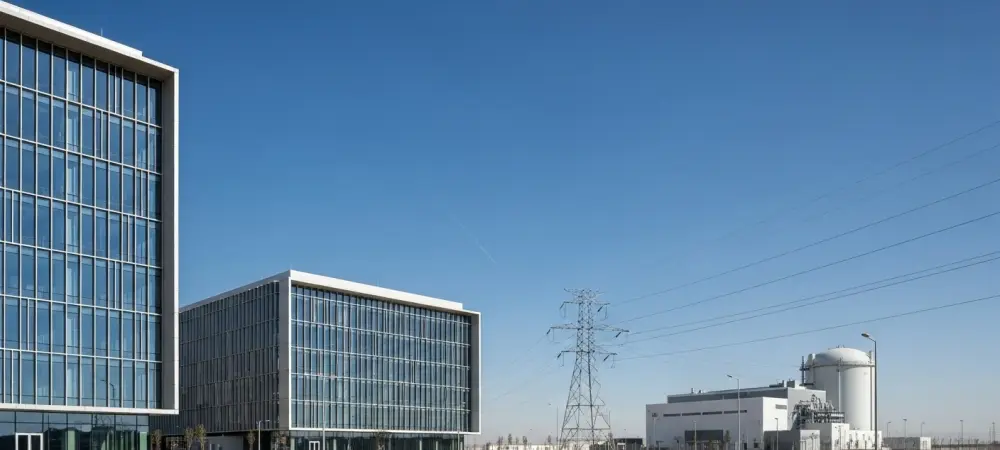
The ambitious convergence of artificial intelligence and atomic energy, once a blueprint for a carbon-free technological future, has collided with the stark realities of regulatory procedure on a quiet stretch of the Texas Gulf Coast. A recent decision by federal regulators to permit a challenge against a pioneering nuclear project, not on the familiar grounds of safety but on the novel basis of financial qualifications, has sent a cautionary signal through a tech industry betting billions on a nuclear-powered AI revolution. This unforeseen hurdle forces a critical reevaluation of whether the promises of swift, clean, and constant power from Small Modular Reactors (SMRs) can be delivered on the aggressive timelines demanded by the world’s most powerful data centers.
The Billion-Dollar Bet on Nuclear AI Hits a Regulatory Wall
With technology titans like Microsoft, Google, and Amazon committing vast sums to fuel the unprecedented energy needs of generative AI, the industry’s search for a reliable, carbon-neutral power source has led directly to the atom. These companies envision fleets of data centers powered by next-generation nuclear reactors, capable of providing the 24/7 baseload electricity that intermittent renewables cannot guarantee. This multi-billion-dollar bet is predicated on the idea that SMRs can be deployed faster and more predictably than their conventional, gigawatt-scale predecessors, making them an ideal match for the rapid scaling of AI infrastructure.
However, the surprising regulatory challenge allowed against the Dow and X-energy project in Texas throws this assumption into question. By opening the door to scrutiny of a project’s financial viability, regulators have introduced a new layer of risk and potential delay. For an industry that measures progress in months, not years, this development is a significant complication. It raises the critical question of whether the nuclear renaissance, so eagerly anticipated by Silicon Valley, can overcome the intricate and often slow-moving machinery of federal oversight to deliver power when and where it is most needed.
The AI Power Paradox Why Data Centers Are Turning to the Atom
The turn toward nuclear energy is not a matter of preference but of necessity, driven by a fundamental shift in how data centers consume power. The rise of AI and machine learning workloads has created a step-function increase in energy demand, moving from steady, predictable growth to explosive, exponential surges. This demand is rapidly outstripping the capacity of existing electrical grids in key regions, creating a bottleneck that capital investment alone cannot solve. Data center developers increasingly find that securing power is a greater challenge than securing funding or land.
This power crunch is exacerbated by the limitations of the current energy infrastructure. While renewable sources like solar and wind are central to decarbonization goals, their intermittency makes them insufficient for the constant power needs of AI computing. Furthermore, the grid itself is a major obstacle, with multi-year interconnection queues and transmission bottlenecks preventing new energy projects from coming online. This “AI power paradox”—the need for massive amounts of clean, reliable electricity that the grid cannot provide—has forced the industry to look for a disruptive solution. SMRs have emerged as that solution, offering the prospect of compact, factory-built reactors that can be deployed on-site to provide a dedicated, carbon-free, and unwavering source of power.
A Texas Showdown The First Real-World Test for SMRs
The first significant real-world test of this new paradigm is unfolding in Calhoun County, Texas, where Dow and X-energy plan to build a 320-megawatt SMR facility. Designed to power Dow’s industrial operations, the project is widely seen as a commercial and regulatory blueprint for future data center applications. If successful, it would demonstrate that SMRs can be licensed, constructed, and operated safely and economically, paving the way for similar projects across the country. Its success would validate the core value proposition of SMRs: faster, more scalable nuclear deployment.
This vital test case, however, hit an unexpected snag. The Nuclear Regulatory Commission’s Atomic Safety and Licensing Board permitted an intervention from a local environmental group, not on technical or safety grounds, but on questions of the project’s financial qualifications. This decision, while not a final verdict on the project itself, creates a powerful ripple effect. It signals to all future applicants that they must be prepared for intense scrutiny on every aspect of their proposal, adding potential schedule delays and financial risks to an already complex and capital-intensive process. The Texas showdown has become a live demonstration of the gauntlet that every SMR project must now navigate.
From Interesting Option to Strategic Hedge Expert Voices on the Nuclear Imperative
Industry experts view this regulatory development not as a stop sign, but as a crucial learning moment that redefines the risks involved. Bill Kosik, a mission-critical sector leader at the engineering firm HED, identifies the financial challenge as a new “type of issue that will probably be raised in future reactor installations,” directly highlighting the new schedule and cost uncertainties that developers must now price into their plans. This shifts the conversation from purely engineering challenges to include complex financial and legal preparedness.
Others see the growing need for nuclear as an inevitability, regardless of the hurdles. Kevin Kong, CEO of Everstar, frames the decision in starkly strategic terms, stating that “if AI load growth keeps outpacing grid buildout, nuclear becomes less of an interesting option and more of a strategic hedge.” His perspective underscores the idea that for major tech players, the risk of falling behind in the AI race due to power constraints may soon outweigh the risks of pioneering a new energy source. Echoing this sentiment, Carmen Li of Silicon Data notes that “power is becoming the limiting reagent in AI infrastructure expansion,” emphasizing that SMRs must prove they are a bankable, long-term commitment, not just a technological experiment. Mark Coates of Bentley adds a crucial dimension, emphasizing that regulatory success ultimately depends as much on building trust with communities and authorities as it does on sound engineering.
Navigating the Nuclear Gauntlet A Five-Step Strategy for Success
Successfully deploying SMRs for data centers requires a strategy that goes far beyond technical design and enters the realms of public policy, community relations, and financial structuring. The first step is to engage early and proactively with all stakeholders. This means building trust with regulators, planners, and local communities by communicating the project’s safety, environmental, and economic benefits in clear, accessible language long before formal applications are filed.
Second, developers must address hard topics upfront. Sensitive issues such as spent fuel management, water usage, and emergency planning cannot be deferred. By tackling these concerns directly from a project’s inception, companies can demonstrate transparency and mitigate potential opposition. Third, building realistic commercial structures is essential. SMRs should be treated as major infrastructure projects with clearly defined milestones, risk allocation, and robust contingency plans, acknowledging that the licensing process will not be a mere formality. Fourth, these reactors must be part of a holistic power system, integrated with renewables and storage to create a resilient and policy-defensible energy strategy. Finally, while this long-term vision matures, companies must maintain their near-term decarbonization efforts through grid interconnections, efficiency gains, and power purchase agreements to maintain credibility and momentum.
The journey of SMRs from a promising concept to a cornerstone of the digital economy was always understood to be challenging, but the Texas case has clarified the nature of that challenge. It revealed that the path forward is not just a technological problem to be solved in a lab but a complex socio-political and financial negotiation to be won in hearing rooms and boardrooms. The experience provided a sobering lesson in the diligence required, showing that financial and regulatory fortitude were as critical as engineering excellence. Ultimately, this critical test did not end the nuclear-for-AI dream but grounded it in reality, forcing a more mature and strategic approach that would define the next phase of its development.