

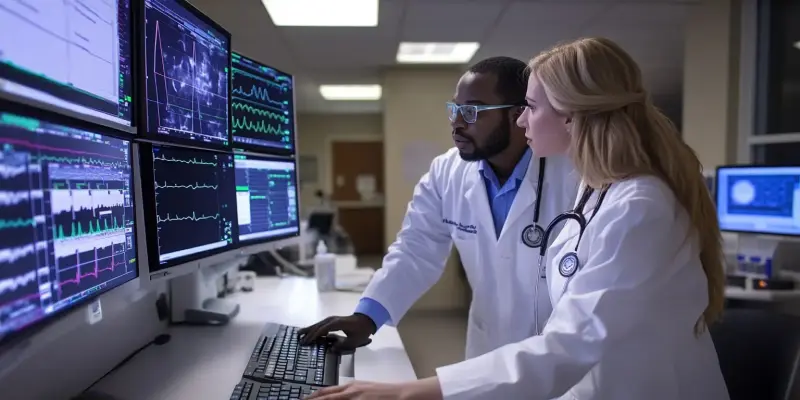
In an era marked by the rapid adoption of electronic health records (EHRs), telemedicine, and digital health platforms, the demand for reliable AI-powered transcription tools has reached an all-time high. The healthcare sector, with its intricate vocabulary and need for precision, calls for advanced solutions capable of handling complex medical terminology and ensuring accurate documentation. Aiming to address these challenges, Deepgram has unveiled Nova-3 Medical, a cutting-edge AI speech-to-text (STT) model that is set to transform transcription practices in both the UK’s National Health Service (NHS) and private healthcare providers.
Advanced AI for Complex Clinical Settings
Tackling Specialized Medical Vocabulary
Traditional speech-to-text models often struggle to accurately transcribe the highly specialized and complex vocabulary characteristic of clinical environments, as errors and misunderstandings can have serious repercussions on patient care. Nova-3 Medical stands out by leveraging sophisticated machine learning techniques and specialized medical vocabulary training, enabling it to recognize and accurately transcribe medical terms, acronyms, and jargon even in challenging audio conditions. This finesse is particularly crucial when healthcare professionals are on the move and away from recording devices, as precise transcription under such circumstances can significantly reduce the risk of miscommunication and errors in patient records.
Scott Stephenson, CEO of Deepgram, emphasized the transformative potential of Nova-3 Medical, highlighting its ability to accurately capture the nuances of clinical language. According to Stephenson, this AI model offers unprecedented customization options, empowering developers to create products that significantly enhance both patient care and operational efficiency. With its ability to handle the complexities of clinical language, Nova-3 Medical is poised to become an indispensable tool in the healthcare industry, seamlessly integrating with and enhancing existing clinical workflows and EHR systems.
Integration and Customization Capabilities
One of the standout features of Nova-3 Medical is its ability to produce structured transcriptions that integrate seamlessly with clinical workflows and EHR systems. This ensures that vital patient data is not only transcribed accurately but also organized in a manner that makes it easily accessible to healthcare providers. The model’s structured output helps streamline the documentation process, allowing healthcare professionals to spend more time focusing on patient care rather than administrative tasks. Additionally, Nova-3 Medical offers flexible, self-service customization, allowing developers to tailor the solution to meet the specific needs of various medical specialties. With the Keyterm Prompting feature, users can customize the model with up to 100 key terms, enhancing its accuracy and relevance in different medical contexts.
The versatile deployment options provided by Nova-3 Medical further enhance its appeal to healthcare providers. The model supports both on-premises and Virtual Private Cloud (VPC) configurations, offering enterprise-grade security and compliance with HIPAA regulations, which is crucial for adhering to UK data protection laws. This flexibility ensures that healthcare organizations can deploy the AI model in a manner that best suits their infrastructure and operational requirements, making it a highly adaptable solution for diverse healthcare settings. Kevin Fredrick, Managing Partner at OneReach.ai, highlighted the fundamental differences between voice AI platforms designed for enterprise use cases and those intended for entertainment, underscoring the superior performance of Deepgram’s Nova-3 Medical in terms of accuracy, latency, efficiency, and scalability.
Benchmark Performance and Real-Time Applications
Superior Transcription Accuracy
In benchmarking tests, Nova-3 Medical demonstrated exceptional performance in transcription accuracy, particularly when compared to other models available in the market. With a median Word Error Rate (WER) of 3.45%, the model significantly outperformed its competitors, achieving a 63.6% reduction in errors. This remarkable accuracy is crucial for ensuring that critical medical information is captured correctly, thereby minimizing the risk of miscommunication and patient safety issues. Additionally, Nova-3 Medical achieved a Keyword Error Rate (KER) of 6.79%, marking a 40.35% reduction in errors compared to the next best competitor. This impressive performance in recognizing keywords ensures that essential medical terms are accurately transcribed, further enhancing the reliability of the model.
The ability of Nova-3 Medical to deliver high accuracy even in challenging audio conditions makes it a valuable tool for healthcare providers. Whether dealing with background noise, accents, or variations in speech patterns, the model’s robust machine learning capabilities enable it to maintain a high level of transcription accuracy. This reliability is particularly important in high-stakes environments such as hospitals and clinics, where accurate documentation can significantly impact patient outcomes. By reducing errors and improving the quality of transcriptions, Nova-3 Medical contributes to enhanced patient safety and more efficient healthcare delivery.
Real-Time Transcription and Cost Efficiency
Nova-3 Medical’s exceptional performance extends beyond accuracy to include real-time transcription capabilities. The model is capable of transcribing speech 5-40 times faster than many alternative speech recognition vendors, making it an ideal solution for telemedicine and digital health platforms that require prompt and reliable transcriptions. This real-time capability ensures that healthcare providers have access to up-to-date information, enabling them to make informed decisions swiftly and effectively. Whether during virtual consultations or patient interactions in clinical settings, the ability to obtain immediate transcriptions can greatly enhance the efficiency and responsiveness of healthcare services.
In terms of cost efficiency, Nova-3 Medical offers a competitive edge, with a starting price of $0.0077 per minute of streaming audio. According to Deepgram, this pricing is more than twice as affordable as leading cloud providers, allowing healthcare tech companies to reinvest savings into innovation and expedite product development. The cost-effectiveness of Nova-3 Medical makes it an attractive option for healthcare organizations looking to optimize their transcription processes without breaking the bank. By offering a high-quality solution at a reasonable price, Deepgram supports the ongoing advancements in healthcare technology and facilitates the development of innovative tools that can further improve patient care and operational efficiency.
Transforming Healthcare Transcription
In today’s world, where electronic health records (EHRs), telemedicine, and digital health platforms are being rapidly embraced, the need for dependable AI-driven transcription tools is at an unprecedented high. The healthcare sector, with its specialized and often complex terminology, demands highly accurate solutions for documenting medical information. Recognizing these needs, Deepgram has introduced Nova-3 Medical, an innovative AI speech-to-text (STT) model designed to revolutionize transcription processes in both the UK’s National Health Service (NHS) and private healthcare providers. The Nova-3 Medical model is specifically engineered to handle the intricate language of medicine, ensuring reliable and precise documentation. As the healthcare industry continues to evolve, such advanced transcription tools are crucial for maintaining efficiency and accuracy in medical records. This development marks a significant step forward in the integration of AI technology within healthcare, promising to enhance overall quality and streamline the documentation process.