

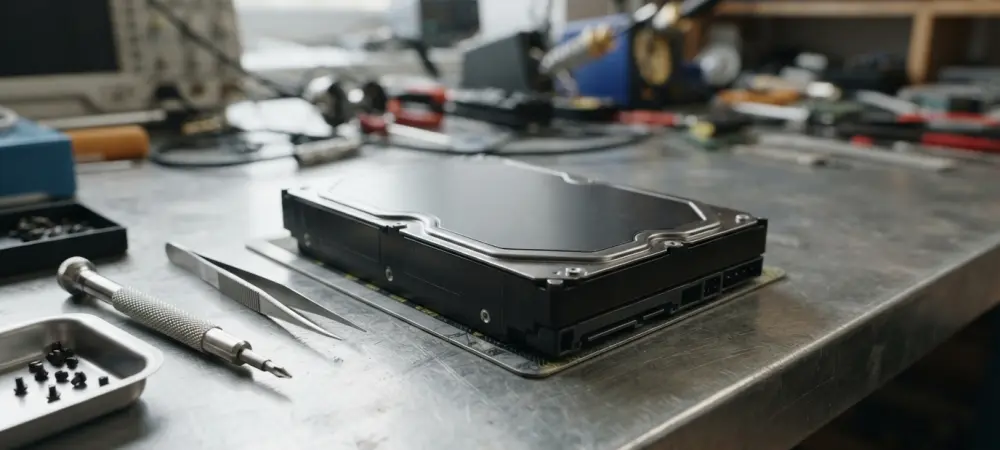
A price comparison between major electronics retailers shows that the Seagate IronWolf 8TB has reached a highly competitive price point for those looking to expand their storage arrays. Digital hoarding is no longer just a hobby for enthusiasts but a necessity for professionals managing massive datasets, media libraries, and critical backups. As high-definition video content becomes the standard, the demand for reliable hard drives has skyrocketed, leading to a volatile market where price shifts can save buyers significant capital. Currently, the landscape of network-attached storage is dominated by a few key players, but the Seagate IronWolf series consistently stands out due to its balance of speed and longevity. For individuals or small businesses operating on a budget, finding a professional-grade drive at a consumer price is the primary objective. This 8TB model represents a sweet spot, offering density for expansion without the costs of enterprise units.
Technical Superiority: The IronWolf Drive Engineering
Performance Metrics and Reliability Standards
The internal architecture of the Seagate IronWolf 8TB drive is built around Conventional Magnetic Recording technology, which is a critical distinction for any serious NAS user. Unlike Shingled Magnetic Recording used in cheaper consumer drives, CMR ensures that data is written in non-overlapping tracks, preventing the performance degradation that occurs during heavy write operations or RAID rebuilds. This reliability is bolstered by a 7200 RPM spindle speed and a 256MB cache, providing the throughput necessary for high-speed file transfers and multi-user access environments. While many competing NAS drives throttle down to 5400 RPM to save energy, this model prioritizes raw performance, making it suitable for creative professionals who edit video directly from their network storage. The drive is rated for a workload of 180TB per year, ensuring it can handle the constant read and write cycles of a busy 2026 home office or a small business server environment.
Engineering for Multi-Bay Systems
Beyond standard speed metrics, the IronWolf series incorporates AgileArray firmware, which is specifically designed to enhance drive performance within RAID configurations. This firmware provides error recovery control, ensuring that the drive does not drop out of a RAID array prematurely during a recovery process. Another standout feature is the inclusion of integrated rotational vibration sensors, which are often absent in lower-tier storage solutions. In a multi-bay NAS system, the combined vibrations from several spinning disks can cause micro-misalignments of the read-write heads, leading to data errors or hardware failure over time. These sensors detect and compensate for such vibrations, allowing the drive to maintain peak performance even in densely packed enclosures. This level of engineering provides a Mean Time Between Failures of one million hours, giving users confidence that their data is protected by hardware built to withstand the physical rigors of a continuous environment.
Market Dynamics: A Strategic Purchasing Perspective
Retail Price Comparison and Value Analysis
Navigating the current retail landscape reveals a discrepancy in how major electronics outlets value this specific hardware. Best Buy has positioned itself as a strong contender by slashing the price of the IronWolf 8TB drive from its original four hundred eighty dollar MSRP down to a more palatable three hundred fifty dollars. This discount represents a substantial saving for the average consumer, yet it is eclipsed by the aggressive pricing strategies found at Newegg. Through their “shell shocker” promotional events, Newegg has managed to bring the price down even further to three hundred thirty dollars, establishing the lowest market entry point currently available. This recurring trend in promotional cycles suggests that while the hardware remains premium, retailers are increasingly willing to cut margins to capture the growing NAS market. Prospective buyers should monitor these price fluctuations closely, as the twenty-dollar difference can add up when populating a large multi-bay system.
Implementation and Future Data Considerations
Determining the right time to invest in storage infrastructure required a careful analysis of both immediate costs and future scalability needs. The Seagate IronWolf 8TB drive proved to be a professional-grade solution that became accessible at a consumer-friendly price point, provided the buyer chose the vendor with the most aggressive discount. For those managing massive media libraries or operating small business servers, the transition to high-performance CMR drives was a logical progression from standard desktop storage. Moving forward, users should prioritize placing these 7200 RPM drives in well-ventilated areas, as their high-speed operation generated more noise and heat than lower-velocity alternatives. Investing in these drives now provided a robust foundation for data integrity through 2028. The combination of a three-year warranty and bundled data recovery services offered a safety net that justified the expenditure, ensuring that critical digital assets remained secure for the long haul.