
New Scale Robotics and FANUC Partner for Automated Gauging Solutions

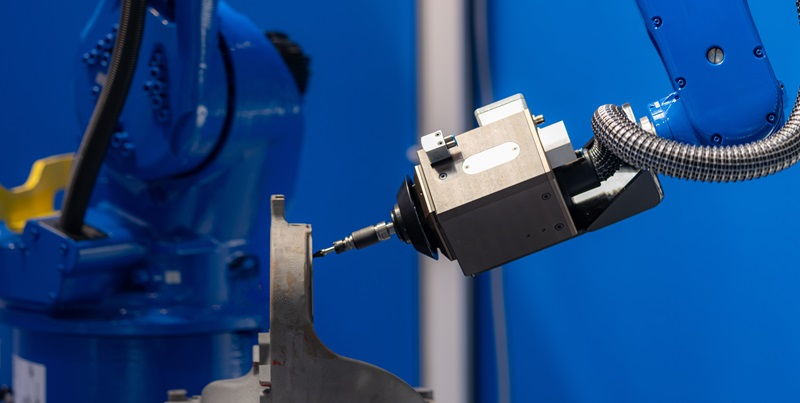
New Scale Robotics has joined forces with FANUC Americas, revolutionizing manufacturing quality control. This partnership combines New Scale Robotics’ precision gauging Q-Span systems with FANUC’s robotic expertise to meet industry demands for quicker, more reliable quality assessments. The Q-Span systems enhance measurement precision and data collection efficiency.

This collaboration with FANUC, a leader in automation, expands opportunities for smaller manufacturers, granting them access to top-tier automation advancements. This initiative promises enhanced productivity through faster, more accurate automated gauging that minimizes human errors and increases production rates. The alliance is set to empower manufacturers to elevate their quality control and production standards, leveraging the combined know-how of these two influential companies in the realm of manufacturing automation.

Transforming Quality Control in Manufacturing

The collaboration between New Scale Robotics and FANUC is a game-changer in manufacturing, bringing automated gauging tools to FANUC’s trusted robotic systems. This melding of advanced technology with established automation reliability promises a new level of precision and consistency in quality control processes. As manual gauging gives way to these innovative solutions, the reduction of human error means products will be more uniformly high-quality.

This strategic partnership is indicative of both companies’ determination to advance automation with a focus on quality control. By fusing New Scale Robotics’ technological prowess with FANUC’s automation expertise, manufacturers now have access to smarter and more efficient production methods.

This alliance not only boosts productivity but also empowers manufacturers to gain a strong competitive advantage with cutting-edge intelligent automation. New Scale Robotics and FANUC are leading the movement towards a smarter manufacturing landscape.

Explore more

Why Is Employee Engagement Declining in the Age of AI?

The rapid integration of sophisticated algorithms into the daily workflow of modern enterprises has created a profound psychological rift that leaves the vast majority of the global workforce feeling increasingly detached from their professional contributions. While organizations race to integrate the latest algorithms, a silent crisis is unfolding at the desk next to the server: four out of every five

Why Are Employee Engagement Budgets Often the First Cut?

The quiet rustle of a red pen moving across a spreadsheet often signals the end of a company’s ambitious cultural initiatives before they even have a chance to take root. When economic volatility forces a tightening of the belt, the annual budget review transforms into a high-stakes survival exercise where every line item is interrogated for its immediate contribution to

Golden Pond Wealth Management: Decades of Independent Advice

The journey toward financial security often begins on a quiet morning in a small town, far from the frantic energy and aggressive sales tactics commonly associated with global financial hubs. In 1995, a young advisor in Belgrade Lakes Village set out to prove that a boutique firm could provide world-class guidance without sacrificing its local identity or intellectual freedom. This

Can Physical AI Make Neuromeka the TSMC of Robotics?

Digital intelligence has long been confined to the glowing rectangles of our screens, yet the most significant leap in modern technology is occurring where silicon meets the tangible world. While the world mastered digital logic years ago, the true frontier now lies in machines that can navigate the messy, unpredictable nature of physical space. In South Korea, Neuromeka is bridging

How Is Robotics Transforming Aluminum Smelting Safety?

Inside the humming labyrinth of a modern potline, workers navigate an environment where electromagnetic forces are powerful enough to pull a wrench from a pocket and molten aluminum glows with the terrifying radiance of an artificial sun. The aluminum smelting floor remains one of the few places on Earth where industrial operations require routine proximity to 1,650-degree Fahrenheit molten metal