

With a deep background in applying artificial intelligence and machine learning to complex security challenges, Dominic Jainy has become a leading voice in the fight against sophisticated financial fraud. As criminals increasingly turn to high-tech methods like Remote Access Trojans (RATs) to bypass traditional security, his work focuses on the next generation of defense: real-time behavioral monitoring. In our conversation, we explore the insidious psychology behind these scams, how new security systems can distinguish a legitimate user from a hidden attacker on the same device, and the critical steps both banks and customers must take to stay ahead of this evolving threat.
Scammers often impersonate trusted institutions and create a sense of urgency. Could you walk us through the psychological tactics they use and what specific red flags customers should look for, such as requests to install software or approve transactions to “reverse fraud”?
It’s a masterclass in social engineering, really. These criminals thrive on a potent cocktail of pressure and authority. They’ll call you pretending to be from your bank’s fraud department, a courier company, or even a government agency, and immediately create a crisis. You’ll hear phrases like your account is “about to be blocked” or a service “can’t be completed.” This sense of urgency is designed to make you panic and short-circuit your critical thinking. The biggest red flag is any request to install an app or software to “fix” the problem—that’s their entry point. They might also ask you to stay on the line while you log into your account or, most insidiously, instruct you to approve a transaction under the guise of “reversing fraud.” A real bank will never, ever ask you to do any of those things.
Remote Access Trojan attacks allow criminals to control a device, making fraudulent transactions appear legitimate. How does this differ from traditional credential theft, and what specific behavioral anomalies—like signs of remote device control—does your system monitor for in real time?
This is what makes RATs so incredibly dangerous and a huge leap from traditional fraud. With credential theft, the criminal steals your username and password and logs in from their own device, which leaves a digital footprint—a different IP address, a new device signature. But with a RAT, the criminal isn’t just stealing your keys; they are inside your house, using your own hands. To the bank’s security system, it looks like you are making the transaction yourself from your trusted phone or computer. Our systems are designed to spot the ghost in the machine. We monitor for subtle behavioral tells—the speed of clicks, the way someone navigates through the app, session activity that doesn’t align with the user’s normal patterns. If we see signs of simultaneous or unusual activity that suggests a remote session is active while the user is also logged in, our risk-based controls kick in immediately.
As security evolves beyond just passwords, you’re focusing on real-time behavioral monitoring. Can you provide an example of how risk-based controls might adapt during a transaction, and how you balance this heightened security with ensuring a smooth, simple user experience for customers?
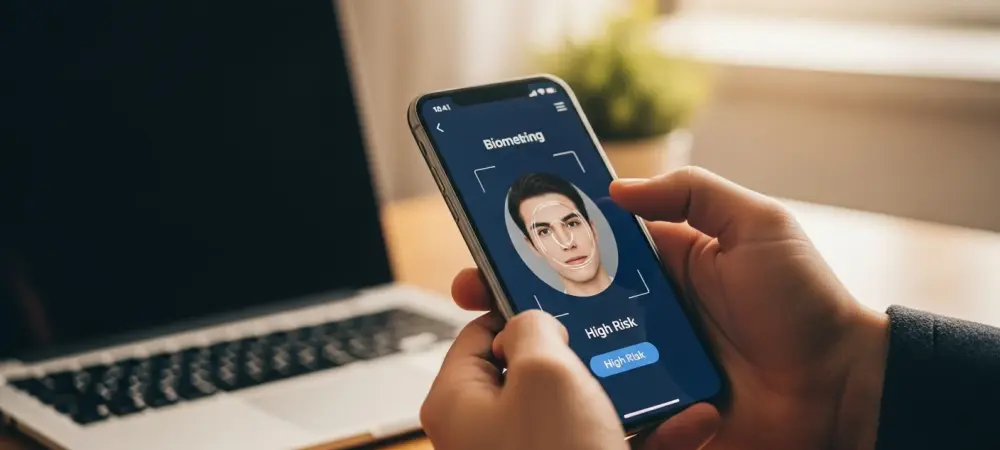
Absolutely. The goal is to be a silent guardian, not a frustrating gatekeeper. Let’s say a customer is initiating a large, unusual payment. Our system isn’t just checking the password; it’s analyzing the context in real time. Is the device behaving erratically? Is the navigation pattern jerky or robotic, unlike the user’s typical fluid movements? If our system detects these anomalies, the risk score for that transaction instantly increases. Instead of just blocking it, the controls might adapt by triggering a step-up authentication challenge—something more robust than a simple OTP, perhaps a video selfie or a call from our team. This way, for 99% of normal transactions, the customer experiences no friction at all. The heightened security only becomes visible when there’s a genuine reason for suspicion, allowing us to stop criminals while keeping everyday banking simple and seamless.
Experts recommend that financial companies use several layers of security to combat these threats. What are the most critical technical defenses, such as endpoint protection or network micro-segmentation, and why is monitoring for abnormal outgoing traffic so crucial for detecting an active RAT?
You cannot rely on a single wall to protect the fortress; you need a defense-in-depth strategy. At the institutional level, several layers are non-negotiable. First is robust endpoint protection on all internal devices to prevent the initial infection. Then, network micro-segmentation is vital; it contains a breach if one does occur, preventing a threat from moving laterally across the network to access sensitive areas like treasury or payment systems. Of course, multifactor authentication should be standard for all accounts. However, monitoring for abnormal outgoing traffic is arguably the most crucial piece for detecting an active RAT. These Trojans need to “phone home” to their command-and-control server to receive instructions and send back stolen data. A sudden spike in data being sent to an unknown server is a massive red flag. It’s like seeing a suspicious person sneaking out the back door with a bag—it tells you the intruder is already inside and active.
If someone suspects their device is compromised, what immediate, step-by-step actions should they take to secure their accounts? Please detail the process from hanging up the phone to contacting the bank, and explain why acting quickly is so critical in these situations.
Time is your enemy in this scenario; every second counts because the fraudster could be actively draining your account. The very first step, if you’re on the phone with a suspected scammer, is to hang up immediately. Don’t argue, don’t hesitate, just end the call. The second step is to disconnect the compromised device from the internet—turn off Wi-Fi and cellular data to sever the connection with the criminal. Third, using a separate, trusted device—a different phone or computer—contact your bank directly using the official number on their website or the back of your card, not a number the scammer gave you. Inform them you believe you’re a victim of a RAT attack so they can freeze your accounts and investigate. Acting with this urgency is critical because these criminals operate in real time. The moment they gain access, they are initiating transactions. Quick action can be the difference between a close call and a devastating financial loss.
What is your forecast for the evolution of banking fraud in the coming years?
I believe we are in a perpetual arms race, and the sophistication of these attacks will only escalate. As digital banking becomes even more integrated into our lives, fraudsters will leverage AI and machine learning to create more convincing, personalized scams that are harder to detect. We’ll see deepfake audio and video used to impersonate trusted individuals, and malware will become more adept at hiding its tracks. Consequently, the future of bank-grade security rests entirely on real-time, adaptive defenses that can analyze behavior and context, not just credentials. Trust between a bank and its customers will be proven not through marketing slogans, but through the consistent, proactive protection of their assets. Awareness will remain our most fundamental defense, so keeping customers informed and vigilant will be just as important as the technology we build to protect them.