

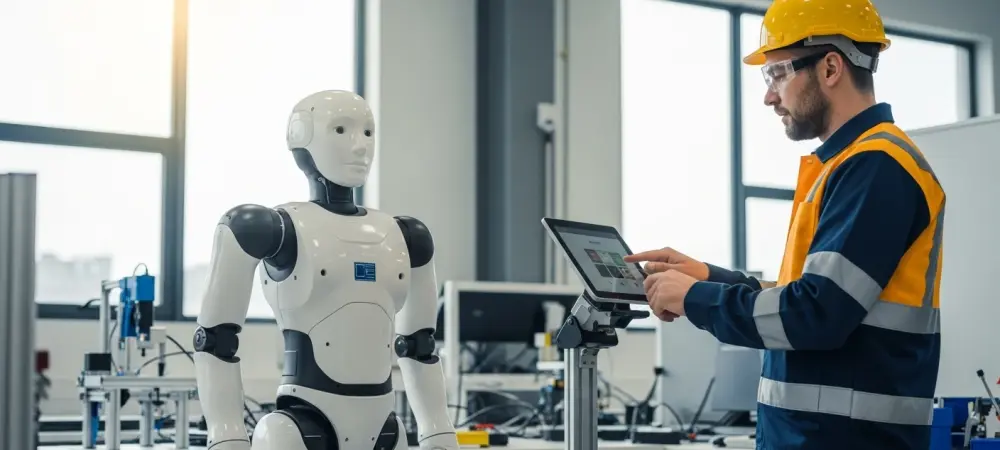
The integration of artificial intelligence into physical hardware marks a decisive departure from the era of digital-only chatbots toward a landscape where machines wield tangible influence over critical physical infrastructure. This transformation signifies the birth of embodied AI, where systems no longer just process text or images but navigate warehouses, manage retail inventory, and operate delivery networks. The stakes have shifted from managing digital misinformation to preventing physical harm, necessitating a total overhaul of the frameworks that govern how these agents interact with the human world. As these technologies migrate from laboratory simulations to public streets, the industry faces an urgent mandate to establish safety protocols that are as robust as those in aviation or heavy manufacturing.
The Evolution of Agency: From Digital Algorithms to Physical Systems
Redefining the Industry: The Transition to Agentic and Embodied AI
The landscape of artificial intelligence is undergoing a fundamental transformation as systems transition from purely digital environments into the physical world. This evolution involves autonomous systems integrated into warehouses, delivery networks, public infrastructure, and retail spaces. Unlike traditional AI, which primarily presents risks related to data bias or misinformation, these new systems interact with the tangible world. Consequently, their failure can result in direct damage to property, disruption of critical infrastructure, or threats to human safety. This shift necessitated a reevaluation of global AI governance, as traditional frameworks designed to mitigate online harms are increasingly viewed as insufficient for managing physical agents that plan, decide, and act across complex environments. The primary focus of current international discourse is the creation of robust governance for agentic AI. These are systems capable of executing multi-step goals with a high degree of autonomy, often interacting with external tools, databases, and physical devices. The analysis centers on how to ensure safety, reliability, and accountability when AI is given the keys to control physical hardware, perform financial transactions, or manage logistics without constant human intervention. The transition toward this model represents a point of no return where the focus of governance has shifted from controlling what an AI says to controlling what an AI does.
Key Stakeholders and the Industrialization of Autonomous Hardware
Establishing a reliable ecosystem for embodied AI requires the synchronization of a diverse group of stakeholders, ranging from chip designers to municipal planners. Robotics manufacturers are no longer merely building shells; they are creating sophisticated sensory platforms that must interpret a constant stream of environmental data. At the same time, infrastructure operators are tasked with preparing the physical world for these agents, ensuring that communication networks and public spaces can accommodate autonomous entities. This industrialization process has led to a more fragmented yet collaborative supply chain where no single entity holds total control over the behavior of the system.
Regulatory bodies have also emerged as central players in this industrial shift. For instance, authorities in major technological hubs are creating flexible frameworks that provide clear guidance for organizations while encouraging innovation through controlled pilots and testbeds. These stakeholders recognize that the safety of a system is not just a software problem but a systemic one that includes hardware reliability and environmental compatibility. The move toward this cooperative model ensures that safety standards are integrated into the design phase of autonomous hardware rather than being added as an afterthought.
Market Trajectories and the Rise of Specialized AI Agents
Emerging Trends in Multi-Step Autonomy and Purpose-Built Design
Market trends indicate a significant move away from generalized AI models toward purpose-built designs that are optimized for specific industrial ecosystems. In the manufacturing sector, there is a clear consensus that specialized robotics systems are superior to one-size-fits-all solutions. These machines are designed with specific sensor arrays and computing architectures that allow them to perform complex tasks with higher efficiency and lower energy consumption. This shift toward specialization is also seen in consumer-facing sectors where major retailers are developing super agents to handle everything from inventory management to personalized customer interaction.
Furthermore, the rise of multi-step autonomy has allowed these agents to perform sophisticated sequences of actions without needing human prompts at every stage. For example, an agent might identify a stock shortage, negotiate