

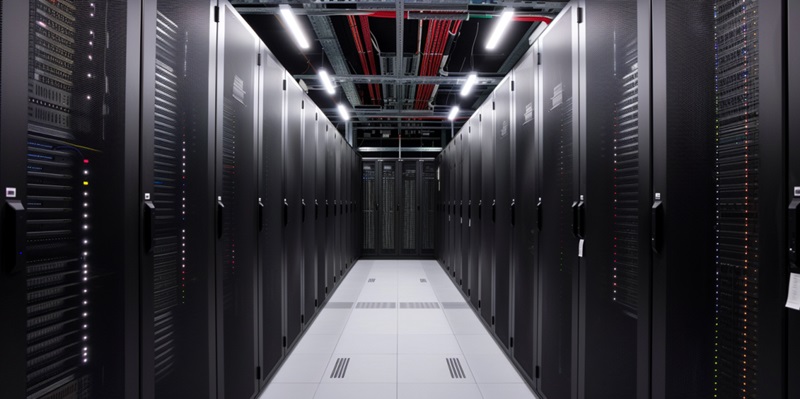
Introducing NetApp’s groundbreaking data management solutions that revolutionize enterprise AI workloads, VMware virtualization, and database management within on-premises data centers. With the unveiling of the AFF A-Series, NetApp has set a new standard in data storage and management, offering robust and versatile solutions that effortlessly integrate with leading cloud providers.
The AFF A-Series: Revolutionizing Data Management
High-Performance Meets Unmatched Reliability
The AFF A-Series is a game-changer, with performance metrics that are nothing short of prodigious. Doubling the might of its predecessors, the A-Series boasts an outstanding 40 million I/O operations per second and a throughput of one terabit per second. These figures not only highlight the system’s agility in managing voluminous data but also its capability to support the most intensive enterprise workloads. Critical to any enterprise, the system promises towering 99.9999% data availability, minimizing the risk of costly downtime and ensuring that businesses can rely on continuous operation, even in the most demanding environments.
A Versatile Solution for Diverse Workloads
The versatility of the AFF A-Series is one of its most striking features. NetApp understands that today’s enterprises grapple with a variety of data types and applications. The A-Series rises to the challenge by supporting block, file, and object storage protocols, simplifying the IT infrastructure and enabling seamless data management across multiple platforms. Moreover, it adopts innovative data reduction technologies, which is crucial in an era where data volumes continue to escalate and storage efficiency is paramount. With a keen eye on security, the A-Series is fortified with integrated, real-time ransomware detection capabilities, strengthening organizations’ defenses against ever-evolving malware threats.
Advancing Enterprise AI with NetApp AIPod
Specialized Infrastructure for Generative AI
NetApp’s AIPod represents a milestone in specialized infrastructure for generative AI workloads. It establishes a new echelon of technological innovation with its focus on retrieval augmented generation (RAG). This breakthrough empowers organizations to refine generative AI models with proprietary data, tailoring the technology for more precise and intelligent applications, such as sophisticated language models like GPT-4. With its dedication to facilitating the retrieval and processing of intricate data sets, the AIPod nudges forward enterprises’ capabilities in creating more nuanced, context-aware AI solutions.
Sustainable AI Developments with Lenovo Collaboration
In collaboration with Lenovo, the AIPod underscores NetApp’s commitment to advancing the AI frontier. Built on Lenovo ThinkSystem SR675 V3 servers equipped with Nvidia L40S GPUs, the platform is honed for Nvidia Corp.’s OVX AI framework, sustaining tasks from AI inference to model training. This partnership exemplifies a shared vision for nurturing AI advancements, rendering a high-performing, GPU-rich, on-premises platform that is meticulously built to accommodate the complexities of AI workflows, from training colossal datasets to fine-tuning algorithms in service of specialized enterprise applications.
NetApp ONTAP Software Enhancements
Unstructured Data Accessibility Upgrades
With the latest ONTAP software enhancements, NetApp amplifies its commitment to conquering one of modern data management’s toughest challenges: accessing unstructured data efficiently. The five new StorageGRID models showcase not just improved performance for their price but also reduced physical footprints and considerable energy savings. Such advancements are vital in an ecosystem where the deluge of unstructured data continues unabated, providing enterprises with a nimble, cost-effective, and environmentally conscious solution.
Protecting Enterprises with Advanced Data Management
Data protection stands as a fortress in ONTAP software’s latest repertoire of features. The introduction of SnapMirror Active Sync provides enterprises with a robust operational shield, minimizing data loss with real-time replication. Similarly, the development of a Cyber Vault Reference Architecture serves as a bulwark against ransomware attacks. This structured approach to secure data storage and recovery is an essential element of contemporary business resilience, helping organizations navigate the perilous landscape of cyber threats while strengthening their ability to maintain uninterrupted operations.
Meeting the Evolving Needs of Modern Enterprises
A Unified Approach to Data Storage Challenges
NetApp delineates a clear path through the complex maze of data storage challenges that modern enterprises face. Its unified data storage solutions, inclusive of the AFF A-Series and enhanced ONTAP software, are tailored to handle the intricacies of digital transformation. This aids businesses in keeping pace with progression, delivering flexibility, control, and a strategic advantage in a rapidly evolving technological environment.
The Power of Cloud Integration in Storage Infrastructure
NetApp has raised the bar in the realm of data management with the launch of the AFF A-Series. These state-of-the-art data management solutions are designed to cater to the complex needs of enterprise artificial intelligence (AI) applications, enhance the efficiency of VMware virtualization, and simplify database administration in on-premises data centers.
Crafted for adaptability and high performance, the AFF A-Series stands out as a top-tier storage and management solution. It seamlessly merges with the ecosystems of major cloud service providers, making it an invaluable asset for businesses operating in hybrid cloud environments. NetApp’s latest innovation delivers both the speed and reliability required to handle large-scale, demanding workloads, optimizing operations and enabling companies to make the most of their data infrastructure.
By integrating cutting-edge technology and features, the AFF A-Series positions itself as a leader in the data storage sector. Organizations that adopt these new offerings can expect a transformation in how they manage and access data, paving the way for advancements in AI research, refined virtualizations, and more effective database management. NetApp’s new introductions are a testament to their commitment to equipping enterprises with the tools needed to thrive in an increasingly data-driven world.