

In an age where speed and efficiency are paramount, businesses are reaching for the helm of automation to navigate the unpredictable waters of the global market. Automation has ceased to be a novelty; it’s become an imperative. Emerging technologies, such as artificial intelligence (AI), machine learning (ML), robotics, and sophisticated data analytics, are the compasses guiding this transformative journey. Through their integration, companies are not only optimizing existing processes but are also discovering new horizons of business possibilities.
At the core of this transformation is data—vast oceans of it. With every passing minute, the data deluge grows exponentially, prompting businesses to leverage analytics that can turn this data into actionable insights. These insights are the lifeblood of decision-making, fueling strategies that enhance customer engagement, drive product innovation, and streamline operations for increased productivity and reduced costs.
The Catalysts of Change: AI and ML
Artificial intelligence and machine learning are at the forefront of business automation, acting as twin engines powering the future of nearly every industry. These cognitive technologies learn and adapt, predicting market trends and customer behaviors with uncanny accuracy. By automating complex tasks that were once exclusive to human intellect, AI and ML are birthing a new era of innovation and operational nimbleness.
Take, for example, the financial sector: AI-driven algorithms can now detect fraudulent activities and manage risk in real time, safeguarding assets and reputations. In marketing, ML is redefining personalization, empowering brands to craft messages that resonate with individual consumers as never before. This level of precision not only elevates the customer experience but also revitalizes marketing ROI.
Synergy and Strategy: Robotics and Data Analytics
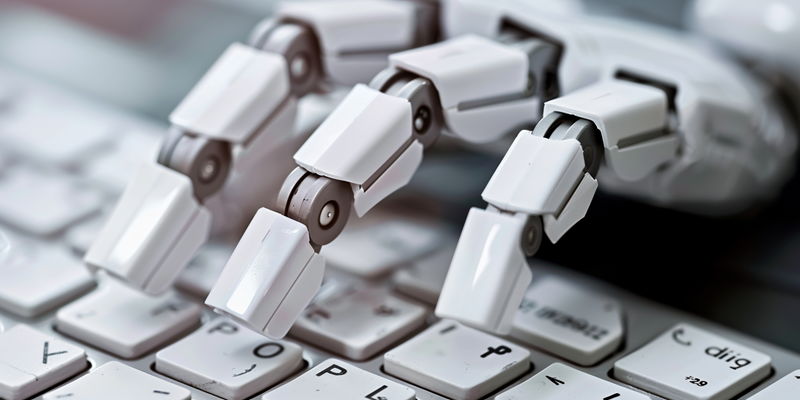
AI and ML are akin to a business’s brainpower, driving automation with insights and strategy, while robotics functions like manual extensions – taking on tasks with exceptional precision. This tech combo isn’t just about replacing the workforce but elevating it to tackle higher-level tasks.
As the vital data disseminator, analytics serves as a company’s nerve center, providing the pulse on operations that allows for swift, informed decision-making. This sophisticated data analysis means businesses no longer rely solely on gut feeling; every move is data-driven, fueling continual improvement and a nimble market response.
Robotics and data analytics together are forging more efficient, robust businesses. Companies are actively redefining their operational frameworks, aiming for agile adaptation that mirrors their cutting-edge tools. In this tech-driven era, automation is the transformative journey toward peak performance and enduring success.