

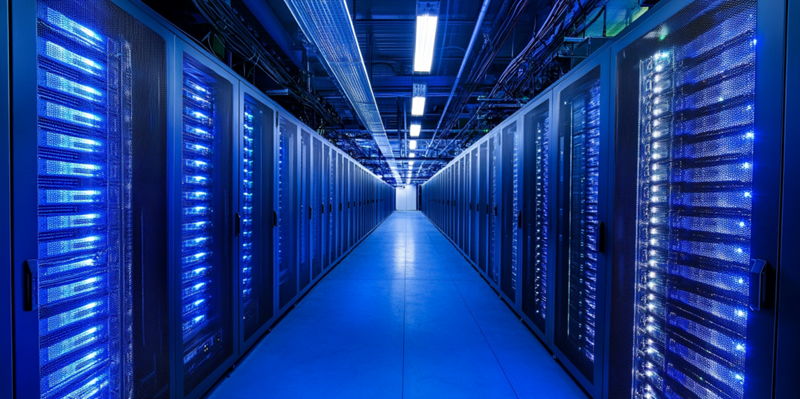
The surging demand for data centers driven by the AI boom has led to substantial growth in data center development, revealing numerous procurement challenges and necessitating strategic adjustments by both clients and the construction industry. This trend highlights the critical role data center investments play in the modern technology landscape and the subsequent need for strategic foresight.
Overview of Data Center Investment
Data center development has emerged as a significant countercyclical demand within the construction industry. Investments by key tech giants such as Microsoft, which invested $35 billion in 2023, and the myriad of real estate deals amounting to $22 billion in the first five months of 2024, underscore the exponential growth in this sector. This surge is largely driven by increasing needs for cloud computing and AI capabilities, leading to a scramble for essential resources like power and connectivity.
Client Approaches to Data Center Delivery
The European data center market is notably diverse, with over 1,250 data centers catering to both enterprise-specific needs and broader cloud services. Enterprise data centers serve secure institutions like investment banks, whereas a larger portion of the critical IT load is transitioning to hyperscale providers and carrier-neutral co-location centers. Hyperscale clients, which include major tech companies such as Alphabet, Amazon, and Microsoft, and co-location centers like Equinix and Digital Realty, propel most of the market’s growth with their requirements for rapid, massive-scale deployment.
Key Characteristics and Differences
Both hyperscale clients and co-location operators showcase several common traits. The need for rapid development cycles is paramount due to demanding end-user needs. Additionally, both types must adapt to local market conditions while maintaining global standards, cope with high competition for limited resources, and leverage economies of scale contingent on the performance of major equipment suppliers. The utilization of reference designs that need local adaptation and the phased delivery of large-scale projects for incremental capacity addition are also key features.
There are, however, notable differences. Hyperscale clients usually retain control over the entire construction process, allowing for deep standardization and easier integration of innovative technologies. This makes them highly responsive to market changes, necessitating robust workload planning and change management. In contrast, co-location centers cater to various lease models, making them sensitive to inflation and contractor availability. They must also be exceptionally adaptable to client-specific requirements, including advanced cooling technologies.
Procurement Challenges and Solutions
The development of data centers faces several procurement challenges. Design standardization must be balanced with local regulatory requirements, and the direct procurement of long lead-in items often accounts for 30-35% of total capital expenditure. Integrating owner-furnished, contractor-installed items necessitates comprehensive quality control during installation and commissioning. The balance of plant MEP setups, and innovations in data hall cooling and security systems involve coordinated plug-and-play installations. Prefabricated and modular solutions are increasingly relied upon to meet rapid deployment schedules. Managing labor demands for supervision and quality assurance can account for up to 25% of the workforce, and phased development presents unique logistical and community impact challenges.
International Procurement Considerations
The expansion of the data center market into new European regions introduces additional complexities. In France, large general contractors with in-house teams navigate unique contractual obligations under a code-based legal system. Germany’s approach often involves split general contractor appointments focusing on MEP integration amidst a high-tech construction boom. Ireland, favored by hyperscalers, actively addresses skill shortages with a strong focus on prefabrication. Scandinavia employs flexible strategies that combine local expertise with external contractors, emphasizing modular construction to manage logistical and coordination challenges.
Conclusion
The rising demand for data centers, fueled by the boom in AI technologies, is leading to significant growth in data center development. This surge is not without its challenges, as it reveals numerous procurement difficulties and necessitates strategic adjustments for both clients and the construction industry. The expansion in data center construction underscores the vital importance of these investments in today’s technology landscape. As companies increasingly rely on AI and data-driven decision-making, the need for robust and efficient data centers becomes more pressing. Moreover, the process of building and maintaining these facilities requires strategic foresight and adaptability due to the rapidly evolving tech environment.
The demand for high-performance data centers means that there are intricate challenges in sourcing materials, managing timelines, and balancing costs. Clients and builders must work together to anticipate and mitigate these issues. The emphasis on innovation and sustainability in construction practices is also paramount, ensuring that data centers not only meet current needs but are also future-proof. Ultimately, the ongoing development in data centers is a testament to their essential role in supporting the burgeoning fields of AI and big data analytics.