

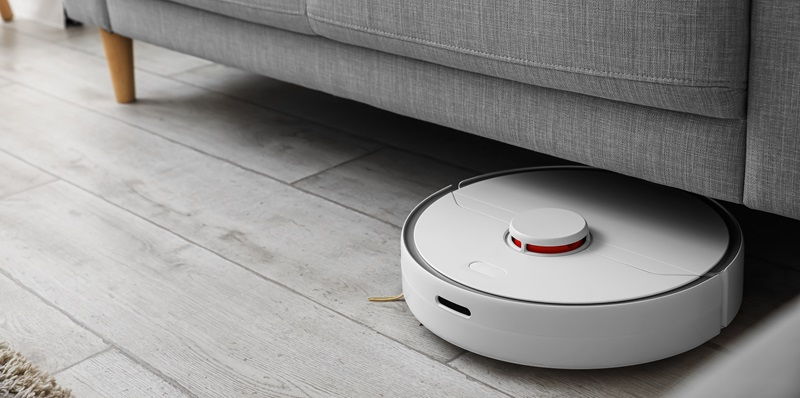
In today’s fast-paced world, businesses are constantly seeking innovative solutions to improve efficiency and productivity. The Navia Robotics Vacuum 50 is one such groundbreaking solution that combines advanced 3D LiDAR technology with intelligent navigation algorithms, promising unparalleled precision in cleaning. Let’s explore the remarkable features and benefits of this industrial robotic vacuum.
Mapping and Navigation Capabilities
One of the key highlights of the Vacuum 50 is its mapping and navigation capabilities. With the increase in data points and computational power, this robotic vacuum can map and navigate spaces with centimeter accuracy. It effortlessly adapts to various floor types and efficiently maneuvers through complex room layouts. From spaces as small as ten thousand square feet to sprawling areas spanning millions of square feet, the Vacuum 50 ensures thorough and precise cleaning.
The Use of Automotive Grade 3D LiDAR
What sets the Vacuum 50 apart is the use of automotive-grade 3D LiDAR technology, a first in this size category for commercial robotic vacuums. With this cutting-edge technology, the robots can sense walls, people, and objects from over 500 feet away. This unprecedented range ensures that the Vacuum 50 never loses its bearings, even in the largest open rooms. Businesses can now rely on this robotic vacuum to clean vast spaces with unmatched efficiency.
User Experience
Designed with user experience in mind, the Vacuum 50 operates at a low noise level, providing a peaceful cleaning environment without compromising efficiency. Now, businesses can maintain a quiet and productive workspace while enjoying the benefits of an immaculately clean environment. Users can go about their tasks without any disturbance from the robotic vacuum, ensuring a seamless work experience.
Extended Battery Life
The Vacuum 50’s extended battery life is thanks to lithium iron phosphate battery technology. This advanced battery technology enables extended cleaning sessions, allowing the robot to cover more ground on a single charge. Unlike standard lithium-ion chemistry batteries, the lithium iron phosphate batteries in the Vacuum 50 can handle more recharging cycles, providing businesses with reliable and long-lasting cleaning performance.
Automated Charging Feature
To further enhance efficiency, the Vacuum 50 offers an optional charging dock station. When the battery runs low, the robotic vacuum intelligently navigates back to its charging dock to recharge. Once the battery is fully charged, it resumes its cleaning tasks, eliminating the need for manual intervention. This automated charging feature ensures uninterrupted cleaning sessions, maximizing uptime and productivity.
Advanced Filtration System
In addition to its cutting-edge cleaning capabilities, the Vacuum 50 boasts an advanced filtration system. This system captures even the finest particles, promoting a healthier indoor environment. With the ability to purify the air and trap allergens and pollutants, businesses can enjoy improved air quality, leading to enhanced employee health and productivity.
Cost and Efficiency Benefits
The advantages of the Vacuum 50 extend beyond its cleaning prowess. By offering over an 80% reduction in floor cleaning costs to businesses, this industrial Roomba should be at the top of the priority list for facilities looking to improve their hygiene and sanitation measures while also looking to save a tremendous amount of money. The Vacuum 50’s efficiency and autonomy translate into significant cost savings, making it a wise investment for businesses of all sizes.
Navia Robotics’ Commitment to Research and Development
Navia Robotics leads the industry with unwavering devotion to research and development. Their continuous innovation spearheads the development of advanced features and patented technologies. By choosing the Vacuum 50, businesses align themselves with a reliable and innovative brand that is committed to delivering cutting-edge solutions for their evolving needs.
The Navia Robotics Vacuum 50 revolutionizes the concept of precision cleaning with its advanced 3D LiDAR technology and intelligent navigation algorithms. It offers unparalleled precision, efficiency, and cost savings. From its mapping and navigation capabilities to its quiet operation and extended battery life, the Vacuum 50 proves to be the future of cleaning technology. Businesses that prioritize hygiene, sanitation, and productivity should consider investing in the Navia Robotics Vacuum 50 for exceptional cleaning performance that pushes the boundaries of innovation.