

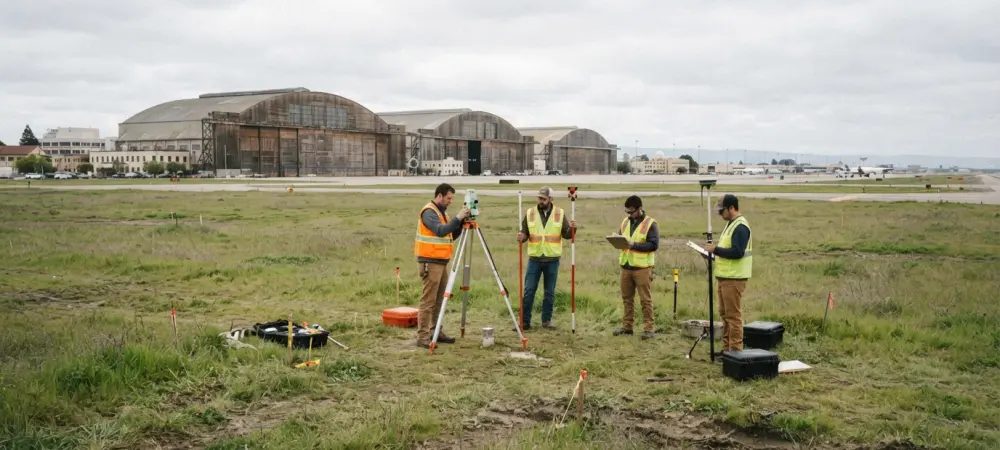
The sprawling landscape of Moffett Federal Airfield in the heart of Silicon Valley is witnessing a transformative shift as NASA contemplates opening its high-security grounds to the engines of the modern digital economy. This proposal to lease land at the Ames Research Center marks a significant pivot in how federal assets support the technology sector. By leveraging Enhanced Use Leases, the agency intends to integrate commercial hyperscale developers into its ecosystem, bridging the gap between government-led aerospace research and the demand for private infrastructure.
The Convergence of Federal Real Estate and Hyperscale Computing
NASA’s Ames Research Center serves as a cornerstone for high-performance computing, housing several advanced supercomputer systems. The shift toward leasing to private entities reflects a strategy to maximize the utility of government property in a region where land is increasingly scarce. This integration allows the federal government to offset maintenance costs while providing the private sector with secure, strategically located facilities.
Catalysts for Developing Commercial Capacity on Government Property
Shifting Paradigms in Public-Private Land Utilization
Repurposing federal sites for industrial technology reflects a broader national strategy. Trends indicate a growing reliance on private-sector efficiency to scale infrastructure rapidly as artificial intelligence and quantum research require specialized facilities. NASA’s partnerships provide a blueprint for how institutional-grade data centers can coexist with federal missions.
Market Dynamics and Growth Indicators for Silicon Valley Projects
Data center demand in Northern California remains at an all-time high, driven by proximity to tech hubs. Growth projections for the 2026 to 2028 period suggest that if assessments are favorable, the center could become a primary site for high-density computing. Developers are eyeing this location for its potential gigawatt-scale power availability.
Technical and Structural Hurdles in Site Feasibility
Expanding infrastructure on federal land presents complex challenges regarding power procurement. Contractors must evaluate if existing utilities can support massive electrical loads without compromising mission-critical operations. Additionally, physical security must be reconciled with the accessibility needs of private developers, necessitating innovative strategies for site management.
Legislative Scrutiny and the Evolving Land-Use Policy
The regulatory landscape for data centers on federal land is becoming increasingly polarized. While support has been bipartisan, new legislative efforts seek to restrict such developments due to environmental concerns. Recent bills aim to limit construction on specific federal territories, forcing agencies to navigate a web of compliance and shifting political priorities.
The Future Landscape of Federated Computing and Quantum Research
The long-term trajectory points toward deeper integration of quantum hardware and specialized accelerators. As NASA explores these leases, co-locating private cloud infrastructure with federal labs offers a unique advantage. Future growth will be defined by the ability to balance sustainability with the immense energy needs of next-generation computing architectures.
Synthesizing the Strategic Value of Federal Data Center Expansion
The exploration of private leasing represents a pivotal moment for industrial growth. Stakeholders prioritized the development of modular power solutions and established standardized security frameworks to facilitate rapid deployment. This initiative cleared the way for a robust digital infrastructure that thrived despite land scarcity and evolving regulatory demands.