

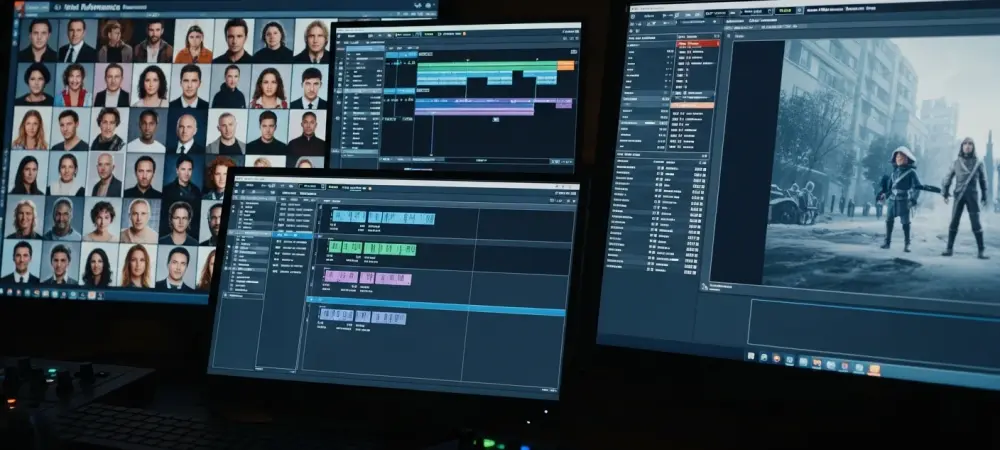
The long-standing barrier between a creative professional’s complex vision and the rigid, text-based commands understood by generative AI has finally begun to dissolve, revealing a new horizon for digital content creation. Multimodal AI Video Generation represents a significant advancement in the digital content creation sector. This review will explore the evolution of the technology, its key architectural components, performance capabilities, and the impact it has on various professional applications. The purpose of this review is to provide a thorough understanding of this technology, its current state, and its potential for future development.
The Dawn of Multimodal Creation
The evolution of AI video generation has reached a critical inflection point with the transition from single-input models to sophisticated multi-input ecosystems. Early text-to-video platforms, while revolutionary, often reduced the creative process to an exercise in “prompt engineering,” where artists had to translate complex visual and narrative ideas into restrictive lines of text. This approach frequently resulted in a disconnect between intent and output, producing content that lacked the nuance, consistency, and contextual awareness required for professional use.
The core principle of multimodal creation is to mirror the complexity of human creativity, which naturally draws from a rich tapestry of sensory information. By enabling the integration of diverse data types—including text prompts, reference images, audio tracks, and existing video clips—these advanced systems can build a far more holistic understanding of a creator’s vision. This paradigm shift moves beyond simple commands, fostering a more intuitive and collaborative dialogue between the user and the AI. It marks a revolutionary step not just for video generation but for the broader landscape of generative artificial intelligence, aligning the technology more closely with the natural workflows of artists, editors, and directors.
Deconstructing the Multimodal Architecture
The power of multimodal AI video generation lies in its sophisticated architecture, which is engineered to process and synthesize various data streams into a cohesive whole. This technical framework is not merely a collection of separate tools but an interconnected system where each component informs the others, allowing for an unprecedented level of creative synergy and control. Understanding this architecture is key to appreciating the technology’s capacity to overcome previous limitations and unlock new creative possibilities.
Integrated Visual Input Systems
A foundational component of modern multimodal systems is their ability to process multiple, concurrent visual inputs. This technical capability allows for the integration of up to nine distinct images and as many as three video clips simultaneously, providing creators with granular control over the final output. By supplying a set of reference images, a user can establish and maintain a consistent artistic style, define a specific color palette, or ensure the unwavering appearance of a character or object across different scenes. This solves one of the most significant hurdles of previous-generation models: the struggle to maintain visual continuity.
Moreover, the capacity to incorporate existing video clips is a game-changer for professional workflows. Editors and visual effects artists can now seamlessly integrate AI-generated sequences with live-action footage, extend pre-shot scenes, or create fluid transitions between different segments. The AI analyzes these video inputs to understand motion, lighting, and composition, ensuring that newly generated content aligns perfectly with the established visual language of a project. This transforms the AI from a standalone novelty into a fully integrated tool within the production pipeline.
Advanced Audio-Visual Synchronization
Perhaps the most innovative leap in multimodal architecture is the sophisticated processing of audio as a primary driver for video generation. Previous models treated sound as an afterthought, often layered on top of pre-generated visuals. In contrast, new systems utilize up to three separate audio tracks—such as dialogue, music, and ambient sound—to fundamentally inform the visual narrative as it is being created. The AI synchronizes on-screen action with the rhythm and emotional tenor of a musical score, choreographs character movements to match dialogue, and adjusts the pacing of scenes based on the texture of ambient sounds.
This deep integration creates a dynamic and cohesive audio-visual experience that feels organic and intentional. The architecture is trained to understand the learned associations between sights and sounds, enabling it to generate appropriate atmospheric audio for a visual scene or, conversely, create visuals that intrinsically match a provided soundscape. For instance, the system can automatically generate the visual representation of a storm that corresponds to the sound of heavy rainfall and thunder, all without an explicit textual prompt. This dual-channel generation ensures that sound and vision are not just aligned but are created in concert.
Synergistic Input Processing
The true intelligence of a multimodal system is revealed in how it integrates all inputs synergistically. Sophisticated neural networks are designed to analyze the intricate relationships between text, images, audio, and video, creating a holistic understanding of the user’s creative intent. The system does not process each modality in isolation; instead, it comprehends how a reference image relates to a text prompt, how a musical track influences the pacing dictated by a video clip, and how all these elements work together to achieve a unified creative goal.
This synergy allows the system to manage complex creative objectives that would be impossible to articulate through a single input type. For example, a user can provide a video of a dancer, a musical track with a specific tempo, and reference images for a surreal, painterly art style. The AI synthesizes these inputs, generating a new video where the dancer’s movements are choreographed to the music, rendered in the desired artistic style, and seamlessly integrated into a new environment. This ability to interpret and execute multifaceted instructions transforms the creative process, enabling the production of polished, professional-grade content with remarkable efficiency.
Emerging Trends and Innovations
The latest developments in multimodal AI are pushing the boundaries beyond command-based interactions toward a more fluid and intuitive “creative conversation.” The trend is a clear departure from rigid systems where users input precise instructions and await a final output. Instead, emerging platforms facilitate a dynamic, visually-driven workflow that empowers creators to guide and refine the AI’s output in real time. This interactive approach makes the technology more accessible to artists who think visually rather than textually. This shift is fundamentally democratizing high-end video production. The intuitive nature of these new tools means that complex tasks, such as creating elaborate visual effects or animating intricate character movements, no longer require years of specialized training or expensive software. By providing a more expressive and responsive creative environment, these innovations are empowering a broader range of users to bring their visions to life. The focus is increasingly on building a collaborative partnership between human creativity and artificial intelligence, where the AI acts as a powerful co-creator rather than a simple tool.
Real-World Impact and Applications
The practical applications of multimodal AI video generation are already making a significant impact across a diverse range of industries. The technology’s versatility allows it to be adapted to numerous professional contexts, streamlining workflows and unlocking new creative potential. From marketing to entertainment, its ability to produce high-quality, consistent, and contextually aware video content is proving to be transformative.
In marketing and advertising, these systems offer a powerful solution for enforcing brand identity. Teams can use reference images of logos and products, audio clips of brand jingles, and existing video advertisements to generate new content that aligns perfectly with established brand guidelines. This ensures a cohesive visual and auditory message across all campaigns, produced at a fraction of the time and cost of traditional methods. Similarly, in film and television production, directors and editors can leverage the technology to generate complex visual effects sequences, create establishing shots that match the principal photography, or even develop pre-visualizations that are stylistically consistent with the final film. For education and training, instructors can develop engaging, media-rich content by seamlessly combining video demonstrations, narrated explanations, and reference diagrams into a single, comprehensive learning module.
Overcoming Core Creative Hurdles
One of the most significant achievements of the multimodal approach is its ability to successfully mitigate key challenges that have long plagued generative AI: inconsistency, a lack of granular control, and the difficulty of managing complexity. By allowing users to provide a rich “input canvas” of visual, auditory, and temporal information, the technology dramatically reduces the ambiguity inherent in text-only prompts, leading to more predictable and accurate results.
This multi-faceted guidance provides a direct solution for maintaining consistency. Supplying the AI with reference images for a character ensures their appearance remains stable across multiple shots and scenes, while providing video clips helps maintain continuity in lighting and camera work. This directly addresses the frustrating tendency of earlier models to produce disjointed or inconsistent outputs. Furthermore, this approach grants creators a far greater degree of creative control, enabling them to steer the AI with precision without stifling its generative potential. The ability to manage complexity is also enhanced; where text-only systems often falter with detailed prompts, multimodal systems thrive on rich, layered inputs, using the additional information to build a more robust and accurate understanding of the creative goal.
The Future of AI-Powered Videography
Looking ahead, the trajectory of multimodal AI video generation points toward an even more integrated and intelligent creative landscape. The potential for integrating new modalities—such as 3D models, motion capture data, or even biometric feedback—promises to further deepen the AI’s understanding of creative intent. As these systems evolve, their ability to synthesize information will become more sophisticated, allowing for the generation of content with even greater narrative depth and emotional resonance.
The long-term impact of this technology is poised to fundamentally reshape creative workflows. It will enable small teams or even individual creators to produce content that once required large-scale production resources, from animated features to cinematic visual effects. This democratization of production will foster a new wave of innovation, empowering diverse voices to tell their stories with a professional sheen. The future of videography is not one where AI replaces human creativity but one where it augments it, creating a powerful synergy that elevates the art form to new heights.
Concluding Analysis
The emergence of multimodal AI video generation marked a landmark evolution in digital content creation. By moving beyond the constraints of single-modality inputs, this technology provided a more intuitive, powerful, and collaborative framework for artists and producers. Its sophisticated architecture, capable of synthesizing a rich spectrum of visual, auditory, and textual data, successfully addressed the core challenges of consistency and control that had limited earlier generative models. The practical applications demonstrated its immense value across industries, from enforcing brand identity in marketing to streamlining complex visual effects in filmmaking. Ultimately, this technological shift transformed the creative process into a more accessible, efficient, and expressive art form, solidifying a new and dynamic partnership between human ingenuity and artificial intelligence.