

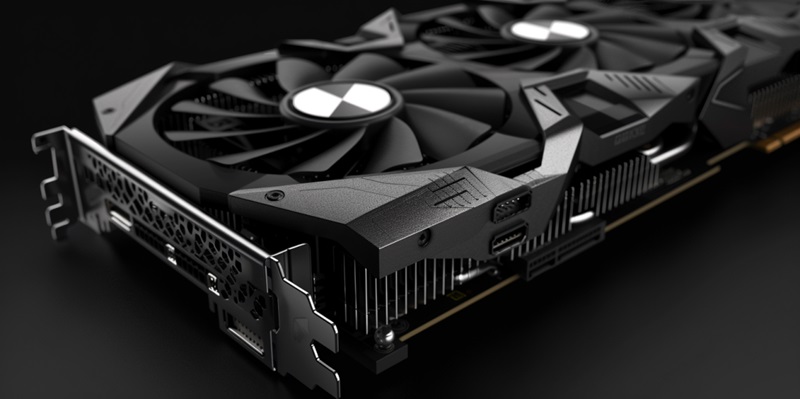
MSI, a leader in gaming hardware, has recently expanded its arsenal of graphics cards with the introduction of the GeForce RTX 4070 Ti SUPER Shadow 3X. This exciting new addition fuses sleek design with high-end performance, tailored for gamers and professionals alike who crave a powerful yet visually refined graphics solution.
Design: An Exercise in Aesthetics
The Allure of Understatement
Gone are the days when gamers only sought out the flashiest equipment with the most RGB. MSI’s latest offering caters to a growing demographic of users who prefer a more subtle, minimalistic approach to their rig’s style. The GeForce RTX 4070 Ti SUPER Shadow 3X satisfies this desire with its elegant bronze and grey palette, entirely eschewing the typical RGB lighting for an understated, yet distinct look. The card’s design isn’t just for show; the triple-fan TORX 4.0 cooling solution ensures performance remains uncompromised, illustrating MSI’s commitment to balancing form with function.
Performance Meets Elegance
The Shadow 3X series isn’t just about looks, and MSI’s decision to go against the grain with a muted visual theme highlights the fact that performance is still at the forefront. The GPU, equipped with 8,448 CUDA cores and a 48 MB L2 cache, is a promising option for demanding tasks. Its 16 GB of GDDR6 memory on a 256-bit bus surpasses the previous non-SUPER model, illustrating MSI’s focus on substantive upgrades. Clearly, MSI understands that today’s consumers prize a complete package where performance is not sacrificed at the altar of design.
Technical Enhancements
Customized Cooling
Efficient heat management remains pivotal for high-end GPU performance and longevity. MSI has fine-tuned its cooling technology to match the demands of the RTX 4070 Ti SUPER Shadow 3X. With TORX 4.0 fans designed to maximize airflow and heat dissipation, users can enjoy long gaming sessions without fear of overheating. MSI’s cooler design aims to deliver not just quieter, but also more effective performance, ensuring the components operate within optimal temperature ranges, even when the card is pushed to its limits in ‘Extreme Performance’ mode.
Heightened Performance
MSI, renowned for its commitment to top-tier gaming equipment, has broadened its range of GPU offerings with its latest release, the GeForce RTX 4070 Ti SUPER Shadow 3X. This new graphics card is the perfect harmony of performance and aesthetics, designed to meet the demanding needs of both avid gamers and creative professionals. With its advanced features and robust processing capabilities, it’s engineered to handle the most graphics-intensive tasks with ease. The Shadow 3X doesn’t just deliver on functionality – its sleek design makes it a visually appealing component that enhances any computer setup. This combination of form and function ensures that users enjoy a premium computing experience, whether they are immersing themselves in the latest high-fidelity games or engaging in complex professional workflows. MSI’s latest offering is a testament to their dedication to pushing the boundaries of what gaming hardware can achieve, catering to a market that values both visual finesse and raw performance.